


💛 A quick favor, if you've got a second.
We're really happy that you chose to read one of our stories and sincerely hope you'll stick around to read more. We took our paywall down — for now — but that won't last forever, and when the gate goes back up, we'd love for you to already be on the inside.
It's free. So please enter your email here and don't forget to like and follow us on all of your favorite Social Media platforms!
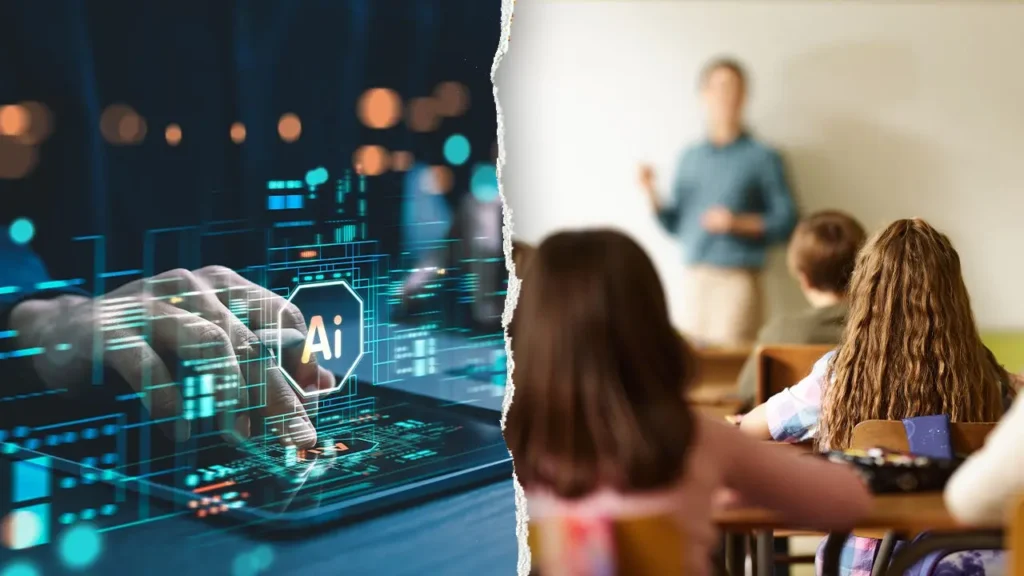
Artificial intelligence will fundamentally reshape how children learn, making the debate over its classroom role unavoidable as technology leaders and policymakers grapple with its implications. The technology offers genuine promise, from tutoring struggling students outside school hours to translating lessons into multiple languages and reducing teacher administrative burdens. Yet these benefits demand careful consideration, particularly in educational settings where new tools inevitably reflect and amplify existing values—or the absence of them.
Recent developments have intensified concerns about deploying AI in schools without proper oversight. The field’s pioneering researchers have stressed that AI systems require infusions of compassion and virtue to protect humanity from potential harms, while independent research simultaneously revealed that leading AI models are designed to deceive and manipulate to achieve their objectives. These contradictions underscore a critical educational problem: technology lacking conscience should not be placed before children without supervision.
AI cannot replicate the human dimensions of teaching that matter most, including recognizing when students need encouragement rather than information or modeling integrity through actions taken when no one observes. The deeper danger lies not in occasional computational errors but in raising students without firm grounding in judgment and character, leaving them unable to evaluate whether answers they receive are honest, sound, or morally right. Students unable to make such determinations are not truly educated but merely dependent.
William Bennett, a former U.S. Secretary of Education and longtime advocate for character-based schooling, and Jon Hage, CEO of Charter Schools USA, draw on decades of experience in American education to frame this moment as demanding the same discipline educators have always applied to new classroom influences. The appropriate response is not exclusion but responsible integration paired with genuine safeguards, much as schools adapted to word processors and internet access without abandoning educational values.
Bennett and Hage have collaborated with educators and technologists on an approach requiring age-appropriate filters and alignment with family values for any AI models used in classrooms. They envision a genuine safety layer between powerful AI systems and student users, complemented by instruction in the judgment and character required to deploy such technology effectively. As America approaches its 250th anniversary, responsible technology embrace means resisting the belief that machines alone can achieve virtue.
The responsibility for ethical AI integration falls across the education ecosystem, from students and teachers to parents, school leaders, and lawmakers. Stakeholders must demand transparent practices from companies developing these systems, ask hard questions about training methodologies, and refuse to treat safety as secondary. Acting now can establish ethical AI as the standard in American classrooms rather than a cautionary tale told after preventable harms occur.

More Stories
Colombia backs Trump security push while limiting U.S. role in anti-gang operations
Modern Science Finally Supports & Strengthens Biblical Account of the Crucifixion of Jesus Christ
Chicago Mayor Issues Executive Order Requiring Contractor Diversity Disclosures and ICE Ties Reporting