

💛 A quick favor, if you've got a second.
We're really happy that you chose to read one of our stories and sincerely hope you'll stick around to read more. We took our paywall down — for now — but that won't last forever, and when the gate goes back up, we'd love for you to already be on the inside.
It's free. So please enter your email here and don't forget to like and follow us on all of your favorite Social Media platforms!
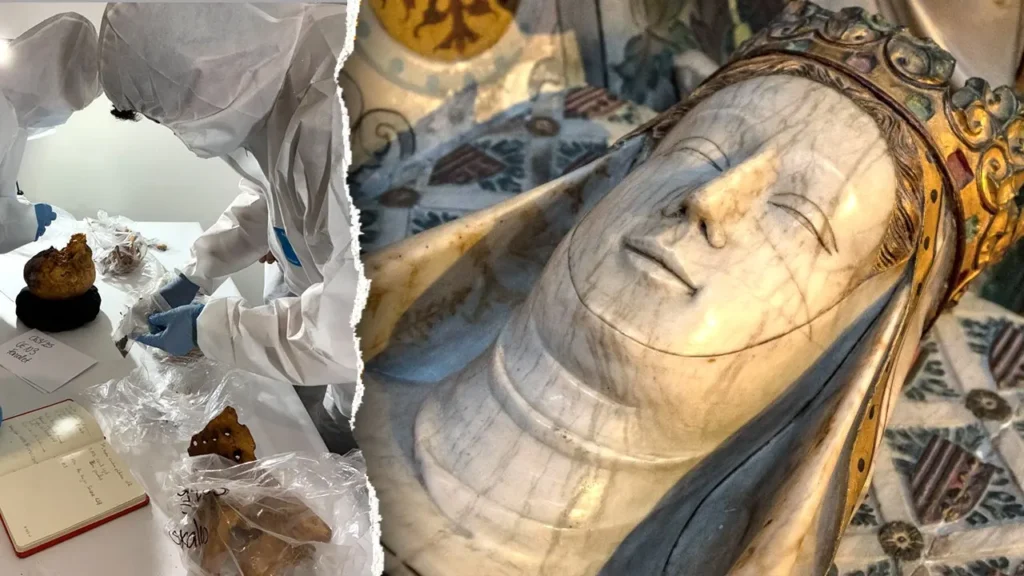
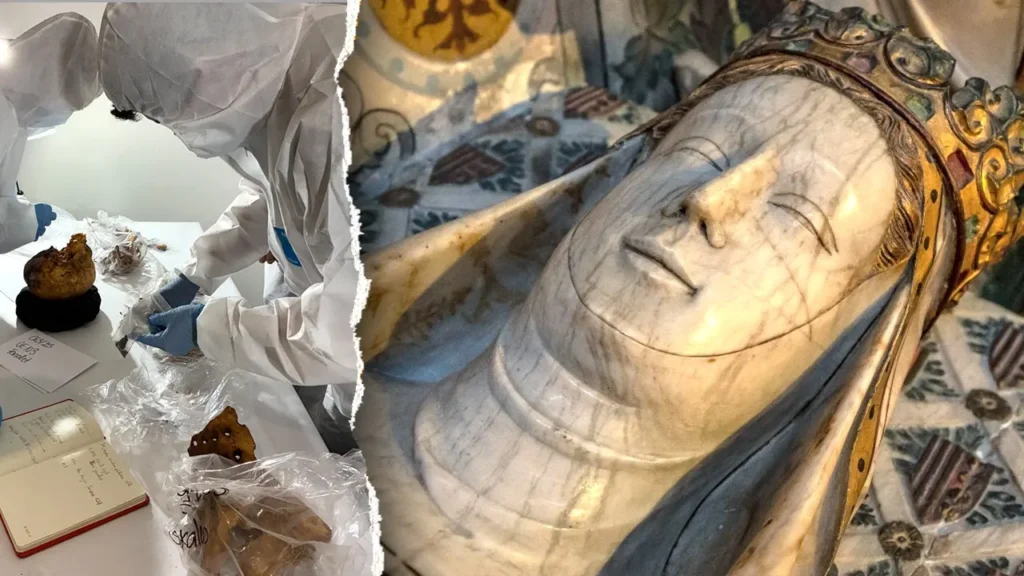
A multiyear archaeological investigation at the Royal Monastery of Santa Maria de Pedralbes in Barcelona has yielded unexpected findings about the identities of individuals buried in its medieval tombs. Researchers recently completed excavations at the nearly 700-year-old Gothic monastery, which was founded in 1326 by Queen Elisenda of Montcada, wife of King James II of Aragon, to mark the site’s approaching seven-century milestone.
The three-year study uncovered a striking discrepancy: numerous tombs did not contain the remains of the individuals historically believed to be interred within them. Officials stated that opening several tombs revealed “the identities historically assigned to them do not necessarily correspond with the remains found inside,” according to a statement translated from Catalan.
In one striking example, the tomb attributed to Artau de Foces contained no male remains whatsoever. Instead, researchers discovered the skeletal remains of five individuals—two adult women and three children—buried together in a single tomb.
The sheer volume of human remains recovered surprised researchers, according to Enric Puga, communications officer for the monastery. The eight tombs examined yielded the remains of 25 people, along with over 200 archaeological samples including funerary offerings and preserved botanical materials, far exceeding initial expectations.
The tomb of Francesca Saportella, the monastery’s second abbess, presented particularly complex findings. Archaeologists discovered at least nine individuals from different time periods, some bearing wounds from edged weapons, and a mummified female torso containing fetal remains—though Saportella herself was not identified among the recovered remains.
Evidence suggests tombs were reopened and altered repeatedly over centuries, accounting for the commingling of remains from different individuals and periods. Such disturbances provide valuable information about medieval funerary practices and cultural attitudes toward the dead, researchers noted.
Queen Elisenda’s own burial chamber, discovered in excellent condition, contained the monarch dressed in simple, modest garments despite her royal status. Skeletal analysis revealed health conditions typical of advanced age at the time of her death.
Botanists identified multiple funerary rites through analysis of preserved plants, including rosemary used in body preparation and symbolic floral offerings. Researchers also recovered numerous everyday objects from the period, many wrapped in bundles within the tombs.
DNA analysis is ongoing through 2027, with researchers having recovered approximately 6 percent of Queen Elisenda’s genome so far. Initial genetic findings have allowed preliminary assessments of certain pigmentation traits, according to project officials.
All research was conducted with approval from the monastery’s resident community of nuns. Per Queen Elisenda’s will, all studied remains will be returned to the monastery for reinterment in their original locations upon completion of the investigation.
Officials anticipate the full analysis of all samples will provide significant insights into 14th-century medieval Catalan society, particularly regarding the role and status of female-centered power structures during the period.
More Stories
Colombia backs Trump security push while limiting U.S. role in anti-gang operations
Modern Science Finally Supports & Strengthens Biblical Account of the Crucifixion of Jesus Christ
Federal Prosecutors Convene Special Grand Jury to Investigate D.C. Schools’ Attendance and Graduation Practices