


💛 A quick favor, if you've got a second.
We're really happy that you chose to read one of our stories and sincerely hope you'll stick around to read more. We took our paywall down — for now — but that won't last forever, and when the gate goes back up, we'd love for you to already be on the inside.
It's free. So please enter your email here and don't forget to like and follow us on all of your favorite Social Media platforms!
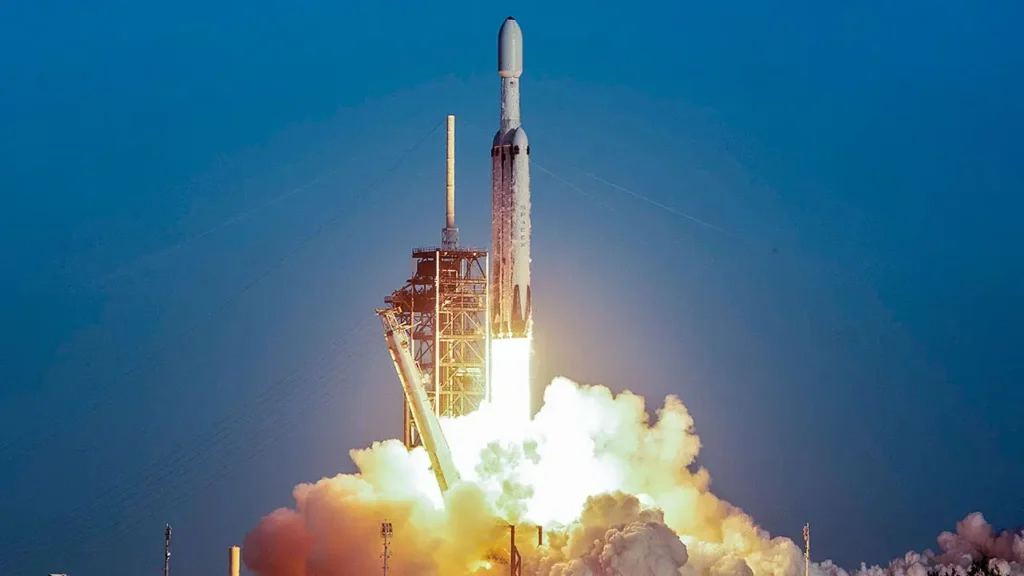
President Donald Trump made an unexpected call to NASA leadership Sunday to praise the agency’s successful deployment of the Nancy Grace Roman Space Telescope, which launched from Kennedy Space Center in Florida aboard a SpaceX Falcon Heavy rocket. NASA Administrator Jared Isaacman left the ongoing press conference to take the call, returning moments later with Trump on speakerphone to address assembled officials and media.
The telescope separated cleanly from its launch vehicle and began transmitting telemetry data as it commenced its nearly 1 million-mile journey toward space, officials confirmed. Trump inquired whether any technical concerns posed risks to the mission’s success, joking that he wanted assurance the spacecraft would not need retrieval. Isaacman assured the president that trajectory and performance metrics were exceeding expectations.
Trump credited Isaacman and the broader NASA team with maintaining American leadership in space exploration while referencing increased federal funding allocations. He compared the agency’s current trajectory to national achievements more broadly, asserting that American capabilities now represent the preeminent standard globally in both terrestrial and orbital domains.
Isaacman predicted the Roman telescope would achieve the iconic status of predecessors like Hubble and the James Webb Space Telescope during its operational tenure. Over coming months, the instrument will travel to Lagrange point L2, where it will transmit imagery and scientific data instrumental to advancing astronomical research and discovery.

More Stories
Trump Threatens FCC Action Against NBC’s Welker Over Endorsement Coverage
Looney Tunes’ ‘Coyote vs. Acme’ Debuts With $15.5 Million as ‘Spider-Man’ Holds Box Office Crown
Trump Backs Christian-Led Initiative for Expedited U.S. Entry for Canadian Jews Facing Antisemitism