

💛 A quick favor, if you've got a second.
We're really happy that you chose to read one of our stories and sincerely hope you'll stick around to read more. We took our paywall down — for now — but that won't last forever, and when the gate goes back up, we'd love for you to already be on the inside.
It's free. So please enter your email here and don't forget to like and follow us on all of your favorite Social Media platforms!
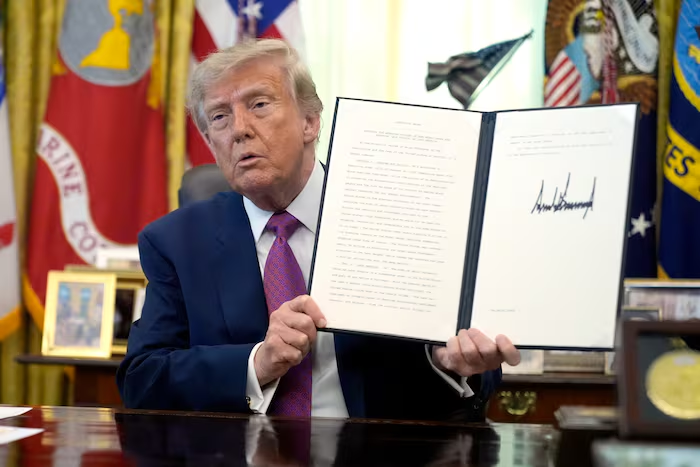
The president of the Seneca Nation has condemned President Donald Trump’s directive to rebrand Lake Ontario as “Lake America,” contending the action breaches a treaty signed more than 225 years ago and constitutes “blatant disrespect” toward the Indigenous communities who originally named the body of water. Seneca Nation President J. Conrad Seneca issued a statement Friday demanding that Trump rescind the order and preserve the lake’s existing name as a tribute to the Indigenous nations inhabiting the region on both sides of the U.S.-Canada border long before either country’s establishment.
Trump authorized the Interior Department this week to modify the lake’s designation in the U.S. geographic naming database as part of an escalating trade dispute with Canada, with the alteration scheduled for completion within 30 days. The Seneca leader asserted that the renaming violates the 1794 Treaty of Canandaigua, a peace agreement negotiated by President George Washington with the Haudenosaunee confederacy, of which the Seneca comprise one of six constituent nations, also known as the Iroquois Confederacy.
Lake Ontario derives its name from the Huron Indigenous people’s term “oniatarí:io,” translating to “lake of shining waters,” while the Canadian province of Ontario, established in 1867, adopted its designation from the lake. In traditional Seneca language, the lake is called “sga:nyodai:yoh,” meaning “beautiful lake,” according to Seneca’s statement.
Trump broached the renaming proposal amid intensifying trade tensions, following the breakdown of negotiations and subsequent imposition of tariffs on Canadian goods by the United States. Canada implemented retaliatory tariffs on American products and condemned the renaming initiative, with Prime Minister Mark Carney rejecting the move by highlighting the lake’s Indigenous heritage and noting the name predates both Canadian Confederation and the U.S. Declaration of Independence.

More Stories
Christa Pike Survives Botched Double Execution Attempt; Tennessee Halts Remaining 2026 Executions
Tennessee’s Lone Death Row Female is Scheduled for Execution Wednesday for 1995 Torture/Murder
Colombia backs Trump security push while limiting U.S. role in anti-gang operations