

💛 A quick favor, if you've got a second.
We're really happy that you chose to read one of our stories and sincerely hope you'll stick around to read more. We took our paywall down — for now — but that won't last forever, and when the gate goes back up, we'd love for you to already be on the inside.
It's free. So please enter your email here and don't forget to like and follow us on all of your favorite Social Media platforms!
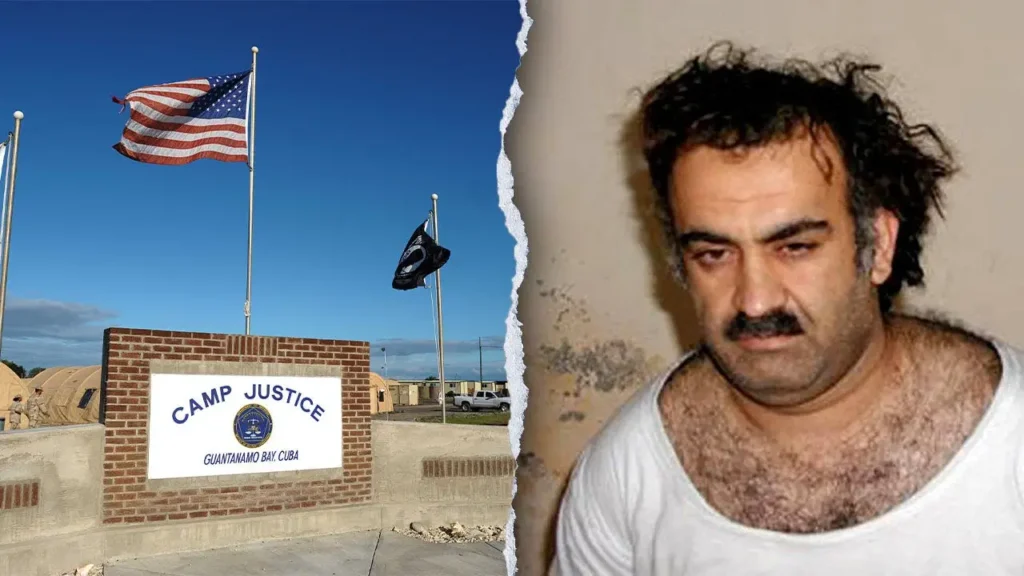
A military judge has scheduled the long-awaited trial of Khalid Sheikh Mohammed, the alleged architect of the September 11 attacks, for June 5, 2028, establishing firm deadlines for the proceeding that has stalled for more than two decades. Mohammed and three accused co-conspirators—Walid bin Attash, Mustafa al-Hawsawi, and Ammar al-Baluchi—have remained detained at the military facility in Guantánamo Bay, Cuba, as legal proceedings have dragged on through repeated pretrial disputes over evidence and other foundational matters.
Michael Lebowitz, a former prosecutor with the military commissions at Guantánamo, characterized the judicial system handling the case as fundamentally broken, describing it to Fox News Digital as “Frankenstein’s zombie court.” Lebowitz pointed to the costly logistical burdens of the process, in which judges, lawyers, witnesses, and court personnel must travel to Washington, D.C., for even routine hearings, creating what he termed “the traveling circus.”
Lebowitz attributed the extensive delays partly to judicial turnover, with more than 10 judges having presided over the case at various stages. This rotation has forced defense and prosecution teams to relitigate routine matters repeatedly, effectively grinding the legal process to a halt. He characterized the military commission structure as favoring defense attorneys, who operate with fewer constraints than they would face in federal court.
A significant unresolved question remains whether prosecutors will pursue capital punishment against the defendants. Even if death sentences are imposed, Lebowitz noted conviction reversal is highly probable, particularly given defense strategies that place the CIA’s post-9/11 detention practices on trial rather than focusing solely on the attacks themselves.
The case experienced a notable setback in 2024 when Mohammed, bin Attash, and al-Hawsawi agreed to plead guilty in exchange for life sentences without the death penalty. Although some 9/11 families supported the arrangement, others opposed it vehemently, prompting the Biden administration to withdraw the plea agreement and restart litigation.
Mohammed, a Pakistani national, faces allegations that he orchestrated the hijackings of four commercial aircraft on September 11, 2001. Two planes struck the World Trade Center in New York City, another hit the Pentagon, and a fourth crashed in Pennsylvania after passengers attempted to regain control from hijackers.

More Stories
Federal voting arrest in New Jersey adds new pressure point in Sherrill-Trump standoff
Colombia backs Trump security push while limiting U.S. role in anti-gang operations
Packers Running Back Josh Jacobs Placed on NFL Commissioner’s Exempt List Following Domestic Arrest