


💛 A quick favor, if you've got a second.
We're really happy that you chose to read one of our stories and sincerely hope you'll stick around to read more. We took our paywall down — for now — but that won't last forever, and when the gate goes back up, we'd love for you to already be on the inside.
It's free. So please enter your email here and don't forget to like and follow us on all of your favorite Social Media platforms!
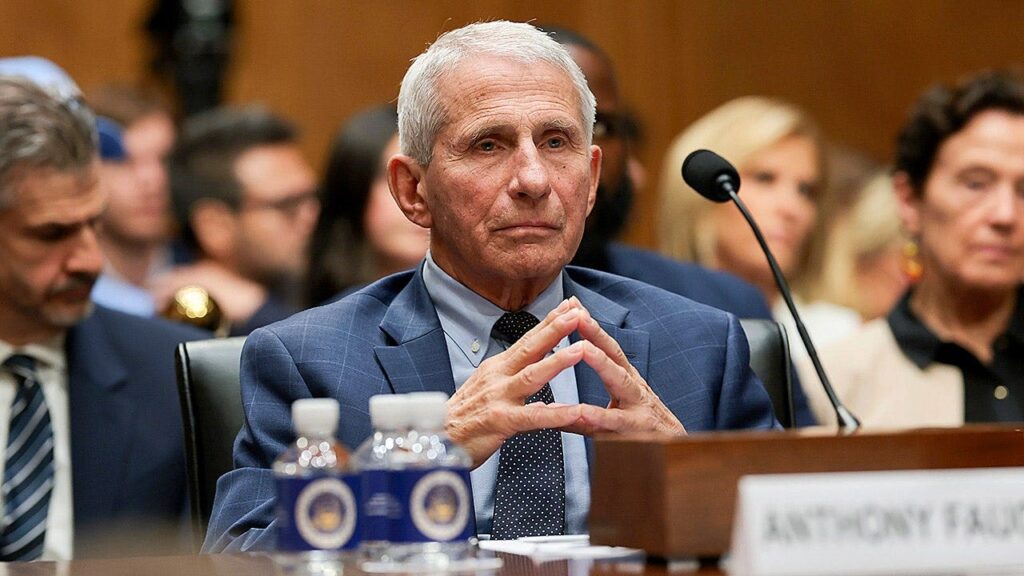
Senator Rand Paul’s release of private communications from Anthony Fauci, former director of the National Institute of Allergy and Infectious Diseases, has renewed scrutiny of pandemic-era public health guidance. The newly surfaced exchanges have intensified debate over the consistency between statements made by federal health officials and their private assessments of virus prevention measures.
Michael Osterholm, an epidemiologist and director of the Center for Infectious Disease Research and Policy at the University of Minnesota, sent a text message in August 2021 to four individuals identified only by first names: Jeff Zients, the Biden administration’s COVID response coordinator; Vivek Murthy, the Surgeon General; Anthony Fauci; and Rochelle Walensky, the CDC director. The message began by noting the sender was “avoiding any FOIA issues,” raising questions about transparency in communications among top officials.
In the text, Osterholm stated that cloth face coverings provided “limited benefit” in reducing transmission risk from aerosol-borne virus particles. He referenced guidance from the American Conference of Governmental Industrial Hygienists indicating that only N95 masks provided meaningful protection against aerosol transmission. Osterholm emphasized that the CDC’s supporting research on cloth mask effectiveness had not withstood scientific scrutiny.
Osterholm further noted that the CDC had been slow to acknowledge the role aerosols played in viral transmission and that the agency’s research used to justify mask recommendations lacked scientific credibility. He stated that studies cited by the CDC to support cloth mask effectiveness “stand up to scientific scrutiny” according to expert review processes established during the early pandemic period.
The epidemiologist expressed concern that government messaging had placed excessive emphasis on masking while providing inadequate guidance to the public about what constitutes effective protective equipment. His communications suggest that senior health officials possessed assessments of mask effectiveness that differed from the public health recommendations they promoted during 2020 and 2021.

More Stories
Federal voting arrest in New Jersey adds new pressure point in Sherrill-Trump standoff
Colombia backs Trump security push while limiting U.S. role in anti-gang operations
Former NFL cheerleader and ex-aide face off in close Rhode Island GOP primary