


💛 A quick favor, if you've got a second.
We're really happy that you chose to read one of our stories and sincerely hope you'll stick around to read more. We took our paywall down — for now — but that won't last forever, and when the gate goes back up, we'd love for you to already be on the inside.
It's free. So please enter your email here and don't forget to like and follow us on all of your favorite Social Media platforms!
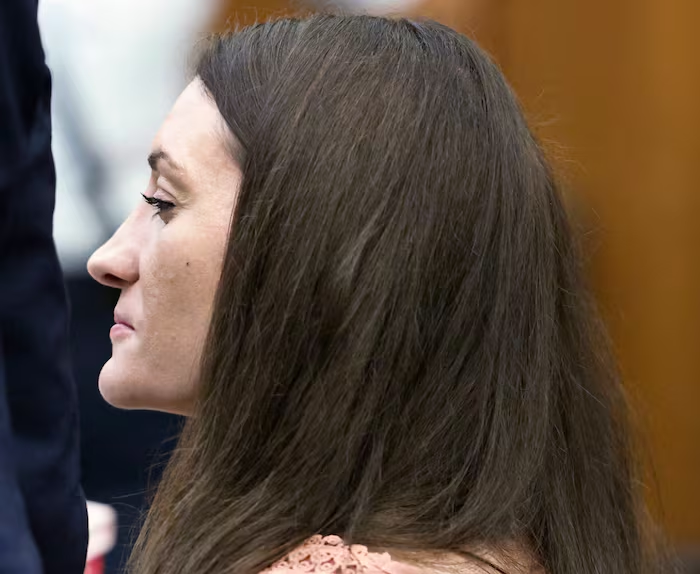
A forensic psychologist has concluded that Lindsay Clancy suffers from bipolar disorder and was grappling with anxiety, depression, insomnia and suicidal ideation in the period leading up to the deaths of her three children, according to testimony delivered Monday during her murder trial. Kirk Heilbrun’s assessment diverges sharply from conclusions reached by a forensic psychiatrist who testified Friday, who stated Clancy neither exhibited bipolar disorder nor psychotic symptoms.
Both Heilbrun and Dr. Avram Mack presented testimony as rebuttal witnesses on behalf of prosecutors in the case, which hinges fundamentally on Clancy’s mental condition at the time she strangled her three young children before jumping from a second-floor window in January 2023. Closing arguments are anticipated to commence later this week.
Clancy’s defense team, led by attorney Kevin Reddington, has not contested that she caused her children’s deaths but argues she should not face criminal liability due to postpartum psychosis, a rare psychiatric condition associated with the physiological and psychological upheaval following childbirth. The defense also contends she had bipolar disorder and that prescribed antidepressants exacerbated her condition.
Prosecutors have alleged that Clancy deliberately orchestrated the killings and manipulated circumstances to remove her husband from the home by requesting he fetch medicine for one child and dinner supplies for the household.
Heilbrun acknowledged difficulty establishing a definitive bipolar 2 diagnosis, citing the extensive array of documented diagnoses and reported symptoms in Clancy’s medical history. He noted that while Clancy described feeling exceptionally well following the births of her children—describing sensations of euphoria and enhanced closeness to family members—these episodes did not align with clinical presentations of manic episodes.
The psychologist corroborated earlier testimony regarding Clancy’s sleep disturbances, adverse medication reactions, workplace anxiety and intrusive thoughts about self-harm. He emphasized, however, that during her approximately two-week psychiatric hospitalization preceding the deaths, Clancy reported neither hallucinations nor suicidal ideation, with her primary complaint being insomnia.
Clancy, 36, maintains a not guilty plea to three counts of murder in connection with the deaths of Callan, Dawson and Cora Clancy, children ranging in age from 8 months to 5 years.
Expert testimony from both sides has presented sharply divergent interpretations regarding whether Clancy was experiencing postpartum psychosis at the time of the incident. Following the defense conclusion Friday, prosecutors initiated their rebuttal phase, with Mack concurring that Clancy experienced a major depressive episode while asserting he found insufficient evidence of mania, hypomania or psychotic features to sustain a bipolar diagnosis.

More Stories
Federal voting arrest in New Jersey adds new pressure point in Sherrill-Trump standoff
Packers Running Back Josh Jacobs Placed on NFL Commissioner’s Exempt List Following Domestic Arrest
Federal Prosecutors Convene Special Grand Jury to Investigate D.C. Schools’ Attendance and Graduation Practices