


💛 A quick favor, if you've got a second.
We're really happy that you chose to read one of our stories and sincerely hope you'll stick around to read more. We took our paywall down — for now — but that won't last forever, and when the gate goes back up, we'd love for you to already be on the inside.
It's free. So please enter your email here and don't forget to like and follow us on all of your favorite Social Media platforms!
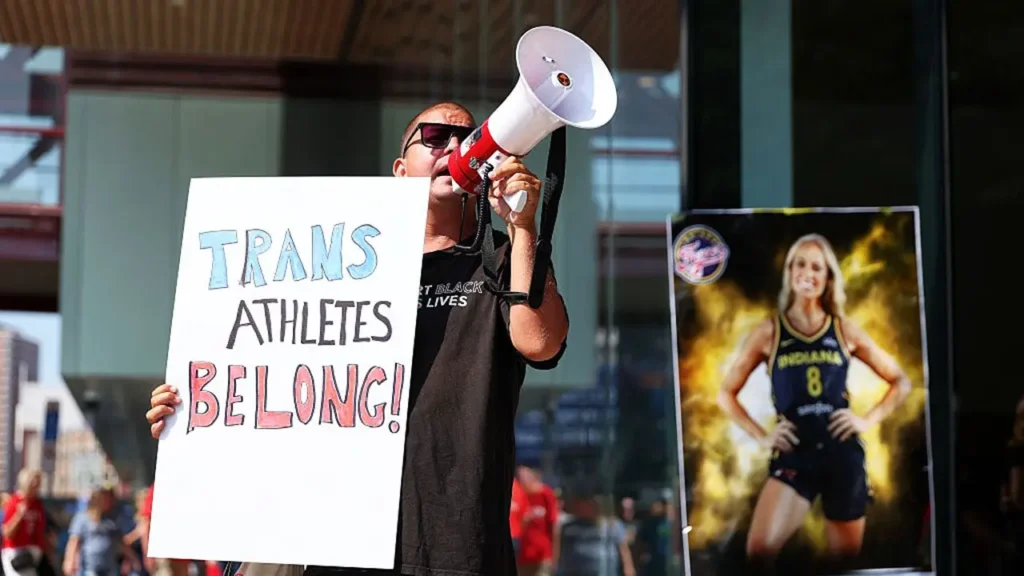
The WNBA confronted a direct challenge to its competitive framework after Chicago Sky guard Natasha Cloud posted a social media message affirming transgender people Sunday night, declaring they “belong” and are “loved” and “perfect as you are.” Her statement followed a confrontation with activist Enes Kanter Freedom during the Sky’s 113-90 loss to the Indiana Fever at Wintrust Arena, where Freedom has pressed the league on whether males may compete in a women’s professional basketball league.
Cloud’s response addressed a question observers say nobody posed. Kanter Freedom and Indiana Fever guard Sophie Cunningham have specifically questioned whether biological males should participate in women’s sports—a narrower issue than whether transgender individuals deserve respect and inclusion in society broadly. The distinction underscores a pattern, according to critics, where defenders of current eligibility structures find themselves debating inclusion rather than athletic eligibility criteria.
The New York Liberty escalated the messaging Saturday when its Barclays Center scoreboard displayed welcoming messages to transgender fans: “Welcome Trans Liberty fans! You are loved and you belong!” and “Hey trans fans! Glad you’re here! Go Liberty!” Minnesota Lynx coach Cheryl Reeve wore a “Trans Kids Belong” shirt following Cunningham’s public statements. These gestures, observers contend, deploy slogans rather than addressing the substantive policy question at hand.
Kanter Freedom has announced intentions to enter the 2027 WNBA Draft, as has former NBA player Royce White, positioning their declarations as demonstrations of the league’s vague eligibility language. The WNBA’s publicly stated rules permit only players who are women to compete, yet the league has declined to formally define that term. Critics argue this definitional gap represents the core issue requiring resolution.
The debate reflects a broader pattern in sports discourse, according to observers. When figures like tennis legend Martina Navratilova or NCAA swimmer Riley Gaines advocate reserving women’s categories for females, opponents characterize them as bigoted or transphobic rather than engaging their substantive arguments. This rhetorical approach, critics suggest, allows organizations to sidestep explaining why males should be eligible for women’s competition.
Proponents of current eligibility standards maintain that women’s sports exist specifically because biological sex affects athletic performance, establishing the rationale for separate male and female divisions in the first place. They distinguish between welcoming transgender individuals as spectators and participants in society from determining eligibility criteria for competitive athletic categories. The WNBA’s response through messaging and statements, they argue, avoids the foundational question entirely.
The league has not publicly released formal eligibility definitions despite weeks of internal discussions, leaving the policy question unresolved. Whether the WNBA will ultimately codify its definition of “woman” for competitive purposes remains unclear as Kanter Freedom and White prepare draft applications.

More Stories
Indiana coach Curt Cignetti tells restless Hoosiers fans not to gripe over 38-0 win
Colombia backs Trump security push while limiting U.S. role in anti-gang operations
Chicago Mayor Issues Executive Order Requiring Contractor Diversity Disclosures and ICE Ties Reporting