


💛 A quick favor, if you've got a second.
We're really happy that you chose to read one of our stories and sincerely hope you'll stick around to read more. We took our paywall down — for now — but that won't last forever, and when the gate goes back up, we'd love for you to already be on the inside.
It's free. So please enter your email here and don't forget to like and follow us on all of your favorite Social Media platforms!
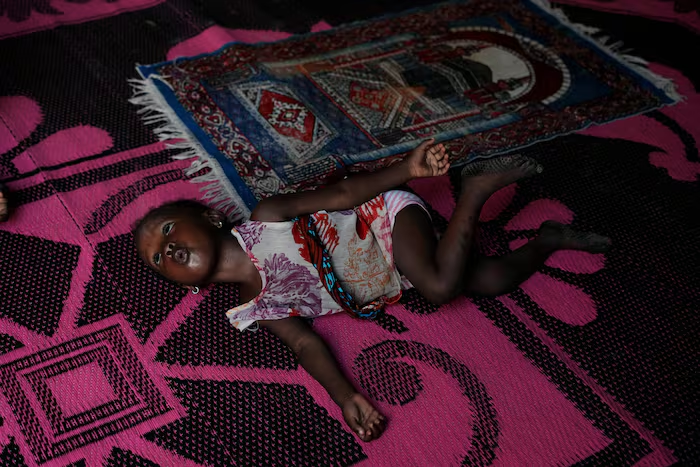
Economic turmoil stemming from the Iran war is driving a surge in child malnutrition across northern Nigeria, where families already struggling with poverty now face sharply elevated prices for food and basic goods. The deteriorating conditions have prompted international alarm, with health workers documenting increasing cases of children relapsing into malnutrition after previous treatment.
Maryam Aminu’s 18-month-old daughter was diagnosed with malnutrition for a second time in April, a development the mother attributed directly to her husband’s job loss as a taxi driver. Fuel prices jumped from 800 naira per liter in February to 1,400 naira by April following Middle East instability, decimating household budgets throughout the region and making consistent nutrition impossible for impoverished families.
The United Nations children’s agency UNICEF warned that if the Middle East conflict persists, as many as 23.4 million additional children could fall into monetary poverty by year’s end, with at least 80 percent located in Africa and Asia. The organization’s executive director, Catherine Russell, emphasized that vulnerable populations far removed from the conflict are bearing disproportionate costs as global fuel shocks ripple outward.
Northern Nigeria, already destabilized by insurgencies and bandit violence, now confronts compounded hardship as the war disrupts fertilizer supplies and inflates agricultural input costs. Analysts note the distant conflict offers little respite for communities dependent on farming and already struggling to access productive land amid security threats.
A World Bank report released this week indicated that 139 million Nigerians currently live in poverty or remain vulnerable to it, a figure exacerbated by President Bola Tinubu’s economic reforms that removed fuel subsidies three years ago and devalued the national currency. Hospital records in Sokoto show approximately 40 previously treated children are undergoing malnutrition care again since February, signaling a troubling pattern of deterioration rather than improvement.

More Stories
Christa Pike Survives Botched Double Execution Attempt; Tennessee Halts Remaining 2026 Executions
Tennessee’s Lone Death Row Female is Scheduled for Execution Wednesday for 1995 Torture/Murder
Colombia backs Trump security push while limiting U.S. role in anti-gang operations