


💛 A quick favor, if you've got a second.
We're really happy that you chose to read one of our stories and sincerely hope you'll stick around to read more. We took our paywall down — for now — but that won't last forever, and when the gate goes back up, we'd love for you to already be on the inside.
It's free. So please enter your email here and don't forget to like and follow us on all of your favorite Social Media platforms!
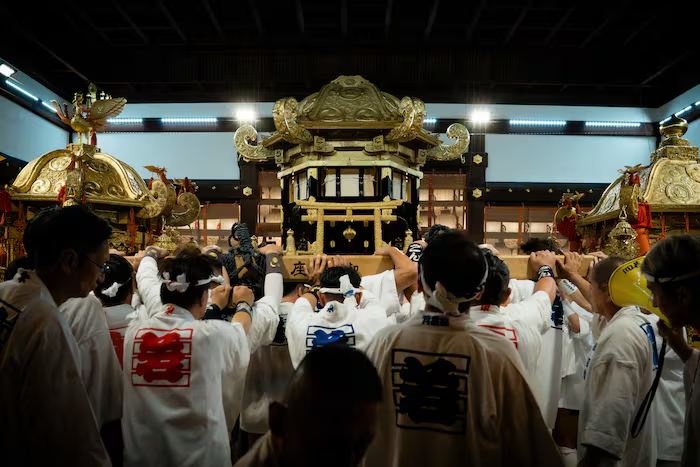
The Gion Matsuri festival in Kyoto draws thousands of visitors each July to witness processions featuring massive floats that can exceed 12 tons, accompanied by traditional music, dance and song. Despite its contemporary appeal as a public spectacle, the celebration remains rooted in religious significance rather than entertainment, according to scholars of Japanese religion. The festival originated in the late 9th century as a ritual to ward off epidemics and appease malevolent spirits.
Kyoto’s Yasaka Shrine serves as the spiritual center of the festival, though its religious history reflects the complex interplay between Shinto and Buddhism in Japan. The sanctuary was a Buddhist temple until approximately 150 years ago, when Japan’s government formally separated the two traditions during the Meiji era in 1868. The separation brought Shinto shrines under state control while establishing the emperor as a central figure in the restructured religious order.
Modern participants describe profound spiritual experiences during their involvement in the festivities. Katsushi Horikawa, who rides atop the festival floats, reports feeling closer to the gods during the procession, particularly while positioned on the structures. Atsushi Matono, responsible for erecting the shingi—a sacred tree placed atop floats believed to attract deities—similarly describes carrying out his duties with reverence and awareness of divine presence.
The festival continues to unite neighborhoods through shared preparation and celebration, with different communities investing months in crafting their floats with meticulous care. A selected boy serves as a sacred messenger to the gods during the parade, never allowing his feet to touch the ground while seated on one of the floats. These practices preserve centuries of Japanese religious and cultural traditions within contemporary civic celebrations.

More Stories
Christa Pike Survives Botched Double Execution Attempt; Tennessee Halts Remaining 2026 Executions
Tennessee’s Lone Death Row Female is Scheduled for Execution Wednesday for 1995 Torture/Murder
Colombia backs Trump security push while limiting U.S. role in anti-gang operations