


💛 A quick favor, if you've got a second.
We're really happy that you chose to read one of our stories and sincerely hope you'll stick around to read more. We took our paywall down — for now — but that won't last forever, and when the gate goes back up, we'd love for you to already be on the inside.
It's free. So please enter your email here and don't forget to like and follow us on all of your favorite Social Media platforms!
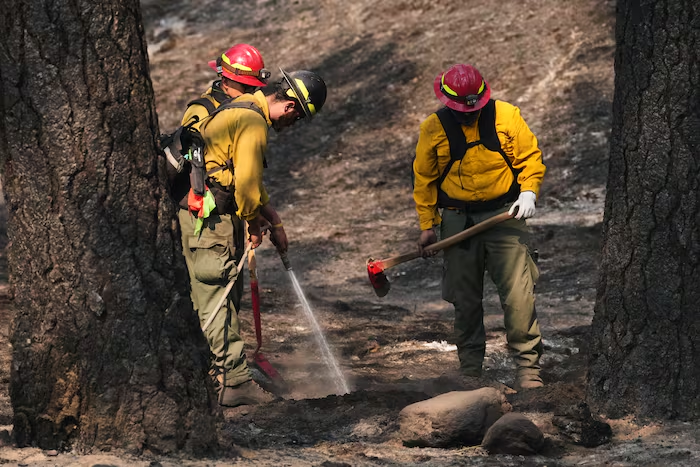
Fire and medical authorities across the Western United States have begun cautioning wildland firefighters against using glutathione, a supplement administered via intravenous injection or nebulizer that lacks proven safety and efficacy standards. The International Association of Firefighters, which represents approximately 360,000 first responders, issued a formal safety alert last week noting that glutathione remains unapproved by the FDA and cautioning consumers about unsubstantiated health claims surrounding the product.
At least two pharmacies recalled the supplement in August following laboratory tests that revealed bacterial contamination, with reports indicating some users experienced fever, chills, severe headaches and additional symptoms. Experts warn that contamination during manufacturing could expose firefighters to serious illness, and inhaling the nebulized compound may constrict airways in individuals with asthma or chronic lung disease.
The Integrative Health Action Network, an organization staffed by licensed naturopathic doctors, offered the supplement to firefighters battling recent blazes near Spokane, Washington, and previously during the January 2025 Los Angeles County wildfires. While some firefighters report subjective improvements in symptoms following smoke exposure, physicians and safety officials stress that anecdotal accounts do not constitute clinical evidence of safety or effectiveness.
Sean DeCrane, assistant to the general president for health and safety at the IAFF, emphasized that medical treatments marketed to firefighters require rigorous evaluation before deployment. The organization has received reports of firefighters experiencing adverse effects or worsening symptoms after treatment, prompting calls for evidence-based protocols.
Dr. Cora Sack, a pulmonary specialist at the University of Washington School of Medicine, acknowledged the biological plausibility of antioxidants addressing oxidative stress from wildfire smoke but stressed the absence of clinical evidence supporting glutathione’s use. Contaminated injectable products carry risks including fever, hypotension, inflammatory reactions, anaphylactic shock and death, according to pharmacy recall documentation.
In response, Jen Riegle, a naturopathic doctor and co-founder of The Integrative Health Action Network, stated the organization recognizes the necessity for peer-reviewed research and is pursuing partnerships to study glutathione’s potential effects on chemical exposure in firefighting personnel. The California Board of Pharmacy reversed regulations in 2025 that would have restricted supplement access after facing pressure from firefighters advocating for continued availability.

More Stories
Forest Service Proposes Steep Fee Increases at Lake Tahoe Recreation Sites
New York Health Officials Sound Alarm Over Rising Measles Cases as School Year Approaches
Son Discovers Father Missing After Himalayan Disaster in Nepal-Tibet Border Region