


💛 A quick favor, if you've got a second.
We're really happy that you chose to read one of our stories and sincerely hope you'll stick around to read more. We took our paywall down — for now — but that won't last forever, and when the gate goes back up, we'd love for you to already be on the inside.
It's free. So please enter your email here and don't forget to like and follow us on all of your favorite Social Media platforms!
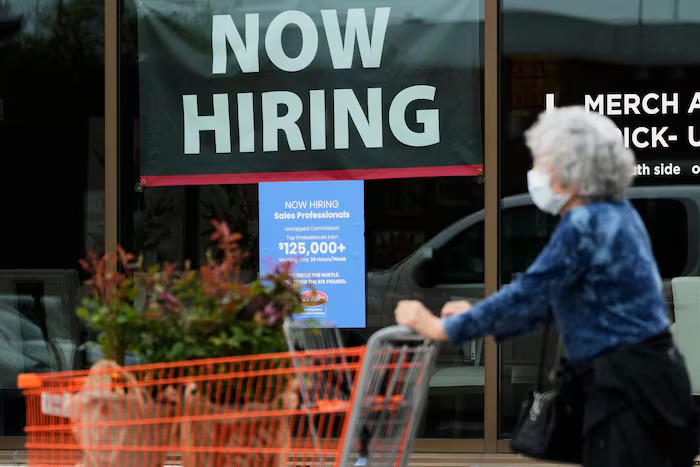
The number of Americans filing for unemployment insurance declined last week to 206,000, down from a revised 212,000 the previous week, according to Labor Department data released Thursday. The decline represents another indication that employer layoff activity remains subdued and that job security remains broadly intact across the nation.
Initial jobless claims serve as a key economic barometer for labor market conditions and potential hiring patterns ahead. Over the past 12 months, claims have stayed within a historically narrow band of approximately 200,000 to 230,000 per week, reflecting the relative stability of the employment landscape.
The U.S. unemployment rate stands at 4.1%, supported partly by economic resilience despite elevated energy costs from international tensions. However, labor force participation has contracted significantly, with more than 1.3 million workers departing the job market over the past year due to President Donald Trump’s immigration enforcement initiatives and the ongoing exodus of retiring Baby Boomers.
Employers face a paradoxical situation in the current environment. Companies maintain strict hiring discipline while simultaneously resisting workforce reductions, a dynamic economists have dubbed the “no hire, no fire” job market. This reluctance to expand payrolls stems from memories of labor shortages following pandemic-era disruptions.
Monthly job creation has averaged 61,000 positions so far in 2025, a marked improvement from last year’s average of 9,700—the slowest hiring pace outside recession since 2002. However, gains remain far below the 166,000 average recorded in 2023 and 2024, and substantially lower than the 491,000 monthly jobs added during the 2021-2022 post-pandemic hiring surge.
Persistent headwinds continue dampening employer expansion plans. Elevated interest rates and unpredictable trade policies under the Trump administration have discouraged companies from committing to significant workforce additions during the current year.

More Stories
Colombia backs Trump security push while limiting U.S. role in anti-gang operations
Chicago Mayor Issues Executive Order Requiring Contractor Diversity Disclosures and ICE Ties Reporting
University of Pennsylvania Climate Scientist Demands Supreme Court Packing Pledge From Democratic Candidates