


💛 A quick favor, if you've got a second.
We're really happy that you chose to read one of our stories and sincerely hope you'll stick around to read more. We took our paywall down — for now — but that won't last forever, and when the gate goes back up, we'd love for you to already be on the inside.
It's free. So please enter your email here and don't forget to like and follow us on all of your favorite Social Media platforms!
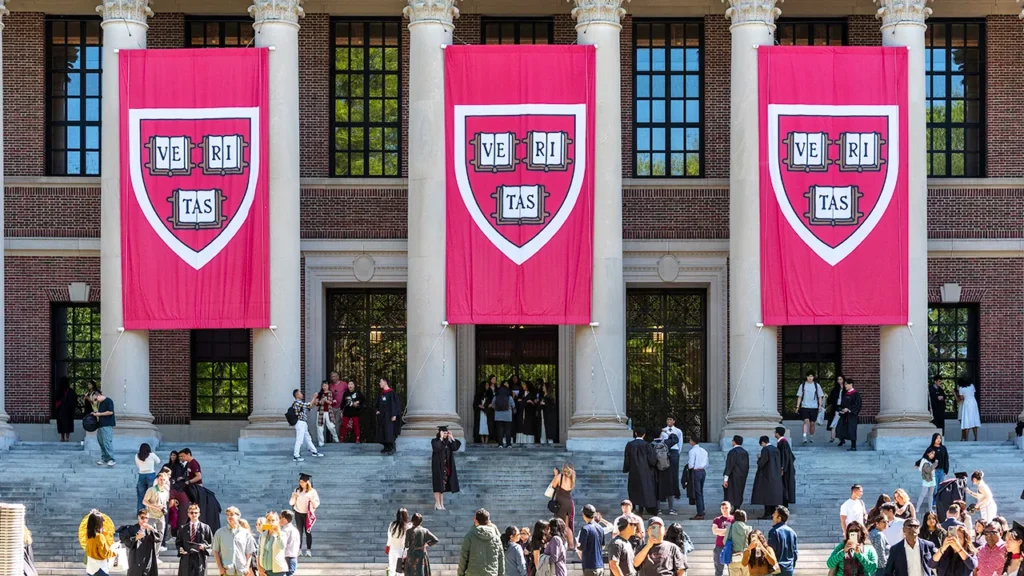
The Pentagon issued a directive Monday compelling 30 U.S. universities to examine their financial and research relationships with foreign entities, with institutions facing the loss of federal research dollars if they fail to comply. The schools must evaluate identified international collaborations and determine potential risks involving “sensitive or export-controlled research,” according to officials.
Emil Michael, Under Secretary of War for Research and Engineering, emphasized the department’s strict stance on safeguarding national interests. “The Department of War has zero tolerance for academic partnerships that compromise our national security,” Michael said, adding that institutions relying on American taxpayer funding must maintain rigorous research security protocols.
The 30 affected institutions include Harvard University, MIT, UCLA, UC Berkeley, New York University, Penn State, Cornell University, Duke University, and Johns Hopkins University, among others. Schools must implement strategies to address potential national security violations and terminate any “problematic partnerships” if required, with findings due to the War Department by August 31.
The audits target foreign entities identified under Section 1286 of the 2019 National Defense Authorization Act, a roster encompassing 130 academic and research institutions in China, Russia, and Iran engaged in activities increasing the risk of U.S.-funded research misappropriation.
Harvard has drawn particular scrutiny, with reports indicating the university failed to adequately protect research collaborations with Chinese institutions. The school co-authored over 140 publications with researchers from Chinese universities and received more than $600 million from China through federal foreign-gift disclosure mechanisms—exceeding all other American universities, according to Education Department data cited by the House Select Committee on the Chinese Communist Party.
The action reflects broader congressional concerns about Chinese access to American research. In July, Reuters reported that China has utilized outputs from U.S. artificial intelligence models to advance its military capabilities.
Growing unease over China-linked academic centers has prompted American universities to close their Confucius Institutes in recent years, citing concerns about Beijing’s funding influence. Lawmakers have also flagged tech entrepreneur Neville Roy Singham’s $278 million network for allegedly disseminating Chinese Communist Party propaganda domestically.
Confucius Institutes, which officially aim to teach Chinese language and culture, have contracted dramatically at American campuses. A 2023 watchdog report documented their decline from approximately 100 locations to fewer than five within four years, driven primarily by federal funding restrictions and intensified government pressure.
More Stories
Federal voting arrest in New Jersey adds new pressure point in Sherrill-Trump standoff
Colombia backs Trump security push while limiting U.S. role in anti-gang operations
Former NFL cheerleader and ex-aide face off in close Rhode Island GOP primary