


💛 A quick favor, if you've got a second.
We're really happy that you chose to read one of our stories and sincerely hope you'll stick around to read more. We took our paywall down — for now — but that won't last forever, and when the gate goes back up, we'd love for you to already be on the inside.
It's free. So please enter your email here and don't forget to like and follow us on all of your favorite Social Media platforms!
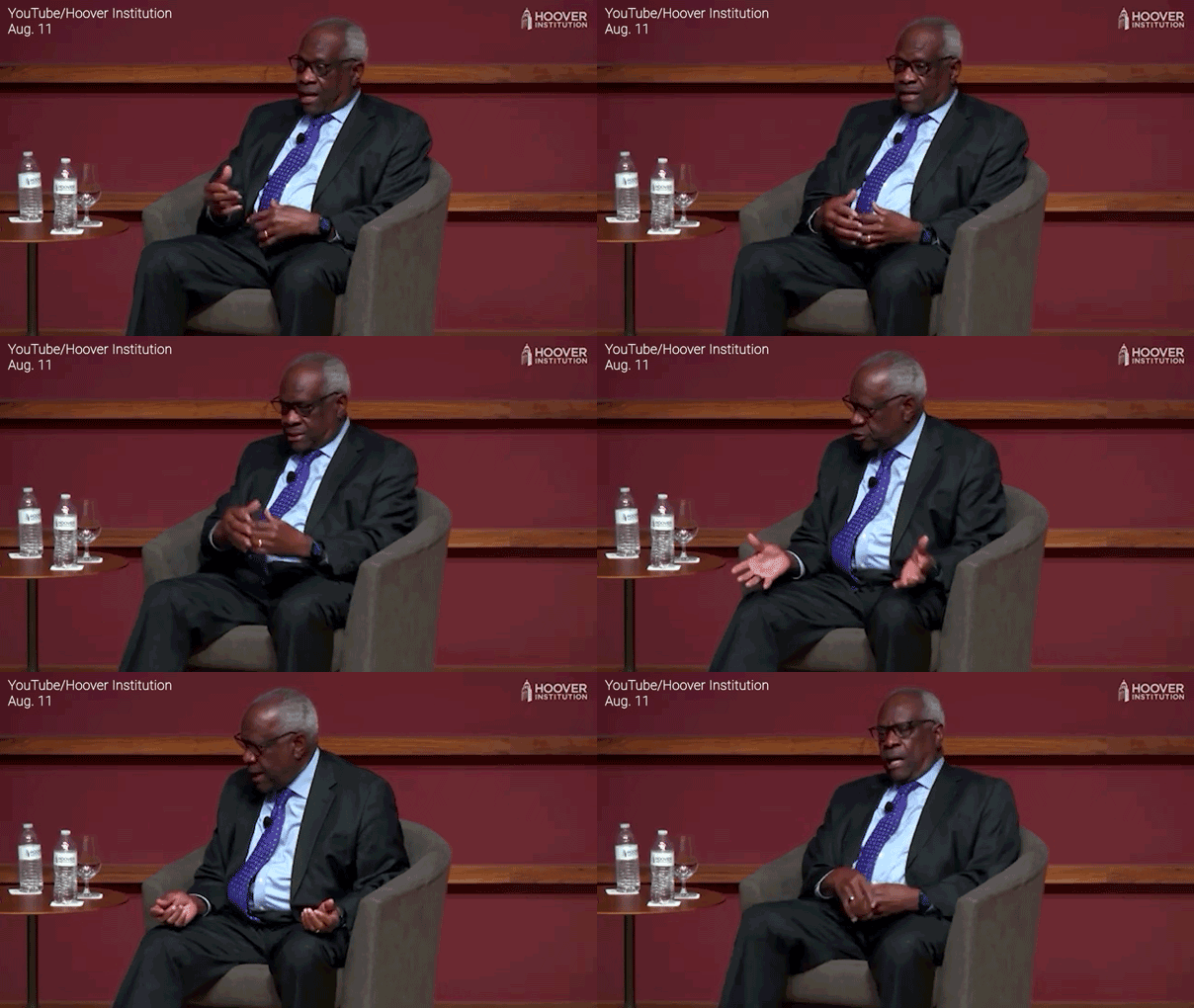
Supreme Court Justice Clarence Thomas pushed back forcefully against critics who have challenged his racial identity based on his positions on race and politics. During a discussion at the Hoover Institution with Peter Robinson, Thomas dismissed such attacks as illogical, declaring “how stupid is that?” while gesturing to himself.
Thomas traced his current worldview to the influence of conservative economist Thomas Sowell, also Black, whose work transformed his thinking during law school and provided intellectual foundation for views he had already begun developing independently. Reading Sowell’s “Race and Economics,” Thomas recalled, felt “literally like a drink of water” after years of isolation over his unconventional beliefs among peers.
As a Yale Law School student, Thomas said he initially resisted prevailing orthodoxies on issues like school busing, questioning why Black families would support sending children to distant, unfamiliar schools. When he voiced these concerns, peers responded by suggesting his views were incompatible with his race, a dynamic he characterized as pressure to conform to predetermined political positions.
Thomas argued that Black political leaders and ordinary Black Americans often held different positions on key policy questions, yet messaging from media and politicians with “the loudest voices” discouraged independent thought. He described this dynamic as creating a false equivalence between racial identity and specific political beliefs, a burden he said Sowell helped him overcome by modeling intellectual independence.
Thomas emphasized that Sowell’s greatest lesson was encouraging him to think for himself without dictating what conclusions he should reach. He criticized what he termed an “overwhelming pressure” on Black Americans to embrace prevailing notions, describing it as inherently limiting to authentic self-determination.

More Stories
Federal voting arrest in New Jersey adds new pressure point in Sherrill-Trump standoff
Colombia backs Trump security push while limiting U.S. role in anti-gang operations
Former NFL cheerleader and ex-aide face off in close Rhode Island GOP primary