


💛 A quick favor, if you've got a second.
We're really happy that you chose to read one of our stories and sincerely hope you'll stick around to read more. We took our paywall down — for now — but that won't last forever, and when the gate goes back up, we'd love for you to already be on the inside.
It's free. So please enter your email here and don't forget to like and follow us on all of your favorite Social Media platforms!
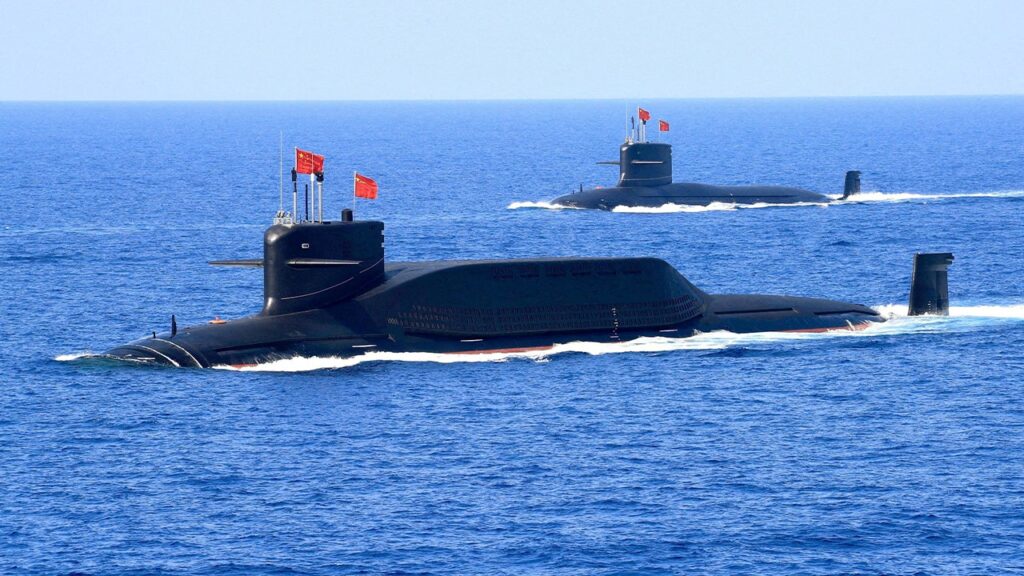
U.S. military leaders are sounding alarms over an intensifying military partnership between Russia and China that threatens American defense capabilities in the Indo-Pacific. Rear Adm. Mark Montgomery told Fox News Digital that Moscow may be supplying Beijing with technology to reduce submarine noise signatures, potentially undermining a critical U.S. naval advantage in potential conflicts over Taiwan’s status.
Submarine-quieting technology reduces the acoustic footprint of vessels, making detection and tracking significantly more difficult. Montgomery, co-author of “Axis of Aggressors,” warned that such a transfer would weaken America’s long-standing edge in undersea warfare—a domain where the U.S. Navy has maintained technological superiority that China has struggled to match despite rapid modernization efforts.
Adm. Samuel Paparo, commander of U.S. Indo-Pacific Command, corroborated these concerns before the Senate Armed Services Committee in April 2025, stating that China was receiving “potentially submarine quieting help” from Russia. Paparo previously characterized the Moscow-Beijing relationship as a “transactional symbiosis” in November 2024.
China has substantially supported Russia’s military efforts during its war in Ukraine, providing approximately 70 percent of machine tools and 90 percent of legacy chips used to rebuild Moscow’s defense industrial base. The Chinese government has also increased foreign direct investment and trade with Russia while supplying components for ballistic, cruise and hypersonic missiles.
In return, Russia has become increasingly willing to share military technologies previously withheld from Beijing. A 2025 RUSI investigation revealed that Moscow agreed to equip and train a Chinese airborne battalion while transferring technology to develop similar capabilities. An October 2024 Treasury Department report documented Russian coordination of Garpiya attack drone production in Chinese factories using domestically-made engines and components.
The Chinese Embassy declined to confirm receipt of submarine-quieting technology, stating instead that military cooperation between the nations “consistently adheres to the principles of non-alliance, non-confrontation, and non-targeting of third parties.” The embassy characterized Taiwan as an internal Chinese matter and called for objective assessment of the bilateral military relationship.
For American defense planners, the implications center on Taiwan’s strategic importance. U.S. submarines form the backbone of Indo-Pacific conflict contingency planning, and improved Chinese submarine capabilities could significantly complicate America’s ability to monitor, deter and counter People’s Liberation Army operations in waters surrounding the island as Russia’s invasion of Ukraine enters its fifth year.


More Stories
Dem House hopeful endorsed by activist who said ‘evil Jews run the world’
Colombia backs Trump security push while limiting U.S. role in anti-gang operations
Chicago Mayor Issues Executive Order Requiring Contractor Diversity Disclosures and ICE Ties Reporting