

💛 A quick favor, if you've got a second.
We're really happy that you chose to read one of our stories and sincerely hope you'll stick around to read more. We took our paywall down — for now — but that won't last forever, and when the gate goes back up, we'd love for you to already be on the inside.
It's free. So please enter your email here and don't forget to like and follow us on all of your favorite Social Media platforms!
As concerns grow about artificial intelligence displacing American workers, some advocates have proposed universal basic income as a solution. The Labor Secretary counters that this approach fundamentally misunderstands the economic opportunity ahead, characterizing it as a surrender that undermines the dignity of work rather than genuine assistance.
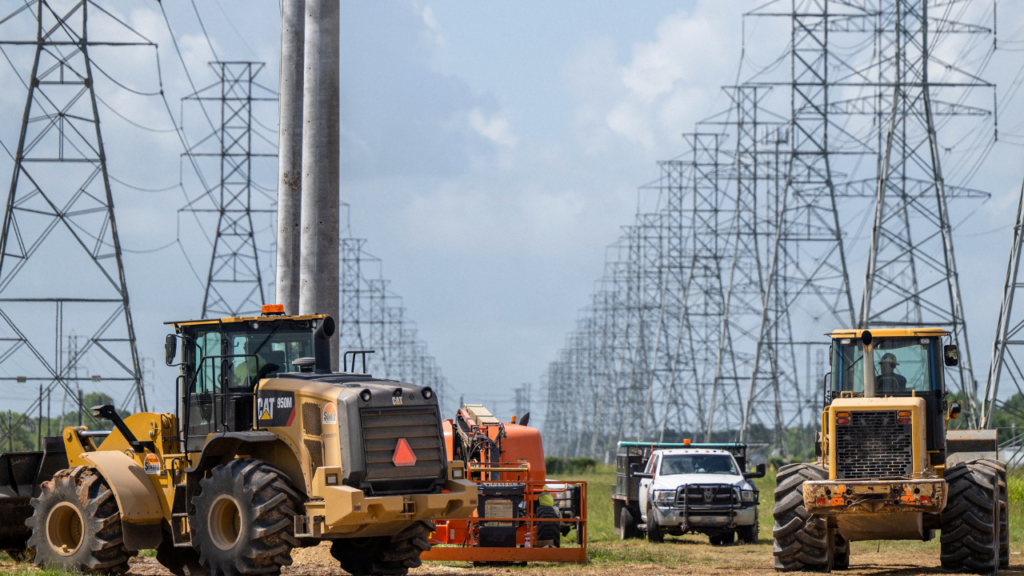
The real choice facing the nation is whether to address technological disruption by paying workers to remain idle or by mobilizing them to build critical infrastructure, according to the Labor Secretary. The alternative being pursued involves constructing data centers, power plants, and supply chains necessary to support the AI economy—projects that require skilled tradespeople earning substantial wages without requiring college degrees or student debt.
Major private sector investments underscore the scale of this opportunity. In January, the White House announced Stargate, a $500 billion private investment in AI infrastructure nationwide, with numerous additional projects already in development. Individual large facilities can employ up to 1,500 skilled tradespeople at peak construction, many earning six-figure incomes including overtime compensation.
Union electricians, pipefitters, ironworkers, HVAC technicians, and operating engineers form the workforce backbone for these projects. Electrical work alone accounts for 45 to 70 percent of a data center’s construction budget, positioning the skilled trades as essential to this economic transition.
Industry leaders validate the scale of opportunity. Nvidia CEO Jensen Huang has characterized this as the “largest infrastructure buildout in human history,” while Micron CEO Sanjay Mehrotra recently announced a $250 billion U.S. investment commitment, emphasizing American workers and technology as central to the effort.
The recommended approach prioritizes expanding registered apprenticeships, streamlining permitting processes for energy projects, and training electricians and pipefitters to meet genuine market demand. This strategy redirects opportunity to regions told their skills had become obsolete, reversing decades of economic messaging that workers should abandon traditional trades.
Work extends beyond financial compensation to provide psychological and social meaning, the Labor Secretary argues. Supporting workers through employment rather than government checks allows parents to demonstrate to their children that they have built something tangible, a dignity that checks alone cannot provide.

More Stories
Federal voting arrest in New Jersey adds new pressure point in Sherrill-Trump standoff
Colombia backs Trump security push while limiting U.S. role in anti-gang operations
Former NFL cheerleader and ex-aide face off in close Rhode Island GOP primary