

💛 A quick favor, if you've got a second.
We're really happy that you chose to read one of our stories and sincerely hope you'll stick around to read more. We took our paywall down — for now — but that won't last forever, and when the gate goes back up, we'd love for you to already be on the inside.
It's free. So please enter your email here and don't forget to like and follow us on all of your favorite Social Media platforms!
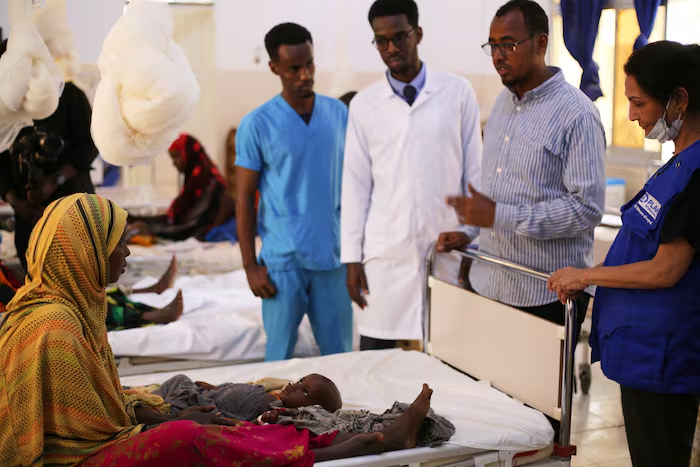
Luul Mohamed arrived in Baidoa, a southwestern Somali city, on Aug. 3 after nearly two weeks of travel with five children, having fled the town of Saakoow in the Middle Jubba region more than 300 kilometers away. The family had exhausted their resources and possessed neither food nor a clear plan for survival upon reaching the city, which has emerged as a major destination for those escaping prolonged drought, conflict and widespread food shortages.
Somalia faces a deepening humanitarian catastrophe as years of drought combined with conflict and economic deterioration have displaced millions from rural areas into sprawling camps. According to Plan International, which has aided over 200,000 people this year, approximately 2 million Somalis now face emergency-level food insecurity—more than double the figure from the previous year. International assistance remains inadequate while concerns mount that additional climate shocks could further devastate the population.
The United Nations Food and Agriculture Organization projects more than a 90 percent likelihood of El Niño conditions beginning mid-2026, potentially intensifying during Somalia’s October-to-December rainy season and creating severe flooding risks. Somalia’s vulnerability to extreme weather has created a destructive cycle of prolonged droughts followed by devastating floods, eroding livelihoods, displacing communities, triggering disease outbreaks and worsening food insecurity across the nation.
Habiba Adan fled her settlement in the Bay region after four consecutive years of drought destroyed crops and killed livestock, eventually settling in a Baidoa displacement camp with her two older daughters. She expressed little hope of returning home, noting that continued drought and failed harvests have left families with minimal prospects for rebuilding their lives and that camp conditions offer no reliable access to food, water or money.
Baidoa now hosts approximately 1.6 million people, with nearly half displaced from their communities. Plan International reports that one in five families lacks dependable access to water, forcing residents to purchase trucked water at prices many cannot afford—an immediate and critical challenge for survival in the camps.
Reena Ghelani, global CEO of Plan International, visited Baidoa recently and documented families who endured successive drought years before their resources completely depleted. She noted that after exhausting all options, displaced families now report having no water, livestock, food stores or anything remaining to sustain themselves.
A May report from the Integrated Food Security Phase Classification, a global hunger monitoring system, revealed that approximately half of Somalia’s children under 5 face acute malnutrition. Plan International, citing Save the Children data, stated that children receiving treatment for severe malnutrition in Baidoa nearly tripled within six months.
Dr. Omar Abdikarin, a nutritionist in Baidoa, reported that patients arrive from the Bay region and neighboring Bakool and Gedo regions suffering from malnutrition-related conditions. Beyond malnutrition, health crises include outbreaks of diphtheria, measles, malaria, cholera and acute diarrhea affecting displaced populations.
The anticipated El Niño conditions and subsequent heavy rainfall pose additional threats to communities already devastated by drought, potentially destroying homes and farmland, contaminating drinking water and forcing new displacement. Aid organizations warn that expected flooding will compound existing crises before families can recover from years of prolonged drought conditions.


More Stories
Colombia backs Trump security push while limiting U.S. role in anti-gang operations
Federal Prosecutors Convene Special Grand Jury to Investigate D.C. Schools’ Attendance and Graduation Practices
State Department Reissues Level 3 Travel Advisory for Israel Amid Terrorism and Armed Conflict Concerns