

💛 A quick favor, if you've got a second.
We're really happy that you chose to read one of our stories and sincerely hope you'll stick around to read more. We took our paywall down — for now — but that won't last forever, and when the gate goes back up, we'd love for you to already be on the inside.
It's free. So please enter your email here and don't forget to like and follow us on all of your favorite Social Media platforms!
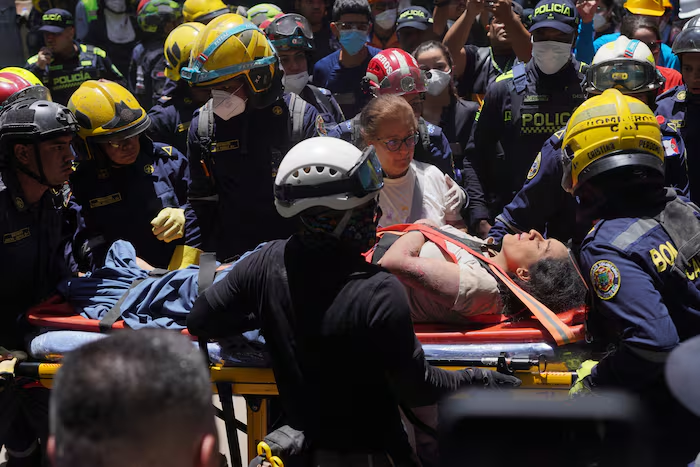
Search and rescue operations intensified Wednesday in Colombia’s hardest-hit regions as teams worked urgently to locate survivors buried in earthquake rubble. The 7.4 magnitude quake that struck the western part of the country has killed at least 181 people and injured 2,595 more, with at least 195 officially reported missing, though civilian databases suggest the number could exceed 4,000.
The disaster has presented an immediate challenge to Colombia’s newly inaugurated President Abelardo de la Espriella and his administration as they coordinate the emergency response. Rescue workers continued overnight operations in the devastated cities of Cali, Pereira, Manizales and Quibdo, aware that the critical 48 to 72-hour window for finding survivors alive was rapidly closing, though that timeframe can extend if victims have access to food and water.
Despite the grim circumstances, isolated rescue successes provided moments of hope, with teams extracting a dust-covered infant through a concrete wall opening and evacuating an injured woman on a stretcher as onlookers offered encouragement. The relief effort has been complicated by the region’s existing struggles with poverty and decades-long armed conflict that has displaced large populations.
The earthquake has compounded an already dire humanitarian situation, according to Giovanni Rizzo, Colombia director for the Norwegian Refugee Council, who emphasized the need for expanded aid distribution. María José Torres, the United Nations resident coordinator in Colombia, noted that existing aid organization infrastructure established through the 2016 peace accord between rebels and the government positioned humanitarian groups to respond more quickly in affected areas including Chocó.
International support has begun arriving, with the United States pledging more than $15 million in assistance. Mexico’s president announced plans to deploy hundreds of search and rescue personnel alongside medical staff, health supplies and equipment, while El Salvador committed to sending two aircraft carrying 100 tons of relief materials within days.
More Stories
Colombia backs Trump security push while limiting U.S. role in anti-gang operations
Federal Prosecutors Convene Special Grand Jury to Investigate D.C. Schools’ Attendance and Graduation Practices
State Department Reissues Level 3 Travel Advisory for Israel Amid Terrorism and Armed Conflict Concerns