




💛 A quick favor, if you've got a second.
We're really happy that you chose to read one of our stories and sincerely hope you'll stick around to read more. We took our paywall down — for now — but that won't last forever, and when the gate goes back up, we'd love for you to already be on the inside.
It's free. So please enter your email here and don't forget to like and follow us on all of your favorite Social Media platforms!
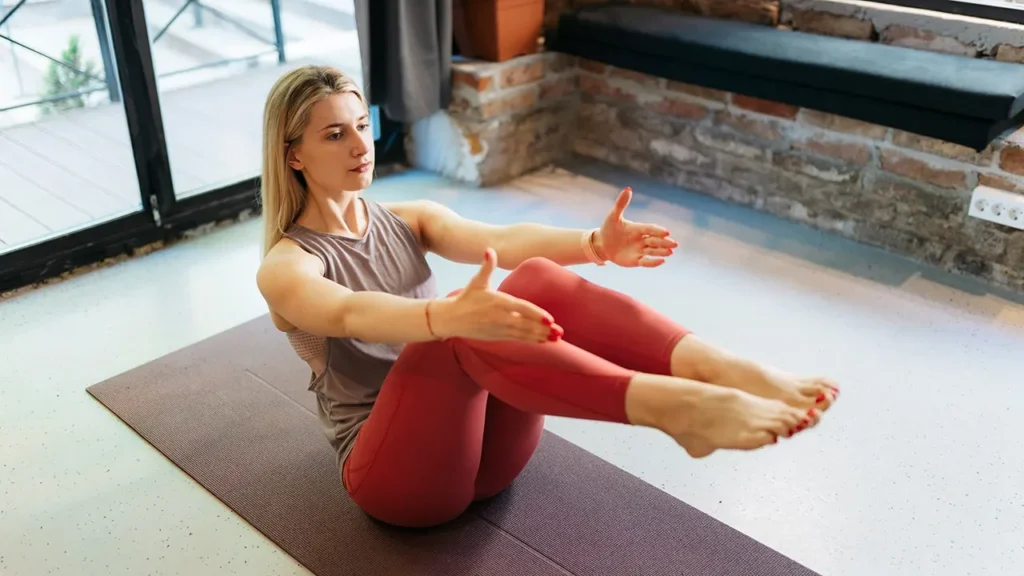
A strong core foundation supports everyday activities and athletic performance, according to fitness professionals. Beyond conventional abdominal exercises, certain yoga positions can deliver comparable or superior results by engaging multiple stabilizing muscle groups simultaneously.
Boat pose, known as Navasana in Sanskrit, positions the body into a “V” shape and activates numerous muscles critical to spinal stability. Melissa Leach, a certified yoga instructor and strength and conditioning coach based in Philadelphia, explained that core strength underpins both structured workouts and routine daily movements.
The pose engages obliques, lower back muscles and deep stabilizers including the transverse abdominis, which collectively maintain spinal alignment and enable efficient force transfer between the upper and lower body, Leach told Fox News Digital. These muscles work together during common tasks such as carrying groceries or rising from a seated position.
Unlike situps, which operate in a single plane of motion, boat pose demands the entire core system to function as an integrated unit to maintain balance and elevation. This comprehensive engagement places greater demands on stability, control and muscular endurance, Leach said.
The pose strengthens not only abdominal muscles but also hip flexors, glutes and back muscles, building functional core capacity rather than isolating individual muscle groups. Over time, practitioners may experience improved posture, a stronger lower back and enhanced support for everyday movement patterns.
Leach recommended several modifications for different fitness levels. Beginners can sit on a folded blanket to tilt the pelvis forward or position themselves inches from a wall for reassurance during the movement.
Seniors or individuals with limited core strength can perform a chair-supported version by sitting at a chair’s front edge, holding the sides for support and lifting one or both feet slightly off the ground. This approach builds the same muscle engagement without requiring unsupported balance, allowing progression to the floor version as strength improves.



More Stories
Modern Science Finally Supports & Strengthens Biblical Account of the Crucifixion of Jesus Christ
Nurse Killed in Hit-and-Run Collision in Brooklyn
Jeff Kent Encourages Barry Bonds to Pursue Hall of Fame Induction During Giants Ceremony