

💛 A quick favor, if you've got a second.
We're really happy that you chose to read one of our stories and sincerely hope you'll stick around to read more. We took our paywall down — for now — but that won't last forever, and when the gate goes back up, we'd love for you to already be on the inside.
It's free. So please enter your email here and don't forget to like and follow us on all of your favorite Social Media platforms!
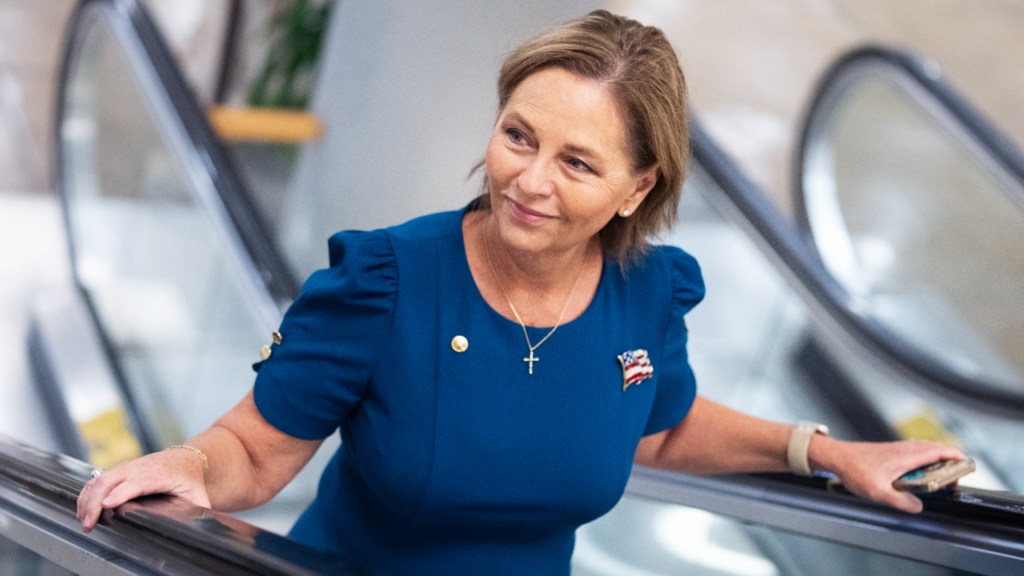
A field of nine Republican hopefuls gathered Saturday in Florence County, South Carolina, to make closing arguments before the special primary election on August 11 to permanently fill the late Sen. Lindsey Graham’s Senate seat. South Carolina’s Republican gubernatorial nominee Alan Wilson hosted the event, which he structured as a rapid-fire series of pitches, allowing each candidate just six minutes to address voters on issues ranging from international military involvement to emerging surveillance technology.
Darline Graham, who was appointed to complete her brother’s term following his death in July, spoke last and emphasized she was not a diversity-focused candidate despite her background leading the South Carolina Commission for the Blind, which oversees a $90 million budget. She touted her alignment with President Donald Trump on issues including transgender participation in women’s sports, support for Israel, voter identification requirements through the SAVE Act, and eliminating birthright citizenship. Graham acknowledged taking a nuanced stance on Flock license plate-reading cameras, saying she needed to study the technology further before taking a firm position on its privacy implications.
Rep. Ralph Norman criticized the Senate as an institution where legislation stalls, pledging to reform rules he called “arcane” and proposing to eliminate or modify the filibuster to advance measures like the SAVE Act. Norman expressed skepticism about expanding artificial intelligence data centers, stating they harm communities and the environment despite Trump’s encouragement of their development.
Mark McBride, the former mayor of Myrtle Beach, diverged sharply from Trump by calling for an immediate end to the war with Iran, arguing the United States should withdraw and regroup. He suggested voters’ expectations had not aligned with current foreign policy outcomes.
Sam Shepherd, describing himself as an engineer and entrepreneur, positioned himself to the right of Trump and claimed to possess 44 patents, surpassing Elon Musk’s total. He framed himself as equipped to tackle bureaucratic inefficiencies and military dysfunction through practical problem-solving.
Rep. Russell Fry attributed affordability challenges to government regulations and pledged to eliminate restrictions stifling businesses and farms. He criticized former President Joe Biden’s work schedule while praising Trump’s availability and commitment to closing immigration pathways Biden had opened to Haitian and Nicaraguan asylum seekers.
Former South Carolina Gov. Mark Sanford focused on the national debt, which approaches $40 trillion, linking fiscal irresponsibility to Americans’ delayed achievement of life milestones. He cited data showing the average home-buying age has climbed from 39 years to 59 years in just 15 years, characterizing the trend as an erosion of the American dream.
Businessman Mark Lynch opposed the filibuster and notably rejected funding from AIPAC, positioning himself against the field’s pro-Israel consensus. He emphasized abortion opposition as his primary focus, describing his personal efforts to dissuade women from abortion and his advocacy for stricter state restrictions.
Danny Ford II, son of the legendary Clemson football coach, raised early concerns about Flock cameras and privacy, warning that rapid data center expansion occurs without public input. He called for data centers to be sustainable and self-sufficient to prevent damage to South Carolina’s environment.
Retired Air Force budget analyst Glenda Gail Parker broke with Trump on energy policy, advocating reduced fossil fuel dependence and urging oil and gas companies to reframe themselves as energy businesses pursuing solar, wind, geothermal, and hydroelectric alternatives. She connected climate resilience to disaster relief for farmers facing increasingly extreme weather events.
More Stories
Colombia backs Trump security push while limiting U.S. role in anti-gang operations
Former NFL cheerleader and ex-aide face off in close Rhode Island GOP primary
Chicago Mayor Issues Executive Order Requiring Contractor Diversity Disclosures and ICE Ties Reporting