


💛 A quick favor, if you've got a second.
We're really happy that you chose to read one of our stories and sincerely hope you'll stick around to read more. We took our paywall down — for now — but that won't last forever, and when the gate goes back up, we'd love for you to already be on the inside.
It's free. So please enter your email here and don't forget to like and follow us on all of your favorite Social Media platforms!
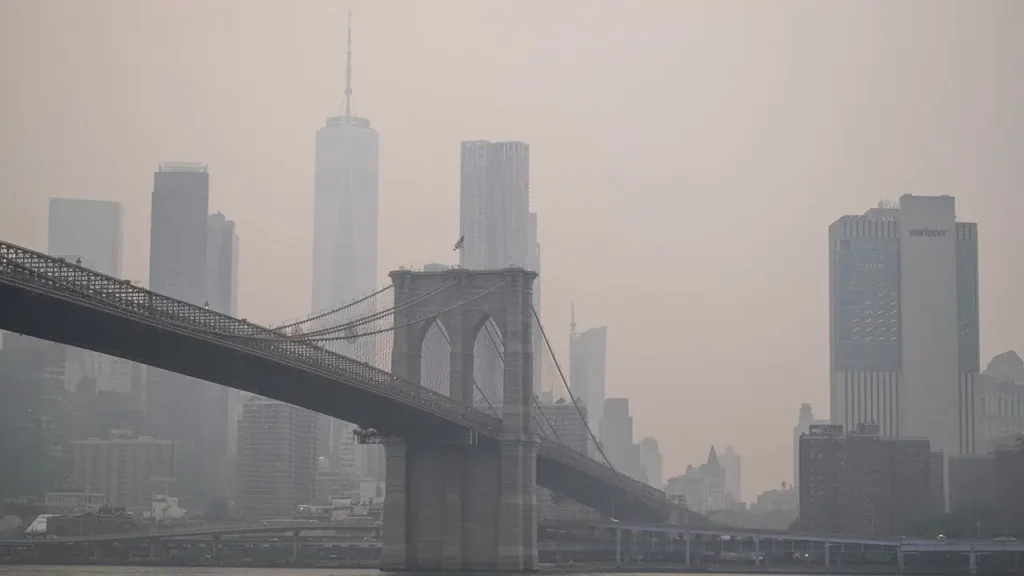
Wildfires burning across Canada have sparked a diplomatic confrontation, with President Donald Trump accusing Ottawa of negligent forestry practices and threatening to leverage the issue in future trade disputes. Trump took to Truth Social on Friday to demand that Canada address the cross-border smoke pollution affecting American air quality, signaling his intent to hold the country financially accountable.
The president vowed to incorporate economic losses from smoke damage into tariff discussions with Canadian trading partners. Trump indicated plans to speak directly with Canadian Prime Minister Mark Carney about the forest management crisis and the resulting air quality deterioration in the United States.
Andrew Hale, a fellow at Advancing American Freedom, reinforced Trump’s position during a Fox News Digital segment, asserting that environmental advocacy groups have influenced Canadian policy decisions that prioritize restrictions over practical forest maintenance. Hale argued that limitations on reservoir upkeep, firebreak development and forest thinning have hampered Canada’s ability to prevent widespread wildfires.
Four Republican House members from Michigan districts sent a formal letter to Prime Minister Carney demanding tangible policy changes rather than diplomatic apologies. Representatives Jack Bergman, John James, Lisa McClain and John Moolenaar specifically called for enhanced funding for forest thinning, fuel reduction initiatives and controlled burn programs.
Canada’s own Senate Committee on Agriculture and Forestry reached comparable conclusions in a June report based on extensive expert testimony and scientific review. The committee determined that while climate change intensifies fire seasons, Canada has failed to proportionally expand its prevention infrastructure to address the growing threat.
Senate witnesses emphasized the critical role of fuel management—the removal of dead vegetation, dried grass and fallen wood that accelerates fire propagation. Prescribed burns consistently emerged as the most effective prevention strategy across expert testimony, capable of reducing fire intensity while restoring natural forest ecosystems.
University of Washington professor Paul Hessburg cautioned the committee that proactive forest management strategies remain essential despite climate change pressures. Jason Hayes, a Heritage Foundation environmental policy researcher, advocated redirecting resources toward prevention rather than post-fire emergency operations, though he acknowledged the logistical challenges of implementing such programs across Canada’s remote, sparsely accessible terrain.
Canadian wildfire management faces additional constraints including personnel shortages and aging aircraft infrastructure. The country’s provincial governments continue operating 22 older CL-215 aircraft models, with approximately 20 planes requiring immediate modernization or replacement.
The Office of Prime Minister Mark Carney did not respond to requests for comment regarding the dispute.

More Stories
Federal voting arrest in New Jersey adds new pressure point in Sherrill-Trump standoff
Colombia backs Trump security push while limiting U.S. role in anti-gang operations
Former NFL cheerleader and ex-aide face off in close Rhode Island GOP primary