

💛 A quick favor, if you've got a second.
We're really happy that you chose to read one of our stories and sincerely hope you'll stick around to read more. We took our paywall down — for now — but that won't last forever, and when the gate goes back up, we'd love for you to already be on the inside.
It's free. So please enter your email here and don't forget to like and follow us on all of your favorite Social Media platforms!
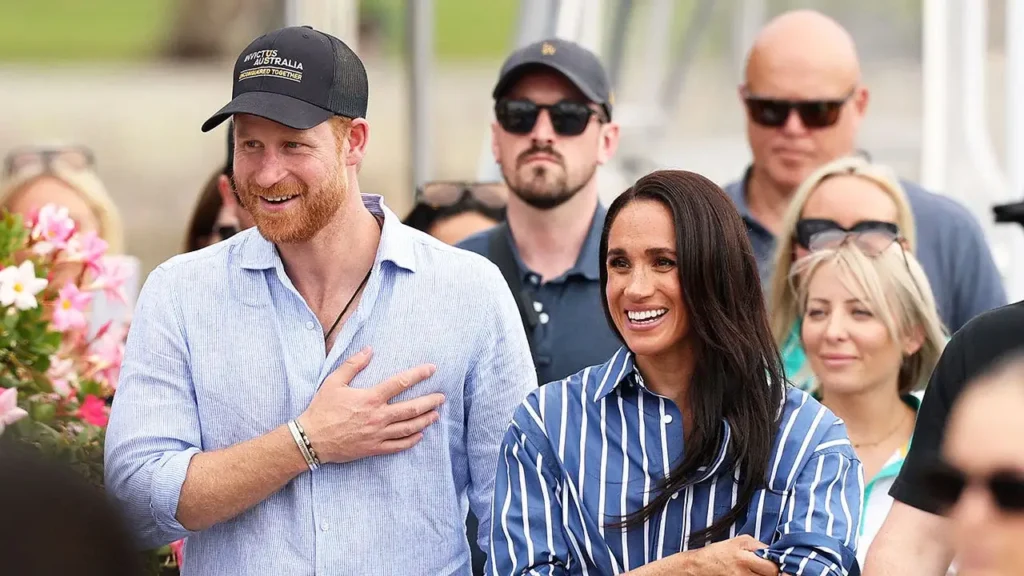
A prominent royal biographer has suggested that Prince Harry’s divisive proposal for a partial royal role may eventually gain traction within the monarchy, despite Buckingham Palace’s swift rejection of the concept in 2020. Simon Vigar, who authored “The Four Wives of Windsor,” told Fox News Digital that he expects a similar arrangement to emerge in the future as the institution evolves. He argued that such a hybrid model would allow royals to support family members and pursue business interests without appearing to exploit their status.
During the 2020 Sandringham Summit held at Queen Elizabeth II’s Norfolk residence, senior members of the royal family convened to establish the terms under which Prince Harry and Meghan Markle would depart from their official duties. According to People magazine, Queen Elizabeth II made her position unambiguous: the couple could not maintain a working royal status while simultaneously engaging in independent, income-generating business activities. The decision effectively closed the door on the Sussexes’ vision of balancing public service with private commercial ventures.
That same year, the Duke and Duchess of Sussex announced their withdrawal from senior royal responsibilities, citing intrusive media scrutiny and insufficient institutional support. In their Netflix documentary series, Harry characterized the decision to step down as his own choice, stating he needed to witness the situation firsthand rather than accepting others’ assessments. Queen Elizabeth II subsequently issued a formal statement confirming the arrangement was incompatible with the obligations inherent in public service.
In his memoir “Spare,” Harry provided additional details about the summit, revealing that he had arrived expecting the family would deliberate over five possible options for the Sussexes’ future. He expressed astonishment when Queen Elizabeth’s private secretary distributed a statement announcing “Option Five”—complete departure—after merely an hour of discussion, suggesting the outcome had been predetermined.
Royal broadcaster Ian Pelham Turner contends that the palace made a strategic error by dismissing Harry’s proposal, characterizing the half-in, half-out model as the contemporary approach modern royal families should embrace. Turner argued that Queen Elizabeth received poor counsel in refusing the framework Harry proposed, which he suggested was necessary to shield Meghan from sustained public attacks and media hostility.
However, competing royal analysts dispute this assessment. Kinsey Schofield, host of “Kinsey Schofield Unfiltered,” emphasized that any personal support Harry provides to his family as a son and brother differs fundamentally from officially representing the monarchy as a working royal. She noted that the current slimmed-down royal operation—consisting of King Charles, Queen Camilla, the Prince and Princess of Wales, and other senior members—functions effectively without the constitutional complications a hybrid role would introduce.
Schofield highlighted that Harry’s actions since departing royal life have reinforced rather than challenged Queen Elizabeth’s original decision. Through the Oprah Winfrey interview, Netflix documentation, his memoir, and years of public commentary, Harry established a pattern of converting private family matters into commercially viable products. This trajectory, she argued, exemplifies the exact risk the late queen sought to prevent.
The author pointed to Sophie, now Duchess of Edinburgh, as an instructive precedent. In 2001, Sophie abandoned her public relations career after an undercover journalist covertly recorded her discussing her royal connections while posing as a potential client. That incident reinforced palace concerns about conflicts between commercial work and official duties, leading Sophie to transition into full-time royal service, where she has become regarded as one of the institution’s most accomplished members.
Royal expert Hilary Fordwich told Fox News Digital she anticipates Harry would receive at most “informal, limited and tightly controlled opportunities” during future visits to Britain while pursuing personal reconciliation with relatives. She maintained that a functional hybrid arrangement remains implausible, particularly given consistent opposition from Prince William, Princess Catherine, and palace officials tasked with protecting the monarchy’s institutional integrity.
As Harry and Meghan continue raising their children in Montecito, California, the likelihood of reconsidering the hybrid model appears remote, according to royal analysts. King Charles, who is undergoing treatment for an undisclosed cancer, met briefly with his younger son in September 2025 following years of estrangement, marking the first substantial contact in over a year. The palace indicated the king may offer Harry accommodations at Buckingham Palace during a projected September visit, though no confirmation was forthcoming from the palace or Archewell, the Sussexes’ office.
Schofield emphasized that Queen Elizabeth’s original determination was not a personal inclination but rather an institutional safeguard designed to preserve the Crown’s neutrality and credibility. She expressed skepticism that King Charles would overturn the decision, given the precedent problems permitting one royal to monetize status while performing official functions would create across the entire royal establishment.


More Stories
Colombia backs Trump security push while limiting U.S. role in anti-gang operations
Modern Science Finally Supports & Strengthens Biblical Account of the Crucifixion of Jesus Christ
Federal Prosecutors Convene Special Grand Jury to Investigate D.C. Schools’ Attendance and Graduation Practices