


💛 A quick favor, if you've got a second.
We're really happy that you chose to read one of our stories and sincerely hope you'll stick around to read more. We took our paywall down — for now — but that won't last forever, and when the gate goes back up, we'd love for you to already be on the inside.
It's free. So please enter your email here and don't forget to like and follow us on all of your favorite Social Media platforms!
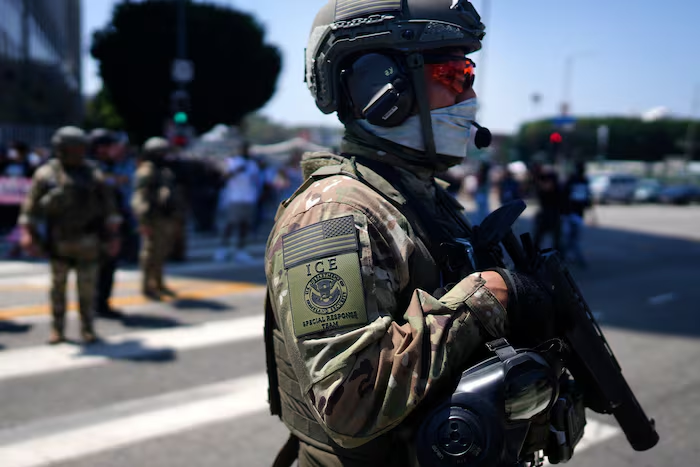
Immigration and Customs Enforcement will outfit field officers nationwide with body cameras by the end of September, capping years of delays and following fatal shootings that intensified calls for accountability. The rollout comes as the agency escalates enforcement operations under President Donald Trump’s immigration crackdown, with ICE spending $30.9 million in July to purchase equipment from Arizona-based manufacturer Axon.
However, ICE’s body camera policy grants the agency substantial control over public disclosure, requiring that any release of footage from shootings or serious injuries occur only when determined to be in the organization’s “best interests.” The policy allows the ICE director to withhold or indefinitely delay video release if “specific and compelling circumstances” apply, without defining those circumstances or providing public guidance on decision-making criteria.
Christopher Schneider, a Brandon University professor who studies police body cameras, said the policy amounts to transparent image management. “In some ways, ICE is saying the quiet part out loud,” he noted, suggesting the agency plans to selectively release footage that portrays officers favorably while suppressing recordings of controversial encounters.
The policy requires officers to activate cameras during routine enforcement, arrests, warrant executions and emergencies. A review committee including top ICE officials and attorneys will assess shooting footage and recommend whether prompt release is appropriate, potentially within 72 hours, though final authority rests with the director.
When footage is released, ICE will redact all identifying features of officers including faces, names and badge numbers. The agency noted that at least one member of every arrest team will be required to have a camera.
Neither of two fatal ICE shootings last month—one involving a 25-year-old motorist in Maine and another involving a Houston homebuilder—were captured on body cameras. Congress had appropriated $20 million for ICE body camera purchases following a government shutdown in April, and lawmakers have since pressured the agency over deployment timelines.
White House border czar Tom Homan argued in July that body cameras primarily exonerate agents and demonstrate necessity of enforcement operations. “I think the American people need to see what that officer sees and hears,” he said on CBS News.
Schneider expressed skepticism about transparent release, saying ICE will likely release recordings portraying officers as brave while depicting immigrants as dangerous criminals to justify mass deportation programs. Jason Houser, former ICE chief of staff under President Joe Biden, criticized the delayed deployment as a “political response” that avoids addressing deeper training and operational deficiencies.


More Stories
Federal voting arrest in New Jersey adds new pressure point in Sherrill-Trump standoff
Colombia backs Trump security push while limiting U.S. role in anti-gang operations
Former NFL cheerleader and ex-aide face off in close Rhode Island GOP primary