
💛 A quick favor, if you've got a second.
We're really happy that you chose to read one of our stories and sincerely hope you'll stick around to read more. We took our paywall down — for now — but that won't last forever, and when the gate goes back up, we'd love for you to already be on the inside.
It's free. So please enter your email here and don't forget to like and follow us on all of your favorite Social Media platforms!
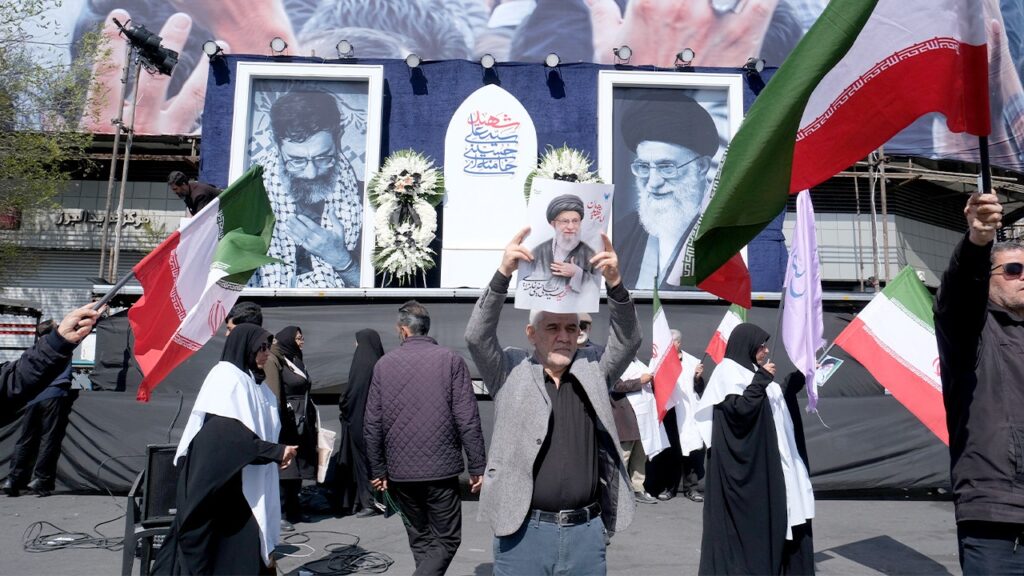
Competing power centers within Iran’s government are increasingly using Supreme Leader Mojtaba Khamenei’s name as a political cudgel to advance their interests, despite persistent uncertainty about whether he is actively involved in running the country, analysts said. The internal tensions became public through two separate reports by Iran International that contradicted each other regarding President Masoud Pezeshkian’s relationship with the new supreme leader and his level of direct contact with him.
Senior cleric Mohammad-Bagher Kharrazi, a relative of the Khamenei family through marriage, claimed in the first report that Pezeshkian had threatened multiple times to resign and received a warning that any further resignation would be accepted, with Khamenei allegedly stating: “If he resigns one more time, I will approve it.” Pezeshkian’s office rejected the account as false, with presidential communications deputy Mehdi Tabatabaei calling it “baseless and an outright lie” and questioning whether Kharrazi had any actual contact with the supreme leader.
A second Iran International report subsequently alleged that Pezeshkian had met Mojtaba Khamenei only once in a vehicle with darkened windows at an undisclosed Tehran location, with the encounter lasting minutes and the two men unable to see one another. According to unnamed sources cited by the outlet, the president was prohibited from shaking the supreme leader’s hand and afterward questioned whether the voice belonged to Khamenei at all. Pezeshkian had previously described a substantially different meeting, claiming publicly he spent approximately two and a half hours with Khamenei in a cordial setting.
Kasra Aarabi, director of IRGC research at United Against Nuclear Iran, characterized the competing narratives as evidence of deeper fractures within what he termed an “Islamist oligarchic mafia system.” Under the deceased Ali Khamenei, the supreme leader functioned as a “godfather” figure who arbitrated disputes among rival factions and controlled access to power and resources, Aarabi explained. Mojtaba Khamenei’s appointment was meant to fill that role, but his prolonged public silence has left competing factions uncertain about actual authority structures and decision-making processes.
The absence of a clear governing authority has transformed Mojtaba Khamenei’s name into a political tool that rival factions invoke to legitimize themselves, weaken opponents, or justify actions whose true origins remain murky, Aarabi said. Competing oligarchic clans are not primarily divided by ideological differences but rather over access to power and economic benefits, he noted, meaning the supreme leader’s name functions as “the glue that’s holding the system together right now.”
Exiled Iranian journalist Mehdi Ghadimi characterized the resignation rumors as part of a cyclical political tactic employed by reformist administrations facing diminished usefulness to the supreme leader. Similar rumors surrounded former presidents Mohammad Khatami and Hassan Rouhani during their final years in office, Ghadimi said, allowing officials to later portray themselves as having challenged supreme authority after their departures.
Ghadimi went further than Aarabi in his assessment of Mojtaba Khamenei’s condition, stating he did not believe “a functioning person by that name who is capable of thinking, making decisions or speaking” actually exists. “Either he is dead, or he is being kept alive in an extremely unstable and severely deteriorated condition,” Ghadimi said. Mojtaba Khamenei has not released any publicly available video or audio recording since assuming his position, according to Iran International, and government officials have offered conflicting accounts regarding how frequently senior figures meet with him.
Aarabi cautioned that the strategy of invoking Khamenei’s authority without tangible evidence of his existence or capacity will face mounting credibility problems if his public absence extends further. “There’s only so many times you can use someone’s name without any proof of life that they actually exist,” Aarabi said, predicting that prolonged absence will intensify doubts about his viability and accelerate internal infighting among rival factions.
More Stories
Federal voting arrest in New Jersey adds new pressure point in Sherrill-Trump standoff
Colombia backs Trump security push while limiting U.S. role in anti-gang operations
Former NFL cheerleader and ex-aide face off in close Rhode Island GOP primary