

💛 A quick favor, if you've got a second.
We're really happy that you chose to read one of our stories and sincerely hope you'll stick around to read more. We took our paywall down — for now — but that won't last forever, and when the gate goes back up, we'd love for you to already be on the inside.
It's free. So please enter your email here and don't forget to like and follow us on all of your favorite Social Media platforms!
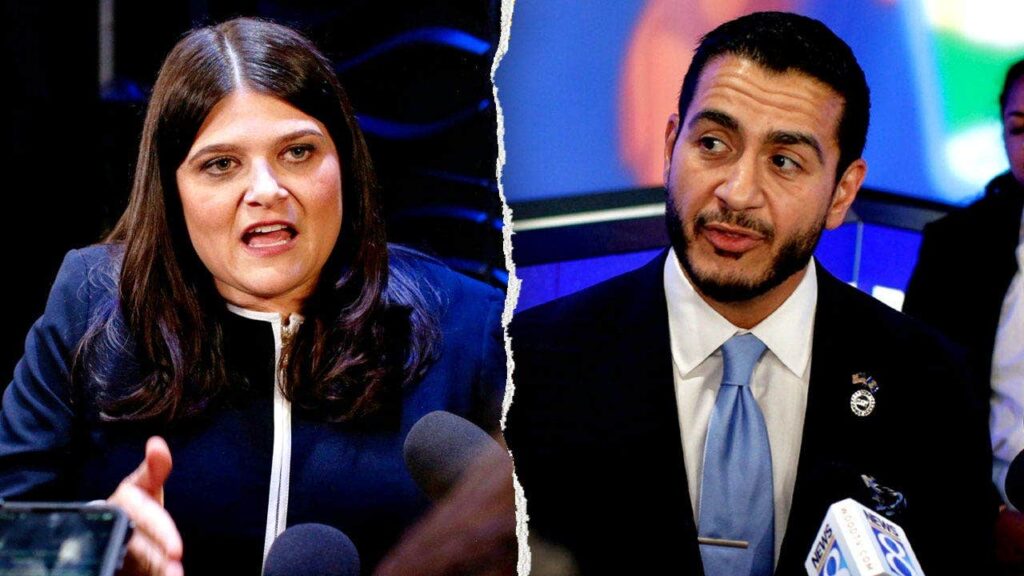
Michigan’s Democratic primary on Tuesday serves as a crucial battleground in an escalating ideological struggle within the party between its progressive wing and establishment leadership. The outcome carries significant implications for Democrats’ ability to retain control of a critical Senate seat in the midterm elections and could influence the party’s direction heading into 2026.
Abdul El-Sayed, a former Wayne County Health Department director and epidemiologist, is challenging Rep. Haley Stevens for the opportunity to succeed retiring Sen. Gary Peters. El-Sayed’s campaign emphasizes “Medicare-for-all,” ICE abolition, and criticism of Israel’s military actions in Gaza, while Stevens, who flipped a Republican-held district in 2018, represents the moderate, establishment-backed approach backed by Peters, Gov. Gretchen Whitmer, and Senate Democratic Leader Chuck Schumer.
El-Sayed has energized progressive voters with support from Sen. Bernie Sanders and Rep. Alexandria Ocasio-Cortez, who campaigned alongside him two weeks ago. If elected, he would become the nation’s first Muslim senator. Stevens counters by emphasizing her track record of winning competitive races and her viability in a general election matchup against likely Republican nominee Mike Rogers.
The primary has become the most expensive Democratic Senate nomination race in history, with over $80 million spent. Much of that spending—particularly funding from groups aligned with the American Israel Public Affairs Committee—supports Stevens and opposes El-Sayed, who has criticized the influx of outside money as evidence that Stevens lacks independent viability.
The left-right divide extends beyond the Senate race to Michigan’s 7th Congressional District, where Sunrise Movement co-founder William Lawrence, backed by Sanders and progressive groups, competes against two moderate Democrats for the chance to face Republican Rep. Tom Barrett. Similar progressive-establishment tensions appear in the state’s 13th Congressional District, where Rep. Shri Thanedar faces challenge from state Rep. Donovan McKinney, supported by Squad members including Reps. Ilhan Omar and Ayanna Pressley.
Nationally, Trump’s influence over Republican nominations is being tested across multiple states. In Michigan, he has endorsed Rep. John James in the gubernatorial primary, while in Kansas he backs state Senate President Ty Masterson. Both races feature crucial GOP opportunities to flip Democratic-held seats in the general election.
Party leaders have pledged unity after the contentious primary. Stevens declared that Democrats will coalesce behind whoever wins to prevent Rogers from reaching the Senate, while El-Sayed similarly emphasized the shared opposition to Trump and Rogers among Democratic candidates.

More Stories
Federal voting arrest in New Jersey adds new pressure point in Sherrill-Trump standoff
Colombia backs Trump security push while limiting U.S. role in anti-gang operations
Former NFL cheerleader and ex-aide face off in close Rhode Island GOP primary