

💛 A quick favor, if you've got a second.
We're really happy that you chose to read one of our stories and sincerely hope you'll stick around to read more. We took our paywall down — for now — but that won't last forever, and when the gate goes back up, we'd love for you to already be on the inside.
It's free. So please enter your email here and don't forget to like and follow us on all of your favorite Social Media platforms!
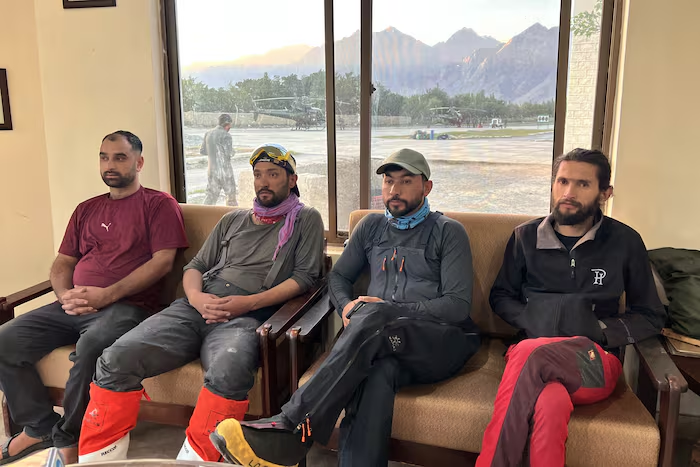
Ground-based rescue teams in Pakistan continued their search Tuesday for the remains of 10 mountaineers who died when an avalanche swept across Broad Peak, the world’s 12th-highest mountain, officials reported. Adverse weather conditions kept helicopters grounded and on standby in the Gilgit-Baltistan region, hampering the recovery effort as teams pressed forward with foot-based operations.
The avalanche struck Thursday and claimed the lives of climbers from Nepal, Oman, Pakistan, China, Britain, and the United States. Rescue personnel had already located eight bodies, with at least three removed from the mountain by Saturday, marking what the Alpine Club of Pakistan described as one of the nation’s most devastating mountaineering disasters in recent memory.
Among those killed was Nirmal Purja, a Nepal-born former British Army officer known internationally as Nims Dai, whose climbing company confirmed his death and hailed him as a towering figure in the mountaineering world. The expedition team announced the loss on Saturday, describing Purja’s passing as a significant blow to the global climbing community.
Pakistan’s Foreign Minister Ishaq Dar issued a formal statement of condolences Tuesday, expressing grief over the tragedy and honoring the memory of Pakistani mountaineer Sohail Sakhi alongside international victims. Dar pledged that Pakistan would maintain its commitment to the ongoing recovery operation in coordination with embassies from Nepal, Oman, the United Kingdom, and the United States.
The Gilgit-Baltistan region experiences frequent mountaineering accidents due to avalanches, ice collapse, rockfall, extreme elevation, and unpredictable weather patterns. A Chinese climber died in a similar incident on K2, the world’s second-highest peak, just last year when struck by falling rocks during descent.

More Stories
Modern Science Finally Supports & Strengthens Biblical Account of the Crucifixion of Jesus Christ
Nurse Killed in Hit-and-Run Collision in Brooklyn
Jeff Kent Encourages Barry Bonds to Pursue Hall of Fame Induction During Giants Ceremony