




💛 A quick favor, if you've got a second.
We're really happy that you chose to read one of our stories and sincerely hope you'll stick around to read more. We took our paywall down — for now — but that won't last forever, and when the gate goes back up, we'd love for you to already be on the inside.
It's free. So please enter your email here and don't forget to like and follow us on all of your favorite Social Media platforms!
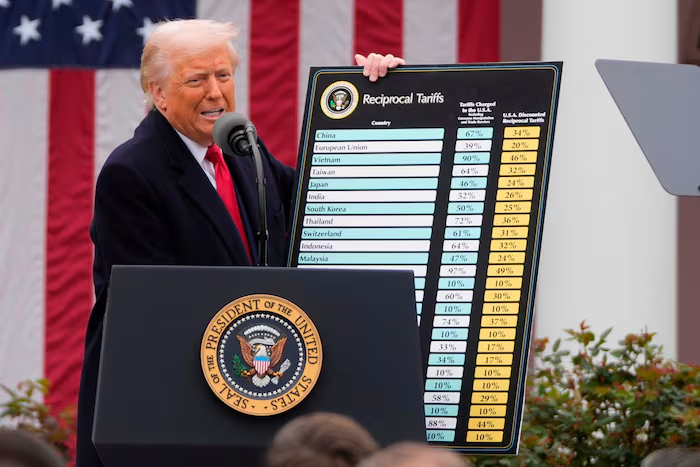
A coalition of 25 states filed suit against the Trump administration Monday, contending that newly imposed tariffs targeting 59 countries and the European Union represent an unlawful scheme to resurrect import duties that the Supreme Court invalidated in February. The administration implemented double-digit levies last month ostensibly to penalize nations for inadequate restrictions on forced-labor imports, timing the measure to coincide with the expiration of temporary tariffs that had been implemented following the Court’s earlier defeat.
New York Attorney General Letitia James spearheaded the legal challenge, which includes Arizona, California, Colorado, Connecticut, Delaware, Hawaii, Illinois, Kentucky, Massachusetts, Maryland, Maine, Michigan, Minnesota, Nevada, New Jersey, New Mexico, North Carolina, Oregon, Pennsylvania, Rhode Island, Virginia, Vermont, Washington and Wisconsin. The states argue that the administration is weaponizing tariffs to illegally impose additional costs on consumers and businesses after exhausting other legal avenues.
The Supreme Court’s February decision rejected the administration’s invocation of the 1977 International Emergency Economic Powers Act, or IEEPA, which Trump had relied upon to justify across-the-board tariffs characterized as a response to what he deemed a national emergency stemming from America’s trade deficit. That ruling compelled the administration to issue refunds to importers who had paid the invalidated tariffs.
Rather than abandon the tariff strategy, the White House implemented temporary 10 percent levies on worldwide imports to recoup lost revenue. When those measures expired at midnight on July 24, the administration shifted to tariffs authorized under Section 301 of the Trade Act of 1974, a statutory provision that grants the president authority to impose sanctions against countries engaged in unfair trade practices.
The current forced-labor tariffs, ranging from 10 percent to 12.5 percent, affect nations accounting for 99 percent of American imports. White House spokesman Kush Desai defended the action, stating that Section 301 tariffs have proven legally resilient since Trump’s first term and remain an appropriate tool for addressing unreasonable trade practices, including inadequate enforcement of forced-labor prohibitions.
Two additional lawsuits challenging the Section 301 tariffs were filed in July in the Court of International Trade by small business groups. Those cases contend the government failed to adequately substantiate its allegations against specific nations or demonstrate how the tariffs would effectively eliminate the forced-labor practice they are designed to address, as required under the statute.


More Stories
Former NFL cheerleader and ex-aide face off in close Rhode Island GOP primary
Trump Threatens FCC Action Against NBC’s Welker Over Endorsement Coverage
Chicago Mayor Issues Executive Order Requiring Contractor Diversity Disclosures and ICE Ties Reporting