



💛 A quick favor, if you've got a second.
We're really happy that you chose to read one of our stories and sincerely hope you'll stick around to read more. We took our paywall down — for now — but that won't last forever, and when the gate goes back up, we'd love for you to already be on the inside.
It's free. So please enter your email here and don't forget to like and follow us on all of your favorite Social Media platforms!
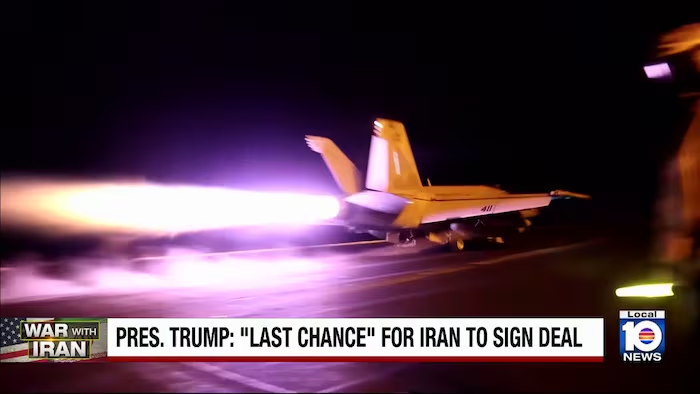
President Donald Trump announced Monday that ongoing diplomatic discussions with Iran constitute the nation’s last opportunity to reach an agreement and forestall further American military action. Speaking from the Oval Office, Trump outlined a two-phase negotiation strategy beginning with reopening the Strait of Hormuz, followed by addressing U.S. concerns regarding Iran’s nuclear weapons development.
The president revealed he had planned to authorize what he characterized as “the biggest attack since World War II” for Sunday but abandoned those orders after consultations with Gulf state leaders including Saudi Crown Prince Mohammed bin Salman, as well as at the behest of unnamed Iranian officials. Trump indicated that updated information on negotiation progress would likely emerge within the next day or two.
Trump’s decision to defer military escalation came after a weekend telephone call with the Saudi crown prince, who emphasized that expanded hostilities could destabilize global energy markets if Iran retaliated against American allies. Saudi officials highlighted that while the kingdom, Qatar, and the United Arab Emirates possess sufficient defensive capabilities, Kuwait remained vulnerable to strikes by Iranian-backed militias operating from Iraq.
The president expressed frustration with Iran’s public statements minimizing the scope of ongoing discussions, particularly regarding Monday meetings with Oman focused nominally on establishing safe passage through the Strait of Hormuz. Trump asserted that substantive nuclear weapons negotiations were occurring despite Iran’s denials, warning that patience remained limited.
This represents the latest instance of Trump retreating from military threats since U.S. and Israeli strikes commenced February 28. Previous de-escalations occurred in early April when a ceasefire agreement emerged hours before a Trump deadline, in May when he postponed strikes citing serious negotiations, and in June when he abandoned planned attacks following claimed progress with Iranian leadership.
Public polling presents significant political headwinds for Trump’s approach. Approximately two-thirds of American adults consider the Iran conflict unwarranted, encompassing most Democrats and independents along with roughly 37 percent of Republicans, according to Associated Press-NORC research released last week.
Some Republican lawmakers have cautiously aligned with restraint. Louisiana Senator John Kennedy suggested Monday that maintaining current sanctions and nuclear-focused pressure rather than military escalation represents the preferable course, acknowledging that further conflict could trigger energy price increases and inflation affecting American consumers.
Critics characterize Trump’s pattern of threats followed by retreats as erratic policy-making. Arizona Democratic Senator Mark Kelly told CBS News that Trump appears to be attempting to reset conditions to pre-conflict status, suggesting the administration may recognize that military force alone cannot compel Iranian capitulation in what has become a months-long conflict.


More Stories
Former NFL cheerleader and ex-aide face off in close Rhode Island GOP primary
Trump Threatens FCC Action Against NBC’s Welker Over Endorsement Coverage
Chicago Mayor Issues Executive Order Requiring Contractor Diversity Disclosures and ICE Ties Reporting