


💛 A quick favor, if you've got a second.
We're really happy that you chose to read one of our stories and sincerely hope you'll stick around to read more. We took our paywall down — for now — but that won't last forever, and when the gate goes back up, we'd love for you to already be on the inside.
It's free. So please enter your email here and don't forget to like and follow us on all of your favorite Social Media platforms!
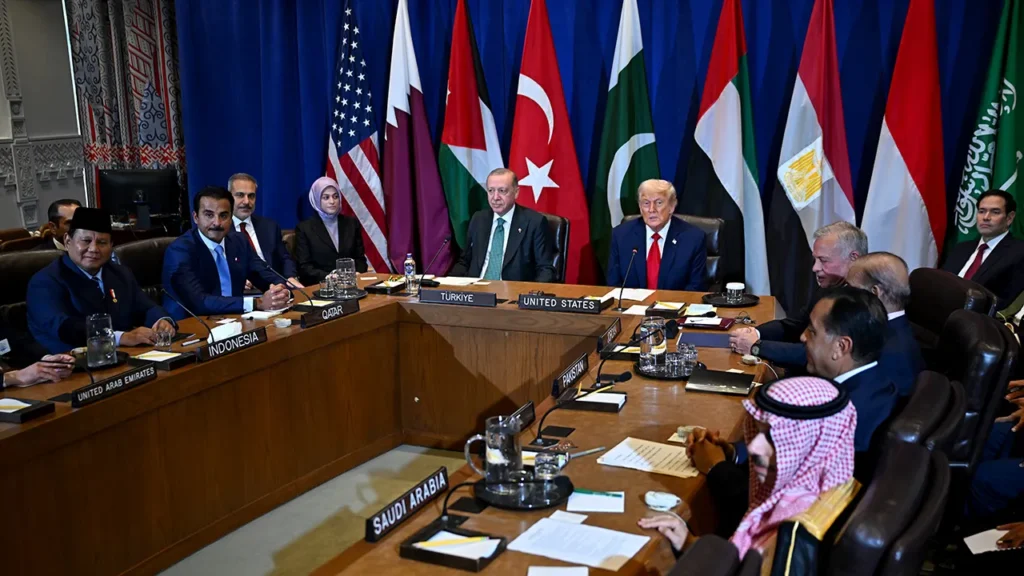
UNITED NATIONS — The Middle East will take center stage when world leaders open the U.N. General Assembly’s annual debate Tuesday, with some of Washington’s most important regional partners arriving in New York facing a question: What will the region look like after months of war with Iran, renewed Houthi attacks and an uncertain future for Gaza?Leaders from Jordan, Türkiye, Qatar and Egypt are expected to address the Assembly during the annual General Debate, which begins Sept. 22. Israeli Prime Minister Benjamin Netanyahu is also scheduled to attend.President Donald Trump is expected to meet Gulf leaders on the sidelines of UNGA to discuss the Iran conflict and the region’s future. U.S. Ambassador to the U.N. Mike Waltz told Fox News Digital that the administration wants to hear directly from Gulf leaders about their concerns, describing the meeting as an important opportunity for diplomacy.TRUMP WELCOMES NETANYAHU TO WHITE HOUSE AS RAGING IRAN WAR THREATENS TO SOUR US-ISRAEL RELATIONSHIPRich Goldberg, a senior adviser at the Foundation for Defense of Democracies, told Fox News Digital that the Iran war has fundamentally altered the region’s strategic landscape, creating opportunities for new energy partnerships and closer cooperation between Israel and its Arab neighbors.”The opportunity for regional integration and normalization works alongside energy infrastructure meeting the moment, the crisis of needing bypasses for Hormuz,” Goldberg said.He argued that a network of pipelines carrying Gulf energy overland to the Mediterranean, potentially through Israel, could reduce dependence on vulnerable shipping routes.”We can make the Strait of Hormuz irrelevant,” Goldberg said, describing potential energy links between Saudi Arabia and Israel, as well as routes connecting Qatar to the Mediterranean.IRAN-BACKED TERROR GROUP’S LATEST TERRITORIAL GRAB THREATENS SECOND GLOBAL SHIPPING CHOKEPOINTBut the threat to regional energy supplies now extends beyond Hormuz. The Houthis’ offensive along Yemen’s Red Sea coast has raised new concerns over the Bab el-Mandeb, another critical maritime choke point. Washington Institute analysts April Longley Alley and Allison Minor wrote in a Sept. 11 analysis that the offensive had “shattered the status quo” along Yemen’s western coast.NETANYAHU REJECTS BOARD OF PEACE’S GAZA PLAN: NO ‘WITHDRAWAL UNTIL HAMAS IS GENUINELY DISARMED’Gaza presents a separate diplomatic challenge, with Arab governments seeking a political settlement while differing with Israel over Palestinian statehood and the territory’s future.In a Sept. 6 joint statement, the foreign ministers of Jordan, Egypt, Qatar, Türkiye, Saudi Arabia, the UAE, Indonesia and Pakistan rejected proposals to forcibly displace Palestinians from Gaza and reiterated support for a Palestinian state along the 1967 lines, with East Jerusalem as its capital. They also warned that displacement proposals risk undermining Trump’s Gaza peace plan.ISRAEL’S E1 PLAN EXPLAINED: THE JERUSALEM-AREA CORRIDOR SPARKING INTERNATIONAL BACKLASHQatar has simultaneously condemned renewed Iranian attacks against Arab states and Houthi attacks on Saudi Arabia and Red Sea shipping, while insisting that the Palestinian issue remains a priority.In a Sept. 8 joint statement, the leaders of France, Britain and Canada announced plans to ban imports from Israeli settlements and pursue targeted measures against settlements and those who facilitate them. They also said they would co-chair a meeting during UNGA to advance a two-state solution, one year after recognizing Palestinian statehood.The diplomatic divisions will also be reflected in who can address the U.N. in person. Palestinian President Mahmoud Abbas was denied a U.S. visa for the second consecutive year. The General Assembly voted Thursday to allow him to deliver his address by video.Netanyahu, meanwhile, is expected to travel to New York weeks before Israel’s Oct. 27 parliamentary elections, the country’s first national vote since the Oct. 7, 2023, Hamas attacks, amid declining international support for Israel. A June 2026 Pew Research Center survey found that a median of 67% of adults across 36 countries held unfavorable views of Israel, compared with 25% who viewed it favorably.For Washington, the challenge is balancing its regional security relationships with competing demands over Gaza and the future of relations with Israel.TRUMP CALLS ON ARAB NATIONS TO SIGN ABRAHAM ACCORDSGoldberg predicted that some of the most consequential discussions would take place away from the General Assembly podium, with Arab leaders delivering one message publicly and another in private meetings with Trump and senior U.S. officials.”We may see the old propaganda of criticizing Israel and saying everybody wants a different future, and they’re going to support Gaza and the Palestinians, they demand a Palestinian state,” Goldberg said.Behind closed doors, he predicted the discussions would focus on U.S. security guarantees, the next steps in confronting Iran and expanding regional energy infrastructure.”What will be a pathway forward politically that the U.S. can provide to these leaders so that they can normalize with Israel alongside the necessary infrastructure upgrades that they need to make for their own energy securities and physical securities going forward?” Goldberg said.

More Stories
Will Levis to sign with New York Jets practice squad in hopes of meeting potential under respected QB coaches
AOC opens up about race, gender in weighing possible 2028 White House bid
Red state Dem faces fury for suggesting illegal aliens should replace American workers