

💛 A quick favor, if you've got a second.
We're really happy that you chose to read one of our stories and sincerely hope you'll stick around to read more. We took our paywall down — for now — but that won't last forever, and when the gate goes back up, we'd love for you to already be on the inside.
It's free. So please enter your email here and don't forget to like and follow us on all of your favorite Social Media platforms!
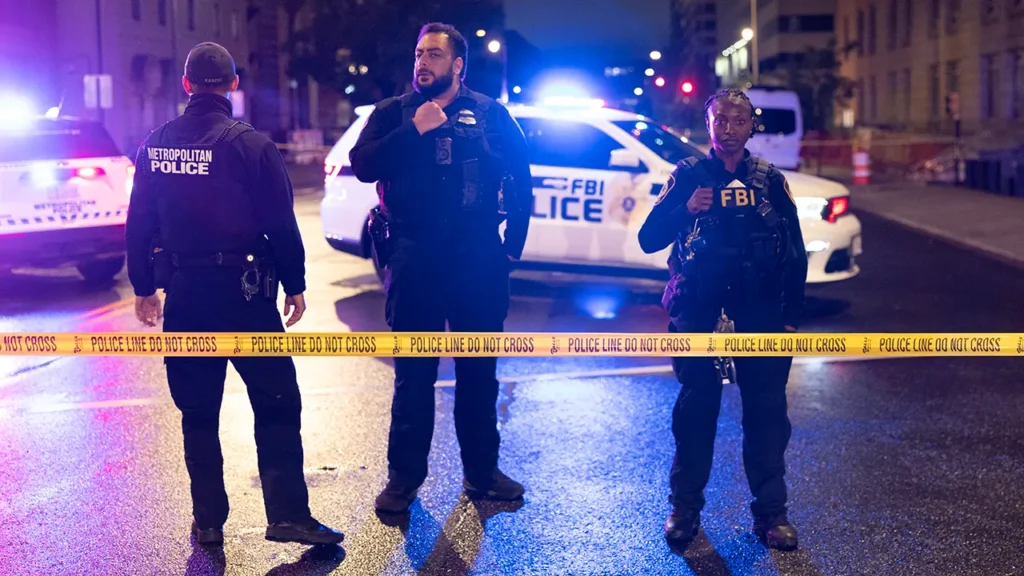
The 9/11 Commission’s central conclusion identified a critical vulnerability in America’s counterterrorism apparatus: despite possessing sufficient intelligence, federal agencies and law enforcement failed to consolidate disparate information streams due to organizational silos and inadequate collaboration protocols. The immediate human toll reached 3,000 American lives, with over 60,000 military personnel killed or wounded in subsequent military operations.
Responding to these systemic failures, the government established the Department of Homeland Security, expanded Joint Terrorism Task Forces, created fusion centers for interagency intelligence sharing, and implemented collaborative frameworks between federal, state and municipal authorities. However, a quarter-century later, security officials contend these mechanisms require fundamental restructuring to address contemporary threats operating in an accelerated operational environment.
The threat landscape has undergone profound transformation since the pre-digital era in which existing systems were designed. Modern extremists leverage social media and online platforms to compress radicalization timelines from months into days or hours, enabling single individuals to consume propaganda, formulate violent intentions and execute attacks within a compressed window previously unimaginable to security planners.
The challenge transcends simply connecting available intelligence fragments. Officials must now distinguish significant data points amid an overwhelming volume of information, rapidly route credible threats to appropriate personnel and mobilize preventive resources before violence materializes. Each passing hour carries consequences equivalent to days in earlier threat scenarios.
The Jewish community has experienced this acceleration acutely. The Secure Community Network, serving as the official safety organization for North American Jewish communities, tracked over 850 threats to life during the past year alone, referring each case to the FBI’s National Threat Operations Center, state and local fusion centers and law enforcement partners for analysis and intervention.
In one documented case, Pittsburgh authorities arrested Hardy Lloyd after he conducted a months-long harassment and threats campaign targeting participants in the city’s synagogue shooting trial. Lloyd admitted deliberately targeting jurors and witnesses because of their actual or perceived Jewish identity and received a 6.5-year federal sentence in December 2023. Similarly, federal prosecutors secured a 37-month prison term in March 2026 against a Philadelphia individual who mailed violent letters to over 25 Jewish institutions across multiple states over a 15-month period.
Extremist ideologies have become increasingly hybridized, with white supremacists adopting jihadist tactical frameworks, anti-government actors amplifying antisemitic narratives, and foreign terrorist organizations inspiring domestic operatives through remote digital connections. These categorical boundaries continue dissolving as mobilization velocity accelerates.
Existing fusion center infrastructure remains foundational to national security architecture, yet contemporary conditions demand supplementary mechanisms. The Secure Community Network’s Regional Threat Capability Initiative exemplifies this emerging model, combining continuous internet monitoring, threat assessment and law enforcement coordination within frameworks that integrate community-level awareness with national intelligence coordination to enable rapid response capabilities.
Effective counterterrorism now requires sustained collaboration between government agencies, community organizations and private sector partners equipped with direct law enforcement connections. The principle underlying modern threat prevention holds that minutes and hours can prove as consequential in preventing loss of life as days represented in earlier operational contexts. Twenty-five years after 9/11, this adaptive approach remains essential to national security.

More Stories
Christa Pike Survives Botched Double Execution Attempt; Tennessee Halts Remaining 2026 Executions
Tennessee’s Lone Death Row Female is Scheduled for Execution Wednesday for 1995 Torture/Murder
Colombia backs Trump security push while limiting U.S. role in anti-gang operations