


💛 A quick favor, if you've got a second.
We're really happy that you chose to read one of our stories and sincerely hope you'll stick around to read more. We took our paywall down — for now — but that won't last forever, and when the gate goes back up, we'd love for you to already be on the inside.
It's free. So please enter your email here and don't forget to like and follow us on all of your favorite Social Media platforms!
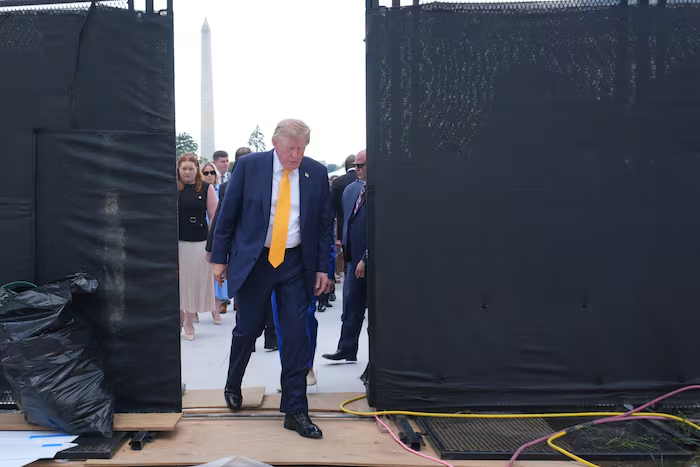
The Trump administration has delivered a classified civil nuclear pact with Saudi Arabia to Congress for mandatory review under the Atomic Energy Act, according to multiple officials briefed on the submission. The document arrived on Capitol Hill on Monday and must be examined by lawmakers before the agreement can proceed, administration personnel and congressional aides said.
Trump has declared that final approval of the nuclear accord hinges on Saudi Arabia’s willingness to establish diplomatic relations with Israel through the Abraham Accords framework. The president announced this precondition the day after Energy Secretary Chris Wright and his Saudi counterpart signed the agreement last month in Washington, casting significant uncertainty over the deal’s ultimate fate.
The highly classified nature of the entire agreement represents a departure from standard practice. Previously negotiated 123 civil nuclear agreements with other nations have been made public, though some contained restricted annexes withheld from disclosure. Congressional sources declined to specify whether Trump’s normalization requirement is explicitly detailed in the classified document under review.
Lawmakers have 90 days while Congress remains in session to evaluate the accord. The agreement automatically takes effect unless both chambers pass a joint resolution rejecting it during this period. No affirmative vote is required for implementation to proceed.
Saudi officials were caught off guard by Trump’s demand for normalization, which complicates diplomatic prospects. Riyadh has previously stated that establishing ties with Israel requires first securing a viable pathway to Palestinian statehood—a position Israeli Prime Minister Benjamin Netanyahu has rejected as incompatible with national security.
Some members of Congress have criticized the accord’s potential to facilitate Saudi uranium enrichment capabilities, raising proliferation concerns. The deal, if ratified, would operate for 30 years and involve American companies in developing the kingdom’s nuclear infrastructure following a joint bilateral study.

More Stories
Federal voting arrest in New Jersey adds new pressure point in Sherrill-Trump standoff
Colombia backs Trump security push while limiting U.S. role in anti-gang operations
Former NFL cheerleader and ex-aide face off in close Rhode Island GOP primary