

💛 A quick favor, if you've got a second.
We're really happy that you chose to read one of our stories and sincerely hope you'll stick around to read more. We took our paywall down — for now — but that won't last forever, and when the gate goes back up, we'd love for you to already be on the inside.
It's free. So please enter your email here and don't forget to like and follow us on all of your favorite Social Media platforms!
A commercial oil tanker sustained a direct hit to its engine Monday night off Oman’s eastern coast, leaving the vessel disabled though its crew unharmed, according to the United Kingdom Maritime Trade Organization. The attack underscores mounting risks facing international shipping in the Strait of Hormuz, where Iran maintains significant control over one of the world’s most critical petroleum transit routes.
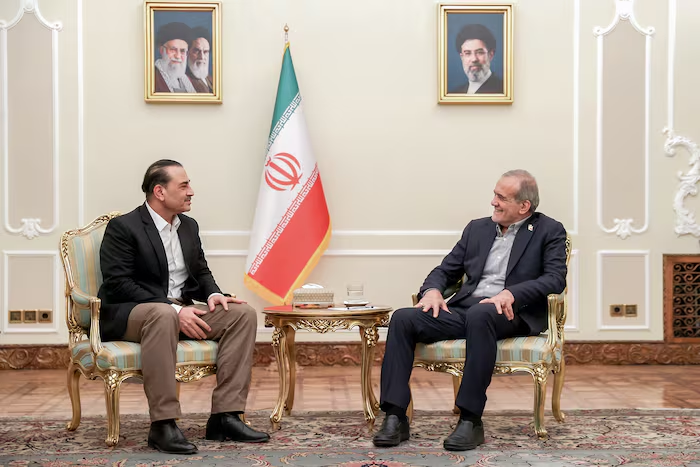
The incident occurred as a high-level Pakistani military delegation concluded meetings in Tehran aimed at brokering negotiations between Iran and the United States. Pakistan’s Interior Minister Mohsin Naqvi characterized the talks with Iranian President Masoud Pezeshkian as productive, signaling optimism that mediation efforts could advance toward resolving the nearly six-month conflict and reopening the Hormuz shipping corridor.
Prior to recent hostilities that began February 28, approximately one-fifth of globally traded oil transited the Strait of Hormuz. Iran has since imposed constraints on maritime traffic through selective strikes on passing vessels, though the source of Monday’s attack remained unconfirmed. The United States maintains concurrent blockade operations against Iranian ports and has engaged in retaliatory strikes against shipping in the region.
Oman and Iran are collaborating on a separate proposal for managing the strategic waterway, with Oman’s foreign minister scheduled to meet Iranian counterparts Tuesday. The viability of this arrangement for gaining U.S. acceptance remains uncertain.
Meanwhile, Tuesday marked one year since Israeli forces killed 22 Palestinians, including two journalists and rescue workers, in consecutive strikes on Nasser Hospital in Gaza. No personnel have faced accountability; Israeli officials cited a suspected Hamas installation as the target, and the military investigation remains incomplete despite repeated requests from news organizations for disclosure.
China’s Foreign Ministry expressed concern over U.S. Treasury Secretary Scott Bessent’s announced expansion of sanctions targeting Iran-linked entities, including Chinese-based operations. China, Iran’s largest trading partner and primary oil purchaser, contended that unilateral sanctions lack international legal foundation and risk escalating regional tensions.

More Stories
Federal voting arrest in New Jersey adds new pressure point in Sherrill-Trump standoff
Colombia backs Trump security push while limiting U.S. role in anti-gang operations
Former NFL cheerleader and ex-aide face off in close Rhode Island GOP primary