


💛 A quick favor, if you've got a second.
We're really happy that you chose to read one of our stories and sincerely hope you'll stick around to read more. We took our paywall down — for now — but that won't last forever, and when the gate goes back up, we'd love for you to already be on the inside.
It's free. So please enter your email here and don't forget to like and follow us on all of your favorite Social Media platforms!
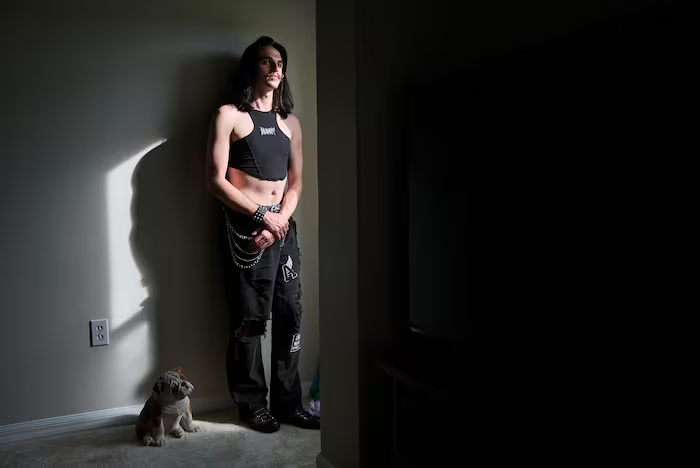
A kitchen accident in June left St. Cloud resident Elijah Button with a severe finger wound, but the 21-year-old chef faced a more pressing problem than the injury itself: he had no health insurance to cover emergency treatment. Button had dropped his Affordable Care Act plan in January after his monthly premium jumped by $100, a cost he could not sustain on his income.
The expiration of enhanced federal subsidies for ACA plans in January forced millions of Americans to make an impossible choice between maintaining insurance with substantially higher premiums or abandoning coverage altogether. Button’s decision to forgo insurance reflected a broader trend affecting the nation, with particularly acute consequences in Florida, where the uninsured population now faces mounting medical debt and delayed care.
Florida has emerged as the epicenter of the healthcare affordability crisis, with approximately 440,000 residents discontinuing their ACA plans this year—more than any other state. The exodus reflects the state’s unique demographic composition, dominated by gig workers, small business owners, and self-employed individuals who depend on the federal marketplace for coverage and lack employer-sponsored alternatives.
The state’s Republican-led legislature has never expanded Medicaid, a decision that leaves vulnerable populations without a safety net. With roughly 3.8 million ACA enrollees representing approximately one-fifth of the national total, Florida’s struggles underscore widespread concerns about healthcare accessibility and cost across the country.
Those who retained coverage are making painful financial sacrifices. Tracy Rand, a 51-year-old mental health counselor in Leesburg, watched her monthly premium climb from $55 to $1,100 and downgraded to a plan costing $160 monthly with higher deductibles. She abandoned her doctoral program, switched to discount grocery stores, and eliminated social outings to manage her budget while maintaining access to medications necessary for managing severe menopause symptoms following ovarian surgery.
Low-cost clinics have partially filled the void left by insurance lapses, but their capacity remains insufficient. Grace Medical Home in Orlando charges uninsured patients $5 per visit and served approximately 1,350 people last year while accepting roughly 350 new patients annually. CEO Stephanie Garris acknowledged the clinic cannot meet demand despite recently launching a mobile acute care unit to expand services across Florida’s 110 free and charitable clinics.
Healthcare affordability has become a central campaign issue in Florida’s competitive midterm races. U.S. Rep. Darren Soto, a Democrat representing a district south of Orlando with the nation’s second-largest ACA enrollment, emphasized healthcare costs as a primary constituent concern. His Republican opponent, former Trump administration official Dan Green, has prioritized grocery and property insurance affordability without addressing healthcare subsidies.
Congress has taken no significant legislative action to address rising healthcare costs since allowing the subsidies to expire. The administration has pursued fraud-prevention initiatives and negotiated drug company agreements, but these measures have proven insufficient to stem the crisis. Button, frustrated by the slow pace of political action, expressed skepticism that policymakers could resolve the crisis quickly enough to help struggling families.

More Stories
Federal voting arrest in New Jersey adds new pressure point in Sherrill-Trump standoff
Colombia backs Trump security push while limiting U.S. role in anti-gang operations
Former NFL cheerleader and ex-aide face off in close Rhode Island GOP primary