


💛 A quick favor, if you've got a second.
We're really happy that you chose to read one of our stories and sincerely hope you'll stick around to read more. We took our paywall down — for now — but that won't last forever, and when the gate goes back up, we'd love for you to already be on the inside.
It's free. So please enter your email here and don't forget to like and follow us on all of your favorite Social Media platforms!
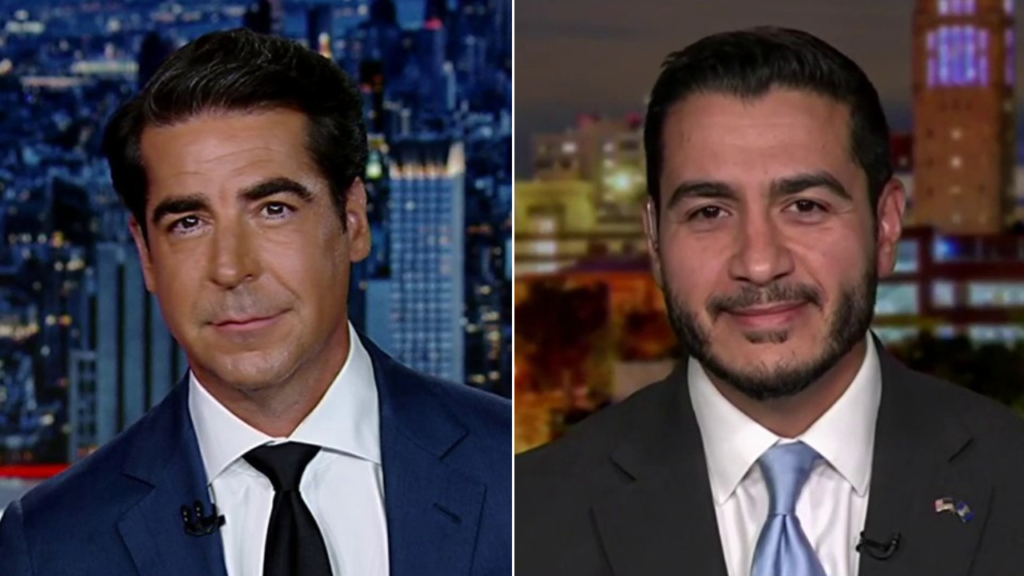
Abdul El-Sayed, the Michigan Democratic candidate for U.S. Senate, became the target of intense social media criticism Monday night following remarks he made during an appearance with Fox News host Jesse Watters. The controversy centered on El-Sayed’s comparison of Sharia law to Catholic canon law while defending his previous opposition to bans on religious Islamic jurisprudence.
When Watters questioned whether El-Sayed believed efforts to eliminate Sharia law constituted White supremacy, the candidate responded by drawing a parallel between Islamic religious law and the governance structures of the Catholic Church. El-Sayed argued that in a nation founded on religious freedom, neither Sharia law nor Catholic canon law should be forcibly imposed on the broader population.
Conservative figures swiftly took to social media to challenge El-Sayed’s analogy. Andrew Kolvet, executive producer of “The Charlie Kirk Show,” distinguished between the two legal systems, noting that canon law restricts itself to ecclesiastical matters while Sharia law encompasses governance of all aspects of human existence. Political commentator Carl Jackson characterized Sharia law as fundamentally incompatible with Western civilization and accused El-Sayed of weaponizing victimhood to deflect legitimate religious scrutiny.
Additional conservative commentators including Dana Loesch, Michael Knowles, and Pamela Geller highlighted distinctions between religious law systems that apply only to adherents and comprehensive legal frameworks asserting authority over non-believers. Some observers noted El-Sayed’s decision to defend rather than contextualize his position would likely fuel future attacks.
El-Sayed has previously stated his religious obligation to follow Sharia-compliant practices, telling The New York Times in 2009 that he felt duty-bound to live according to Islamic jurisprudence. In 2022, he opposed Oklahoma’s constitutional referendum banning Sharia law, likening such efforts to historical injustices against Native Americans and Black Americans.

More Stories
Colombia backs Trump security push while limiting U.S. role in anti-gang operations
Trump Threatens FCC Action Against NBC’s Welker Over Endorsement Coverage
Chicago Mayor Issues Executive Order Requiring Contractor Diversity Disclosures and ICE Ties Reporting