

💛 A quick favor, if you've got a second.
We're really happy that you chose to read one of our stories and sincerely hope you'll stick around to read more. We took our paywall down — for now — but that won't last forever, and when the gate goes back up, we'd love for you to already be on the inside.
It's free. So please enter your email here and don't forget to like and follow us on all of your favorite Social Media platforms!
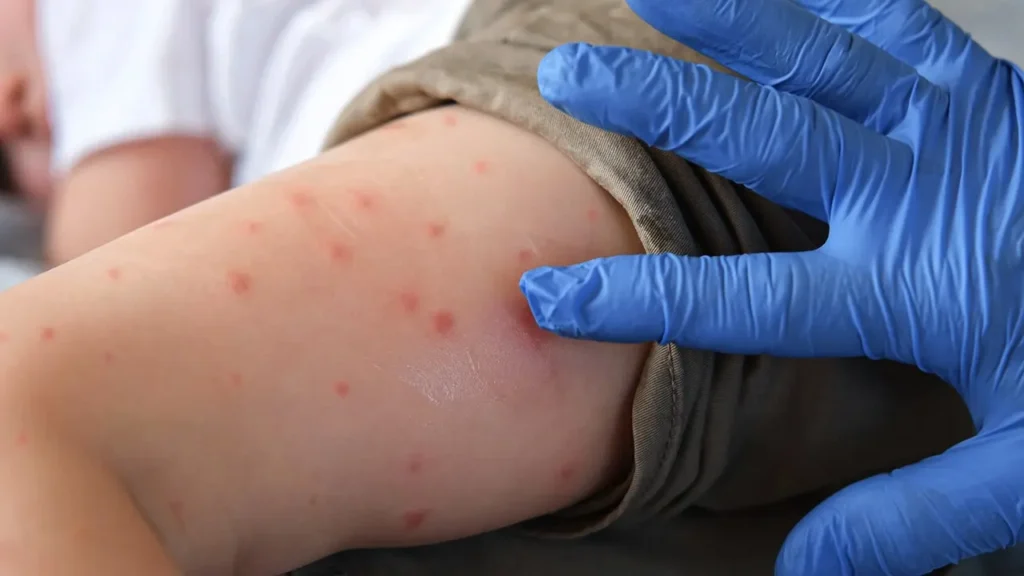
Two residents of Lancaster County in Pennsylvania have died from measles, marking the first fatalities from the disease in the state since 1991, according to an announcement Tuesday from the Pennsylvania Department of Health. Both individuals were unvaccinated at the time of infection, officials confirmed. The deaths underscore growing concerns about the resurgence of a virus that had been effectively controlled through widespread immunization efforts for decades.
Pennsylvania Secretary of Health Dr. Debra Bogen expressed condolences to the families affected and stressed the importance of vaccination. “Because measles was largely eliminated in the Commonwealth for more than three decades, people are not familiar with this disease and don’t fully understand the potential severity of the illness,” Dr. Bogen said in a statement. She emphasized that the MMR vaccine—administered in two doses—is safe and provides 97% lifetime protection against the virus.
The state health department has documented 393 measles cases across 28 counties throughout 2026, reflecting a significant surge in cases. Measles remains highly contagious, with transmission occurring through respiratory droplets when infected individuals breathe, cough or sneeze. The virus can remain infectious in air and on surfaces for up to two hours after an infected person departs an area.
Medical experts warn that measles is fatal in one to three patients per 1,000 cases, with nearly 20% of those infected requiring hospitalization. The disease can cause severe complications including pneumonia and encephalitis. Symptoms typically emerge seven to 21 days after exposure and initially include fever, cough, runny nose and conjunctivitis, followed by a characteristic rash.
Dr. Amesh Adalja of Johns Hopkins Center for Health Security characterized Pennsylvania’s 35-year streak without measles deaths as evidence of vaccine effectiveness rather than chance. “It was the vaccine working so completely that an entire generation of parents grew up never seeing what this virus does to a child’s lungs or brain,” Dr. Adalja stated. He warned that declining vaccination confidence has predictable consequences.
Achieving herd immunity against measles requires a 95% vaccination coverage rate, according to medical experts consulted on the outbreak. Dr. Marc Siegel, a Fox News medical analyst, noted that measles is so contagious that up to 90% of susceptible individuals exposed to infected persons become infected. He stressed that vaccination protects not only individuals but vulnerable populations including immunocompromised persons and pregnant women who cannot receive the live virus vaccine.
Former FDA Chief Scientist Dr. Jesse Goodman emphasized that extensive research has found no link between the MMR vaccine and chronic illnesses or autism. “The vaccine prevents millions of measles deaths worldwide annually, including hundreds that used to occur in the U.S.,” Dr. Goodman stated. Those who believe they have been exposed to measles should contact a healthcare provider immediately.

More Stories
New York Health Officials Sound Alarm Over Rising Measles Cases as School Year Approaches
CareCloud Breach Compromises 3.75 Million Patient Records, Among Largest Healthcare Data Thefts of 2026
Month-Long HEPA Use Linked to Faster Cognitive Processing in Middle-Aged Adults