


💛 A quick favor, if you've got a second.
We're really happy that you chose to read one of our stories and sincerely hope you'll stick around to read more. We took our paywall down — for now — but that won't last forever, and when the gate goes back up, we'd love for you to already be on the inside.
It's free. So please enter your email here and don't forget to like and follow us on all of your favorite Social Media platforms!
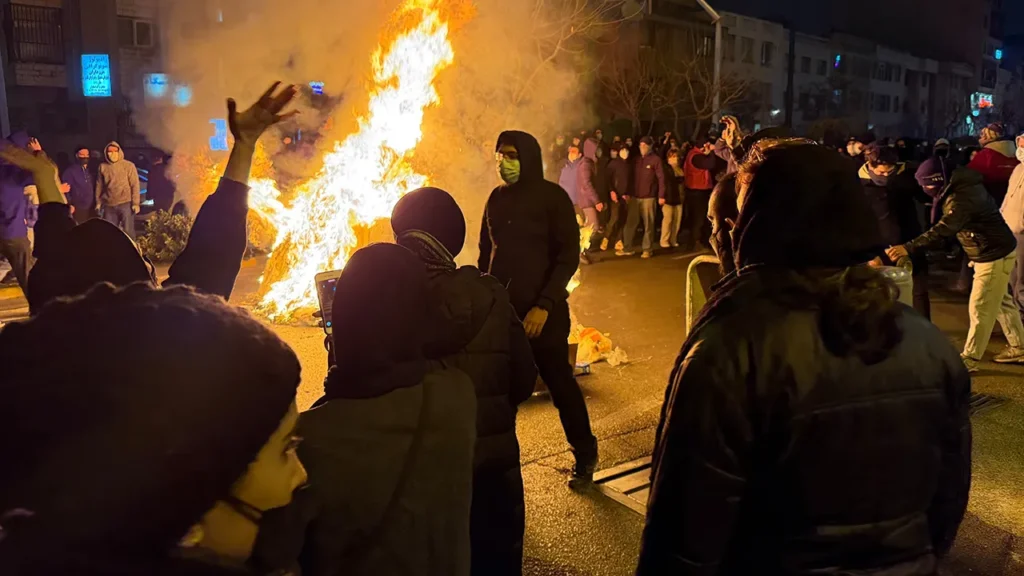
Treasury Secretary Scott Bessent unveiled an expansive economic assault on Iran on Monday, drawing comparisons to military strategy that defeated Nazi Germany. The initiative, aligned with President Donald Trump’s pledge to launch an “economic D-Day” against Tehran, could potentially accelerate the collapse of Iran’s nearly 47-year-old government, according to analysts specializing in the region.
Bessent framed the campaign as a coordinated effort to isolate Iran’s financial infrastructure globally. “Our objective is to sever every economic lifeline that sustains this tyrannical regime until Tehran stands alone,” Bessent stated, citing the regime’s hostility toward the United States and nuclear ambitions as justification for the sweeping measures.
Iran’s currency faced immediate pressure following the announcement, with the rial falling to an unprecedented 2.02 million against the U.S. dollar. The deteriorating exchange rate is compounding hardship for ordinary Iranians already struggling to purchase basic necessities.
Jonathan Harounoff, a British-Persian author and Iran specialist, suggested the economic offensive could trigger widespread domestic unrest. He told Fox News Digital that sustained pressure campaigns typically weaken regimes and create conditions favorable for popular uprisings, though predicting timing remains impossible.
Jason Brodsky, policy director at United Against Nuclear Iran, distinguished this pressure campaign from previous efforts by highlighting its synchronized economic and military dimensions. He noted that ongoing U.S. naval operations, industrial sabotage affecting Iranian steel production, and degraded military capacity have converged to create unprecedented vulnerability for Tehran.
However, skepticism exists about whether economic hardship alone will mobilize the Iranian population. Alireza Nader, an independent Iran expert, warned that civilian suffering could fail to inspire revolt given the regime’s demonstrated willingness to use lethal force against protesters, citing the killing of thousands during January demonstrations.
Bessent appealed directly to Iranian military personnel, suggesting economic collapse would force difficult questions about regime leadership. He invoked the fall of the Berlin Wall as evidence that ordinary soldiers can determine a nation’s trajectory by refusing orders.

More Stories
Colombia backs Trump security push while limiting U.S. role in anti-gang operations
Chicago Mayor Issues Executive Order Requiring Contractor Diversity Disclosures and ICE Ties Reporting
Federal Prosecutors Convene Special Grand Jury to Investigate D.C. Schools’ Attendance and Graduation Practices