


💛 A quick favor, if you've got a second.
We're really happy that you chose to read one of our stories and sincerely hope you'll stick around to read more. We took our paywall down — for now — but that won't last forever, and when the gate goes back up, we'd love for you to already be on the inside.
It's free. So please enter your email here and don't forget to like and follow us on all of your favorite Social Media platforms!
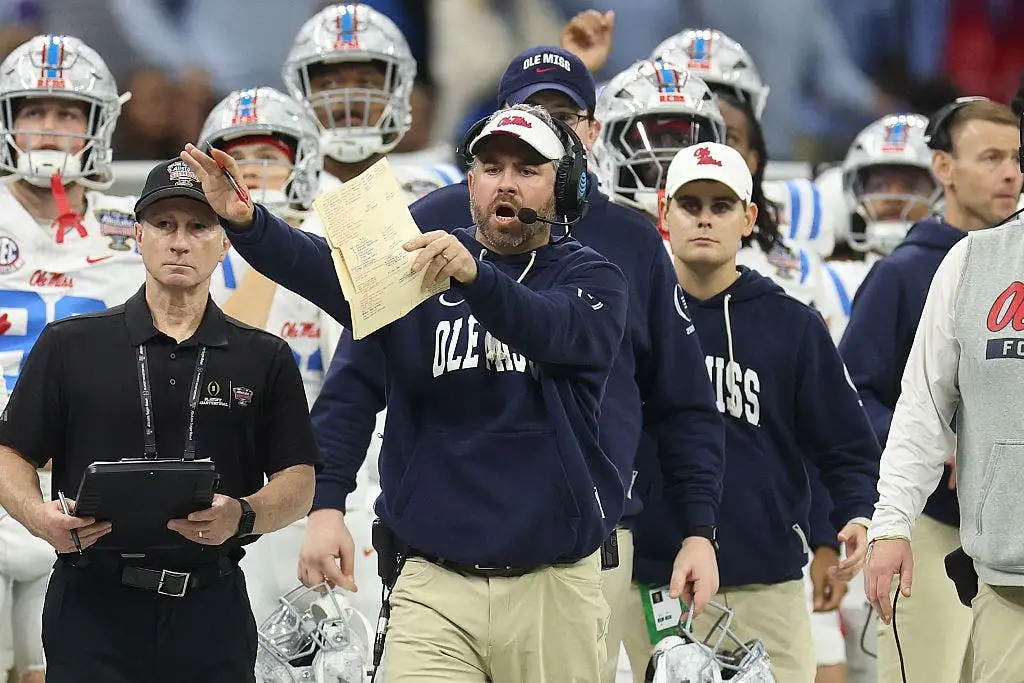
In the turbulent days after Lane Kiffin’s departure to LSU, Ole Miss officials arranged for a security assessment of the football facility that involved personnel with federal law enforcement connections. Walker Jones, the executive director of Ole Miss’s name, image and likeness collective, disclosed the detail during a recent podcast appearance, noting that officials wanted to protect sensitive information and player security during the transition period.
Jones described checking office spaces and expressing concern about potential listening devices, reflecting widespread anxiety within college athletics about the unauthorized access of practice footage and team materials. The revelation immediately sparked speculation about the scope and nature of the security sweep, though Ole Miss head coach Pete Golding quickly moved to clarify the situation to reporters.
Golding rejected the notion that the university had formally retained FBI personnel to conduct a counterintelligence operation. Instead, he explained that the assessment was handled by someone whose father worked in federal law enforcement and lived in the area, framing the effort as a standard precaution taken by any program advancing to the College Football Playoff.
The security concerns stemmed from the chaotic coaching departures that followed Kiffin’s exit to Baton Rouge, with multiple assistants accompanying him and some coaches shuttling between the two campuses. Kiffin was also expected to pursue Ole Miss players including Kewan Lacy and Trinidad Chambliss once the Rebels’ postseason ended, heightening concerns about operational security.
The episode reflects the broader chaos engulfing college athletics, where congressional debates, NCAA courtroom battles, and the return of former NFL players to college rosters have created an environment of institutional paranoia and competitive desperation.

More Stories
Indiana coach Curt Cignetti tells restless Hoosiers fans not to gripe over 38-0 win
Packers Running Back Josh Jacobs Placed on Commissioner Exempt List Pending Misdemeanor Charges
Denver Broncos Linebacker Jonathon Cooper Placed on Commissioner’s Exempt List Amid Domestic Violence Charges