


💛 A quick favor, if you've got a second.
We're really happy that you chose to read one of our stories and sincerely hope you'll stick around to read more. We took our paywall down — for now — but that won't last forever, and when the gate goes back up, we'd love for you to already be on the inside.
It's free. So please enter your email here and don't forget to like and follow us on all of your favorite Social Media platforms!
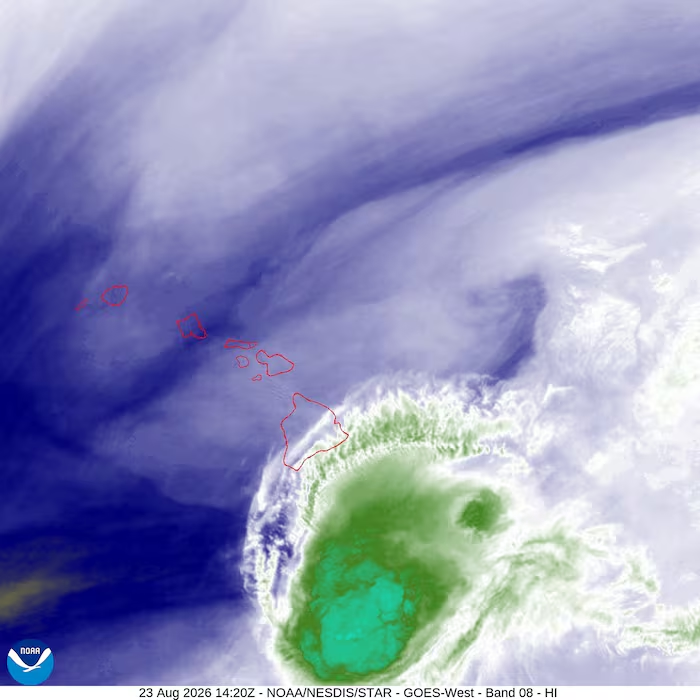
Tropical Storm Moke churned southward near Hawaii on Sunday, positioning itself to deliver substantial rainfall to regions already devastated by Hurricane Lala the previous week. The National Hurricane Center pinpointed Moke approximately 310 miles south of Hilo early Sunday, with maximum sustained winds near 45 mph. The storm’s primary threat centered on precipitation rather than wind intensity, particularly in communities where Lala had already inflicted considerable damage including downed vegetation, electrical infrastructure failures, and destroyed roadways and bridges.
Forecasters projected Moke would unleash between 10 and 15 inches of rain across the Big Island, with certain elevated terrain potentially receiving up to 15 inches. Such accumulations posed serious risks of catastrophic flooding and debris flows on windward and southeastern exposures, especially across terrain compromised by Lala’s initial passage. Eastern Maui faced expectations of 6 inches, while other islands in the chain anticipated minimal accumulation of one to two inches, according to the hurricane center’s projections.
Hurricane Lala had previously generated significant precipitation across the Big Island’s northeastern coastline, measuring 43.54 inches in some locations. Two fatalities were attributed to the storm. By Sunday, more than 6,700 customers—predominantly on the Big Island—remained without electrical service, according to outage tracking data.
Gov. Josh Green and state officials convened to alert residents ahead of Moke’s arrival, urging preparedness measures including acquiring additional food supplies, medications, and critical resources. Residents expressed anxiety over the prospect of continued heavy precipitation in flood-damaged communities, with concern particularly acute among those in vulnerable areas like Keaau on the island’s eastern flank.

More Stories
New York’s Colombian Community Mobilizes Relief Efforts Following Recent Earthquakes
Nepal Buries Hundreds of Flood Victims in Mass Graves as Identification Efforts Lag
Hurricane Karina Intensifies Over Pacific, Potential Major Storm Looms This Week