


💛 A quick favor, if you've got a second.
We're really happy that you chose to read one of our stories and sincerely hope you'll stick around to read more. We took our paywall down — for now — but that won't last forever, and when the gate goes back up, we'd love for you to already be on the inside.
It's free. So please enter your email here and don't forget to like and follow us on all of your favorite Social Media platforms!
Political advocates for free-market systems typically ground their arguments in empirical evidence and economic theory. By contrast, proponents of communist ideology frequently disregard historical outcomes and the lived experiences of those who endured communist rule firsthand. This selective amnesia serves a strategic purpose: survivors of totalitarian communist states represent irrefutable testimony to the systems’ destructive realities.
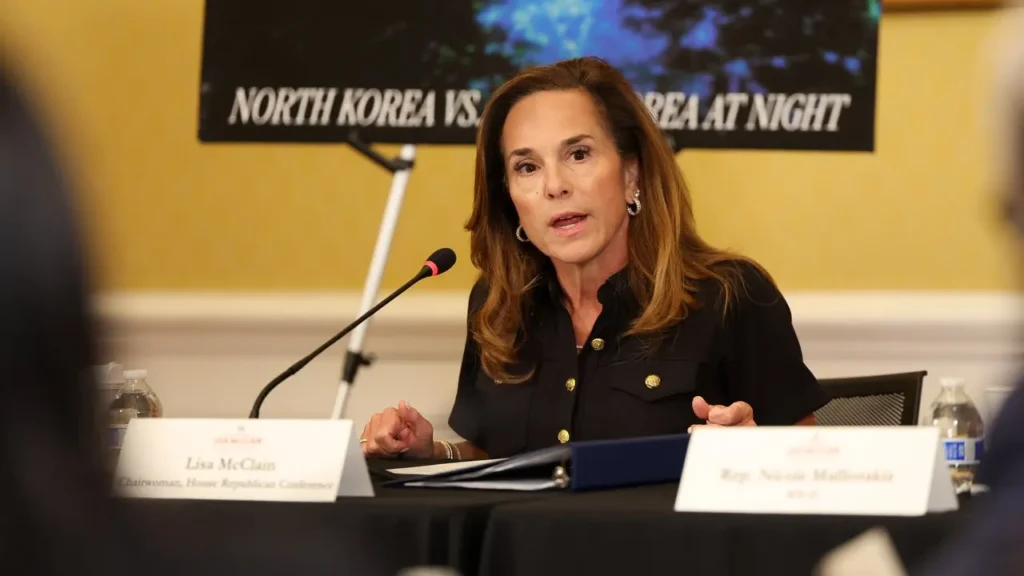
A gathering of communist regime survivors was recently convened at the Capitol to recount their experiences. These individuals fled Cuba, Venezuela, the Soviet Union and China, each carrying distinct but similarly harrowing accounts. Their testimonies documented systematic torture, economic collapse, educational indoctrination and religious persecution orchestrated by their respective governments.
José Daniel Ferrer, imprisoned for over 12 years in Cuban facilities, endured both physical and psychological torture alongside fellow prisoners who perished from similar treatment and deprivation. Ferrer argues that communist leaders who seek power in democracies employ deliberate deception. Both Fidel Castro and Hugo Chávez concealed their communist ideology until after consolidating governmental control, then transformed their nations into authoritarian states.
American politicians identifying themselves as “Democratic Socialists” employ similar tactics, according to observers. They claim their designation distinguishes them from communist movements while simultaneously advocating for centralized control over economic and political systems—the defining characteristic of all communist states throughout history.
Daniel Di Martino’s family experienced Venezuela’s transformation during the Bolivarian Revolution. Once middle-class with stable employment and housing, his family watched as government rationing eliminated basic goods from markets. The regime implemented fingerprint scanning requirements at grocery stores, restricting citizens’ purchasing based on government-assigned shopping days.
When governments monopolize food distribution, employment and housing, citizens forfeit their ability to meet basic needs without state authorization. The regime need not imprison every opponent; it can simply deny access to paychecks, housing or sustenance. This economic dependency transforms the state into an instrument of control over populations.
Communist systems extend their authority beyond material necessities into intellectual and spiritual life. Mike Gonzalez, who grew up in 1970s Cuba, was harassed for church attendance and pressured to join state-sponsored youth organizations as a child. Communist regimes view religious institutions and independent thought as threats because they represent loyalties external to state authority.
Pastor Ezra Jin was arrested in China last year alongside 20 other church leaders for practicing worship outside state control. Though China’s Constitution formally guarantees religious freedom, the Communist Party places itself above constitutional law. Eight of Jin’s fellow pastors remain imprisoned for their refusal to surrender spiritual independence to party authority.
Communist movements systematically undermine the institutions capable of resisting state expansion. They delegitimize national history, traditions and cultural heritage as irredeemable and oppressive. Once populations reject their own institutions as corrupt, dismantling those institutions becomes framed as liberation rather than destruction.
Survivors of communist regimes pose an inconvenient obstacle to ideological advocates because their testimonies cannot be abstracted or theorized away. They have witnessed confiscated businesses, depleted grocery shelves, shuttered churches and childhoods structured by fear. Americans considering political movements toward socialism should heed the warnings of those who lived under leaders making identical promises before seizing absolute power.

More Stories
Federal voting arrest in New Jersey adds new pressure point in Sherrill-Trump standoff
Colombia backs Trump security push while limiting U.S. role in anti-gang operations
Former NFL cheerleader and ex-aide face off in close Rhode Island GOP primary