
💛 A quick favor, if you've got a second.
We're really happy that you chose to read one of our stories and sincerely hope you'll stick around to read more. We took our paywall down — for now — but that won't last forever, and when the gate goes back up, we'd love for you to already be on the inside.
It's free. So please enter your email here and don't forget to like and follow us on all of your favorite Social Media platforms!
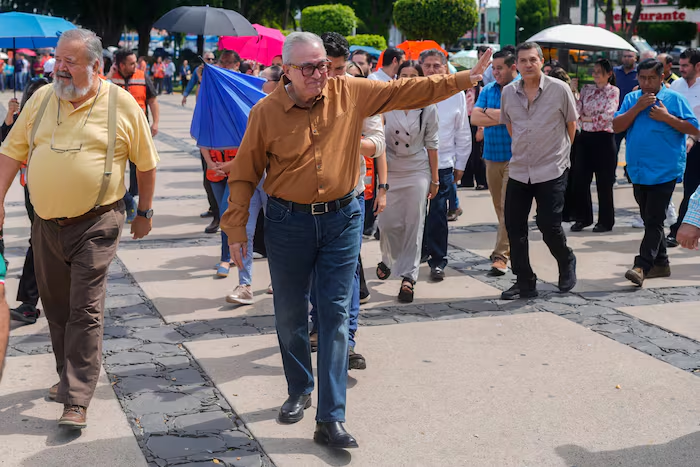
Sinaloa Governor Rubén Rocha Moya has reversed course and requested indefinite leave from office less than two days after announcing his return, capitulating to intense pressure from within Mexico’s Morena party and President Claudia Sheinbaum over accusations by U.S. federal prosecutors that he collaborated with a major cartel on drug smuggling operations. The state legislature was scheduled to vote Sunday on his fresh leave request, marking an abrupt reversal of his Friday declaration that he was resuming his post.
Rocha Moya’s initial return to the governorship came after claiming that Mexico’s Attorney General’s Office had found insufficient evidence to support participation in criminal activity. His announcement that he was reassuming duties “with my head held high” triggered swift condemnation from party officials, including multiple governors, senators and Sheinbaum herself, who warned that “positions are temporary, but responsibility to the nation is eternal” without naming him directly.
The U.S. Department of Justice indicted Rocha Moya and nine other current and former Mexican officials in late April in New York federal court, alleging they accepted bribes to protect Sinaloa cartel operatives trafficking fentanyl, heroin, cocaine and methamphetamine into the United States. The 77-year-old official had taken leave in early May following the indictment but maintained his innocence and characterized the charges as politically motivated.
Sheinbaum has refused U.S. requests to arrest and extradite the defendants without what she considers sufficient evidence, insisting that any prosecution occur within Mexico’s legal system. The standoff reflects the administration’s effort to balance pressure from the Trump White House, which contends cartels control Mexico, against the progressive movement’s resistance to U.S. intervention and concerns about sovereignty.
Morena’s national leadership disavowed prior knowledge of Rocha Moya’s return, characterizing it as his independent decision. Ricardo Monreal, the party’s congressional leader and a longtime Rocha Moya ally, publicly urged him to reconsider and remain on leave, contributing to the isolation that prompted Saturday’s retreat.
The conflict reflects ongoing violence in Sinaloa, where rival cartel factions have engaged in nearly two years of bloodshed. Following the indictment, Culiacán’s mayor and the state’s deputy attorney general also stepped down, while two former senior state officials surrendered to U.S. authorities.

More Stories
Federal voting arrest in New Jersey adds new pressure point in Sherrill-Trump standoff
Colombia backs Trump security push while limiting U.S. role in anti-gang operations
Former NFL cheerleader and ex-aide face off in close Rhode Island GOP primary