


💛 A quick favor, if you've got a second.
We're really happy that you chose to read one of our stories and sincerely hope you'll stick around to read more. We took our paywall down — for now — but that won't last forever, and when the gate goes back up, we'd love for you to already be on the inside.
It's free. So please enter your email here and don't forget to like and follow us on all of your favorite Social Media platforms!
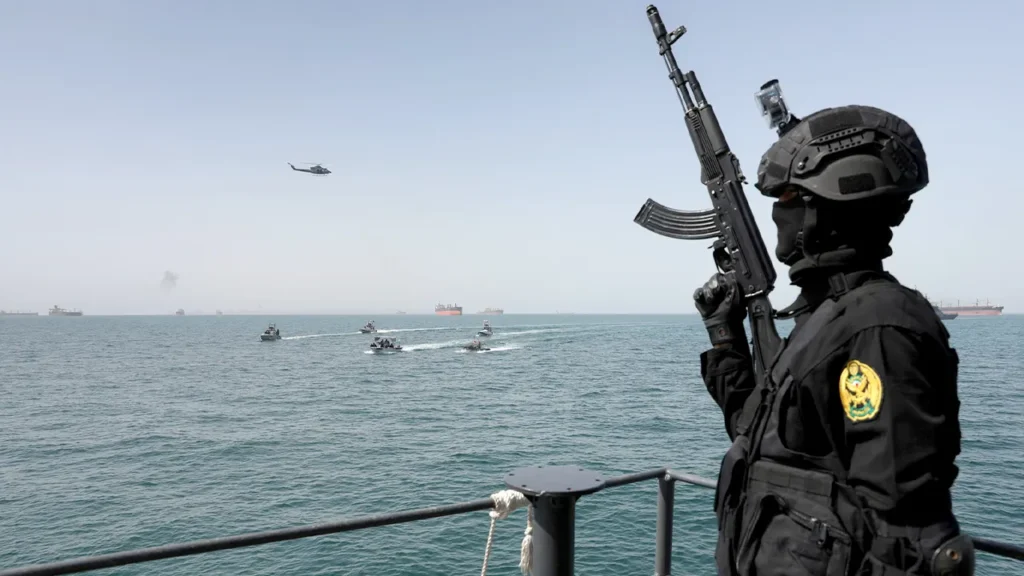
While international focus remains on maritime traffic navigating the Strait of Hormuz, industry experts are drawing attention to a potentially more serious and longer-lasting energy crisis unfolding beneath the surface. Petroleum geologist Art Berman, an energy consultant with over 40 years of experience, cautions that restoring dormant Gulf oil production involves far greater technical complexity than reopening shipping lanes through the strategic waterway.
Berman told Fox News Digital that approximately 8 million barrels of Persian Gulf production remain offline, with global output down roughly 10 million barrels daily. He emphasized that even after political agreements resolve the immediate conflict, the upstream challenge of reactivating wells thousands of feet underground could persist for months or longer, making this “a kind of a world-changing event” comparable in scale to major economic disruptions.
The International Energy Agency’s August 12, 2026 Oil Market Report supports Berman’s assessment, noting that Gulf production stood at 23.9 million barrels per day in July, still 8.3 million barrels below pre-conflict levels. Global oil supply remained 6.3 million barrels per day below year-earlier levels, according to the IEA analysis.
The U.S. Energy Information Administration projects somewhat lower production shut-ins, averaging 5.5 million barrels per day in July. However, the EIA cautioned that transit constraints continue to worsen conditions and warned that some Gulf producers may never fully recover their previous output during the forecast period extending into early 2027.
Restarting dormant wells requires reestablishing underground communication systems and managing complications that develop during extended shutdowns, Berman explained. The process differs fundamentally from simple infrastructure reopening, involving “complicated, high-risk, relatively long-term” technical work with uncertain outcomes.
Berman estimated that approximately 80 percent of affected wells could eventually approach previous production levels within weeks or months, though others may require additional engineering or operate permanently at reduced capacity. “Some of that production will never come back,” he predicted.
Wood Mackenzie offered a more optimistic recovery scenario, projecting that affected fields could reach roughly 70 percent of previous output within three months and 90 percent within six months, assuming controlled restart procedures. The final million barrels per day could require substantially longer to restore.
Beyond production challenges, Berman cautioned that political agreements alone would not immediately normalize energy flows. Shipowners, insurers, and crews require confidence in maritime security before resuming normal operations, and various logistical obstacles could persist even after governmental settlements.
The petroleum geologist stressed that U.S. energy independence does not insulate American consumers from disruptions, since global crude markets remain interconnected. U.S. refineries require specific crude grades unavailable domestically to produce gasoline, diesel, and jet fuel, making isolation from international markets impossible.
The White House countered concerns about lasting energy security threats, highlighting record American oil and gas production under the Trump administration. Spokeswoman Taylor Rogers blamed Iran for instability in the shipping corridor and called on U.S. allies to invest in diversified energy partnerships.

More Stories
Colombia backs Trump security push while limiting U.S. role in anti-gang operations
Federal Prosecutors Convene Special Grand Jury to Investigate D.C. Schools’ Attendance and Graduation Practices
State Department Reissues Level 3 Travel Advisory for Israel Amid Terrorism and Armed Conflict Concerns