


💛 A quick favor, if you've got a second.
We're really happy that you chose to read one of our stories and sincerely hope you'll stick around to read more. We took our paywall down — for now — but that won't last forever, and when the gate goes back up, we'd love for you to already be on the inside.
It's free. So please enter your email here and don't forget to like and follow us on all of your favorite Social Media platforms!
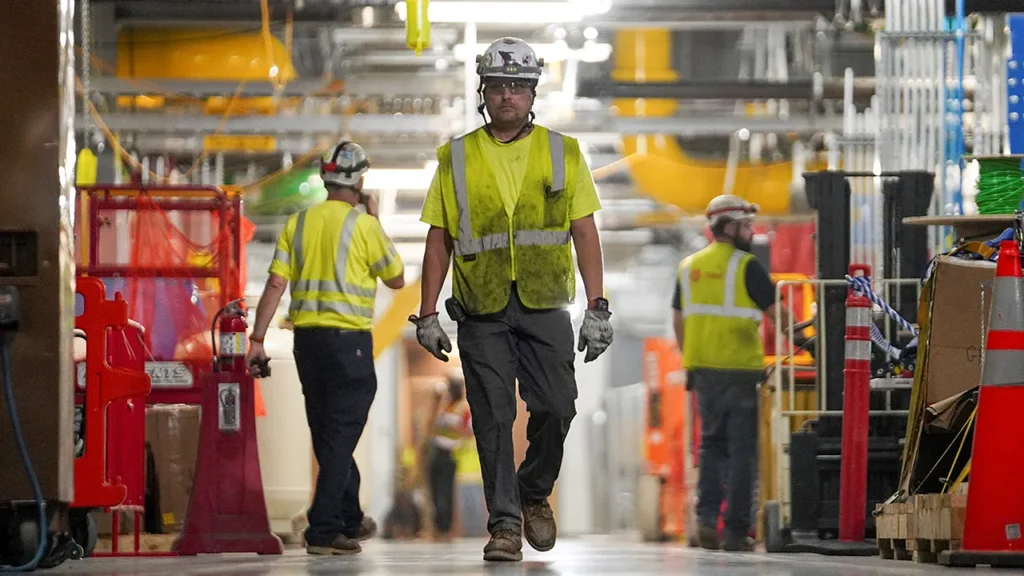
Across the country, elected officials are responding to constituent concerns about data center construction by implementing blanket moratoria, a reflexive move that prioritizes short-term political comfort over long-term consequences. Yet genuine leadership demands weighing the full scope of outcomes when making decisions about major infrastructure projects that will shape the nation’s economic and technological future.
Construction freezes on data centers risk ceding artificial intelligence advancement to international competitors, particularly China, while undermining national security interests. Such restrictions also eliminate hundreds of millions of dollars in annual wages for working Americans and freeze expansion of the construction sector’s most dynamic segment, simultaneously drying up tax revenue streams that currently support local police operations, road maintenance and teacher compensation in counties nationwide.
Democratic leaders seeking to restore public confidence must articulate a forward-looking strategy that ensures broad-based prosperity rather than concentrating gains among the wealthy. The party must champion substantive solutions grounded in evidence rather than fear, reclaiming its historical identity as the party of transformative infrastructure projects and pragmatic governance.
New York Governor Kathy Hochul’s statewide moratorium in July exemplifies the pattern now spreading to numerous local jurisdictions. At the federal level, Independent Senator Bernie Sanders of Vermont and Democratic Representative Alexandria Ocasio-Cortez of New York have introduced legislation for a national construction freeze on data centers.
Policymakers should instead establish Centers of Excellence at state or national levels, equipping county boards and municipal zoning authorities with factual information necessary for transparent decision-making. Local leaders must balance constituent input with evidence-based analysis when determining whether data centers align with community interests.
Electricity rate concerns frequently dominate public debate, yet aging infrastructure, geopolitical conflicts and grid maintenance represent the primary drivers of residential rate increases—not data center operations. The industry has committed to supplying its own power or funding grid improvements, with 200 companies now pledging support through the White House’s Ratepayer Protection Pledge.
Studies demonstrate that properly structured rate policies ensure data centers contribute significantly to grid maintenance costs. Virginia’s Dominion Energy model shows large-load customers, including data facilities, pay fees equivalent to or exceeding their energy consumption, generating additional revenue for upgrades and renewable generation development.
Water usage concerns warrant perspective: data center consumption remains minimal compared to residential lawn irrigation, household plumbing losses and golf course operations. Virginia’s legislative committee determined most data centers consume comparable or lesser water than average large office buildings, with newer facilities employing treated wastewater systems or closed-loop recycling.
Backup diesel generators, another source of community anxiety, operate approximately 20 hours yearly for routine maintenance and testing. Air quality data from Northern Virginia, a significant data center hub, demonstrates improvement to decades-low pollution levels according to Environmental Protection Agency records.
Thoughtful planning should confine data centers to appropriately zoned industrial land. Loudoun County’s permission for facilities in mixed-use residential areas illustrates how poor zoning decisions—not industry behavior—create problems. Developers and union construction workers operate within existing regulatory frameworks regardless of their quality.
The central question remains whether data centers represent net community assets. A 2025 PwC analysis documented $162.7 billion in combined federal, state and local tax contributions during 2023 alone. Loudoun County depends on data centers for 38 percent of tax revenue despite occupying merely 2 percent of county land, while Mecklenburg County constructed its first new school in 75 years using data center revenues.
Virginia’s experience under Governor Abigail Spanberger demonstrates productive alternatives to moratoria. When unions representing 113,000 skilled workers in the state mobilized support for industry tax exemptions common to all industrial companies, state Democrats engaged data center operators in substantive discussions rather than implementing restrictions.
The resulting compromise—a first-of-its-kind energy consumption tax—establishes foundation for ongoing conversations regarding water usage standards and energy efficiency without eliminating the construction jobs, permanent employment and local revenues data centers generate. Democratic policymakers nationwide should adopt this evidence-based, collaborative approach rather than reflexively yield to anti-development sentiment.

More Stories
Federal voting arrest in New Jersey adds new pressure point in Sherrill-Trump standoff
Colombia backs Trump security push while limiting U.S. role in anti-gang operations
Former NFL cheerleader and ex-aide face off in close Rhode Island GOP primary