


💛 A quick favor, if you've got a second.
We're really happy that you chose to read one of our stories and sincerely hope you'll stick around to read more. We took our paywall down — for now — but that won't last forever, and when the gate goes back up, we'd love for you to already be on the inside.
It's free. So please enter your email here and don't forget to like and follow us on all of your favorite Social Media platforms!
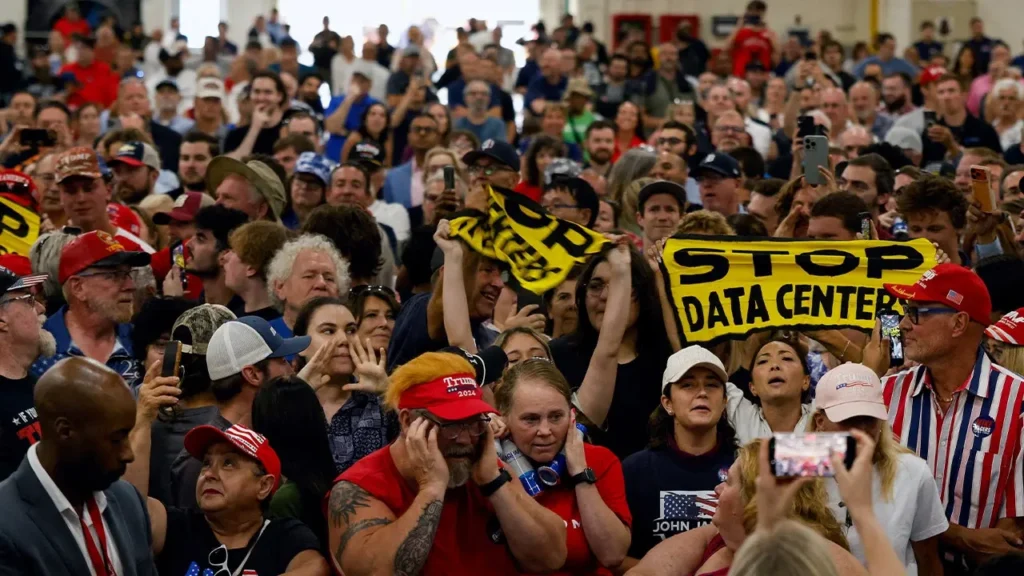
The technology industry’s dominance in shaping consumer behavior has not translated into political success on infrastructure matters. Companies controlling smartphones, smart home devices and software platforms now confront organized resistance to their expansion plans, particularly regarding artificial intelligence facilities and the data centers they require.
Data center opposition has reached historic levels. Between May 2024 and March 2025, local communities and activists successfully blocked or delayed $64 billion worth of projects. A Gallup poll indicates 71 percent of Americans oppose data center construction in their neighborhoods — a figure surpassing opposition to nuclear power plants. New York recently became the first state implementing a statewide data center ban.
The tech industry’s political apparatus, while substantial in Washington influence, lacks infrastructure for state and local battles. Tech lobbying historically focused on digital regulation, content moderation and intellectual property matters. Data centers demand different expertise: power generation, transmission infrastructure, water rights and land use approvals across hundreds of communities.
More than 230 environmental organizations, including Food & Water Watch, Greenpeace and Friends of the Earth, have formally called for a national moratorium. These well-resourced groups employ experienced lawyers, field organizers and established networks perfected through decades opposing energy projects. Congressional scrutiny has questioned some organizations’ foreign funding sources, with the House Energy and Commerce Committee investigating potential Chinese influence.
The shale industry offers a potential model for success. Fracking companies survived environmental opposition by creating direct financial beneficiaries in local communities through royalties, wages and tax revenue. Nuclear power provides a cautionary example, losing its political battle in the 1970s despite environmental benefits, delaying American capacity for 50 years until artificial intelligence demand renewed interest.
Major AI companies possess resources to transform public opinion through dedicated power generation, community infrastructure investments, local hiring and transparent messaging about economic benefits. Without rapid strategic response matching the opposition’s organizational sophistication, tech risks repeating nuclear’s decades-long stalemate.

More Stories
Federal voting arrest in New Jersey adds new pressure point in Sherrill-Trump standoff
Colombia backs Trump security push while limiting U.S. role in anti-gang operations
Former NFL cheerleader and ex-aide face off in close Rhode Island GOP primary