


💛 A quick favor, if you've got a second.
We're really happy that you chose to read one of our stories and sincerely hope you'll stick around to read more. We took our paywall down — for now — but that won't last forever, and when the gate goes back up, we'd love for you to already be on the inside.
It's free. So please enter your email here and don't forget to like and follow us on all of your favorite Social Media platforms!
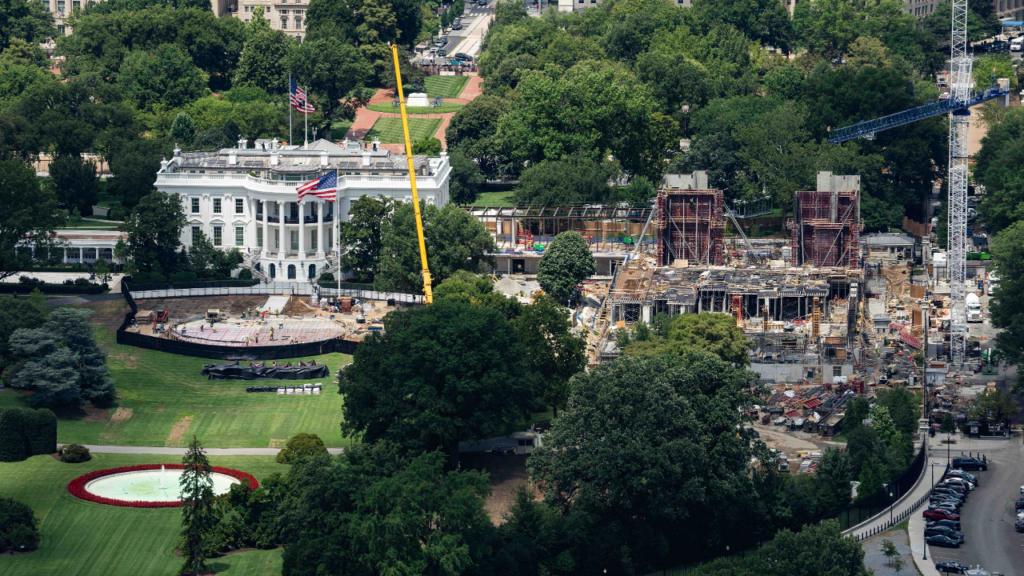
The U.S. Supreme Court’s Chief Justice John Roberts is reviewing an emergency request to overturn a federal appeals court decision that has stalled construction on a new East Wing at the White House. The application seeks to reinstate building work that has been restricted by a complex construction schedule imposed by U.S. District Judge Richard Leon, who oversaw the project affecting the replacement structure for the demolished original East Wing built in 1902 and substantially expanded under President Franklin D. Roosevelt in 1942.
Judge Leon’s oversight has constrained what can and cannot be constructed in the new East Wing, which is designed to replace aging underground facilities including the Presidential Emergency Operations Center that has served the nation for 84 years. The Department of Justice has asked Chief Justice Roberts to stay the D.C. Circuit Court’s decision and allow construction to resume under the design approved by the president following consultations with the Secret Service and Pentagon.
Judge Neomi Rao of the D.C. Circuit issued a forceful dissenting opinion challenging the appellate court’s decision to uphold Judge Leon’s restrictions. The National Trust for Historic Preservation brought the case that led to the construction limitations, though legal analysts have questioned whether the organization has proper standing to challenge presidential authority over executive branch facilities.
The core legal dispute centers on presidential powers over the Executive Mansion and national security infrastructure. Proponents of lifting the restrictions argue the president possesses inherent constitutional authority as Commander-in-Chief to modify and secure facilities essential to presidential operations and national defense without judicial interference over construction schedules.
Security concerns cited in support of the stay include evolving threats from surveillance technology, drone capabilities, and hypersonic missiles that have emerged in recent years. Advocates contend that restricting the president’s ability to implement defensive measures at the White House and related facilities poses unacceptable risks to national security and executive continuity.
Chief Justice Roberts requested the National Trust for Historic Preservation to submit its response by noon Eastern Time on Tuesday, August 18, 2026. The decision on whether to grant the stay application remains pending before the nation’s highest court.

More Stories
Federal voting arrest in New Jersey adds new pressure point in Sherrill-Trump standoff
Colombia backs Trump security push while limiting U.S. role in anti-gang operations
Trump Threatens FCC Action Against NBC’s Welker Over Endorsement Coverage