


💛 A quick favor, if you've got a second.
We're really happy that you chose to read one of our stories and sincerely hope you'll stick around to read more. We took our paywall down — for now — but that won't last forever, and when the gate goes back up, we'd love for you to already be on the inside.
It's free. So please enter your email here and don't forget to like and follow us on all of your favorite Social Media platforms!
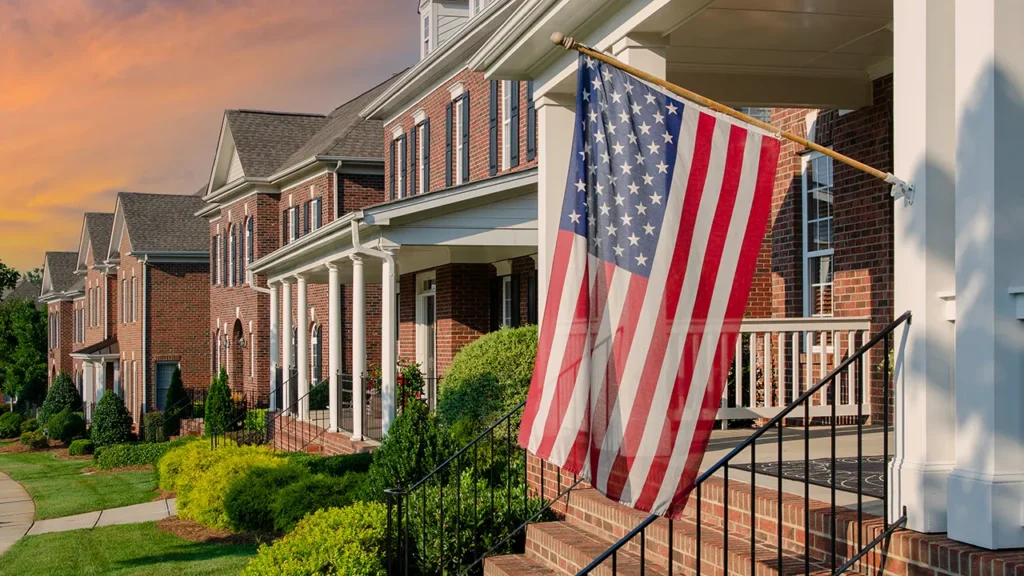
Homeownership has become increasingly unattainable across the nation despite Washington allocating hundreds of billions of dollars toward housing initiatives, according to a new analysis by Open The Books, a conservative government spending watchdog. The organization examined a decade of housing data and federal expenditures, concluding that massive federal investment bore virtually no correlation with narrowing the gap between rising home prices and stagnant household incomes.
Open The Books reviewed price indices and income figures across all 50 states between 2015 and 2024, discovering that home prices outpaced median household income growth in every single state during this period. The watchdog calculated what it termed an “Affordability Gap” by measuring how much faster home prices increased than incomes in each state. In 48 states, this gap reached double digits, while 17 states experienced home-price appreciation exceeding wage growth by more than 50 percentage points.
The organization tracked roughly $460 billion in Department of Housing and Urban Development spending across 18 housing-related programs during the decade, then compared this funding allocation to each state’s affordability conditions. The analysis revealed no meaningful linear relationship between the level of HUD funding received and improvements in housing affordability outcomes.
Christopher Neefus, vice president of communications for Open The Books, told Fox News Digital that centralized federal solutions prove ineffective for addressing local market dynamics. He emphasized that regulatory reform and zoning modifications at the state and local level represent more promising approaches than additional federal spending.
HUD responded by highlighting the Trump administration’s deregulation efforts and initiatives to combat housing fraud. A department spokesperson stated that HUD has uncovered nearly $495 million in fraudulent activity, eliminated previous regulatory burdens, and facilitated homeownership for more than one million Americans.
The report underscores mounting concerns that younger generations face unprecedented barriers to homeownership. National median household income rose 99.7 percent between 2000 and 2024, while median single-family home prices climbed 150.1 percent over the same span, according to housing policy data released earlier this year. The median age of first-time homebuyers has now reached 40.
Neefus noted that the time required for median-income households to accumulate a substantial down payment has become prohibitively long, suggesting younger Americans may be reconceptualizing what homeownership means for their futures. He concluded that reversing affordability trends requires addressing structural impediments rather than expanding top-down federal expenditures.

More Stories
Federal voting arrest in New Jersey adds new pressure point in Sherrill-Trump standoff
Colombia backs Trump security push while limiting U.S. role in anti-gang operations
Former NFL cheerleader and ex-aide face off in close Rhode Island GOP primary