


💛 A quick favor, if you've got a second.
We're really happy that you chose to read one of our stories and sincerely hope you'll stick around to read more. We took our paywall down — for now — but that won't last forever, and when the gate goes back up, we'd love for you to already be on the inside.
It's free. So please enter your email here and don't forget to like and follow us on all of your favorite Social Media platforms!
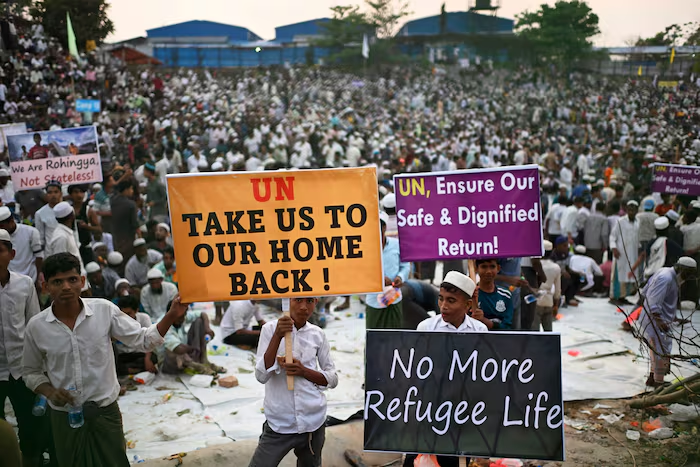
Myanmar’s military-controlled government announced Saturday that it has verified more than 300,000 Rohingya refugees sheltering in Bangladesh camps as former residents of Rakhine state, pledging to facilitate their return once security conditions stabilize in the western region. The statement from the Ministry of Foreign Affairs marks a development in the long-stalled repatriation process as the displacement crisis approaches nine years since the initial mass exodus.
The refugee crisis began in August 2017 when Myanmar’s military launched a sweeping offensive in Rakhine following attacks by a Rohingya insurgent faction on military guard posts. The military operation forced more than 700,000 Rohingya across the border into Bangladesh, compounding an existing refugee population that had accumulated over previous decades from earlier waves of violence perpetrated by Myanmar’s armed forces.
Myanmar verified 426,545 of the 828,824 refugees listed by Bangladesh as of late July, determining that 308,797 of those individuals were former Rakhine residents eligible for return. The government said 113,507 people could not be verified and identified 4,241 individuals as having engaged in activities it classified as terrorist in nature.
The international community has characterized the 2017 military operation as ethnic cleansing and genocide, including formal accusations from the United Nations. Myanmar’s government does not recognize the Rohingya as an official ethnic minority among the nation’s 135 recognized groups, instead labeling them as Bengalis to suggest they are Bangladeshi nationals illegally residing in Myanmar.
A 2018 bilateral agreement between Myanmar and Bangladesh established a two-year repatriation framework, but efforts have stalled amid deteriorating security. A 2021 military coup that removed elected leader Aung San Suu Kyi from power intensified instability, while subsequent fighting between the military and the Rakan-based Arakan Army over regional control in 2023 forced additional refugees to flee toward Bangladesh and other destinations.
Deteriorating conditions in refugee camps, substantial cuts to international aid, and minimal prospects for safe return have driven increasing numbers of Rohingya to attempt perilous ocean journeys to Malaysia and Indonesia aboard unsafe vessels. Malaysian Prime Minister Anwar Ibrahim announced in late July that Myanmar had agreed to accept 5,000 Rohingya refugees from Malaysia, though a Myanmar foreign ministry official subsequently clarified the program applied exclusively to verified Myanmar nationals held in Malaysian detention facilities.

More Stories
Tennessee’s Lone Death Row Female is Scheduled for Execution Wednesday for 1995 Torture/Murder
Colombia backs Trump security push while limiting U.S. role in anti-gang operations
Modern Science Finally Supports & Strengthens Biblical Account of the Crucifixion of Jesus Christ