


💛 A quick favor, if you've got a second.
We're really happy that you chose to read one of our stories and sincerely hope you'll stick around to read more. We took our paywall down — for now — but that won't last forever, and when the gate goes back up, we'd love for you to already be on the inside.
It's free. So please enter your email here and don't forget to like and follow us on all of your favorite Social Media platforms!
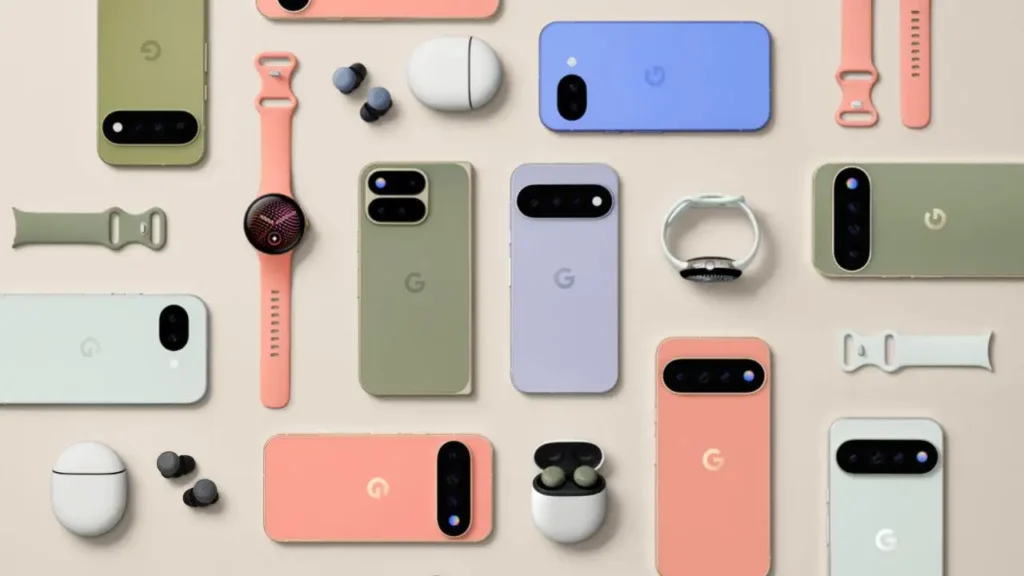
Google’s annual Made by Google event on August 12 showcased an expanded device ecosystem featuring four new Pixel 11 phones, an updated Pixel Watch, the company’s inaugural tracker tag, and enhanced earbuds capabilities. The overarching theme emphasized how devices can intelligently anticipate user needs without explicit prompts, leveraging advanced artificial intelligence and contextual awareness across the product line.
The Pixel 11 lineup comprises the standard Pixel 11, Pixel 11 Pro, Pixel 11 Pro XL, and Pixel 11 Pro Fold, all powered by Google’s new Tensor G6 processor. The base model features a camera bar 40% thinner than predecessor versions and a 48-megapixel primary sensor with 56% increased light sensitivity compared to the Pixel 10. Its 5x telephoto lens now achieves up to 30x Super Zoom capability. All three traditional models now begin with 256GB storage.
The Pro variants introduce Google’s most luminous Pixel displays to date, achieving up to 3,600 nits brightness with enhanced scratch resistance coatings. Their telephoto cameras support up to 120x Pro Zoom. All models incorporate Pixelsnap magnetic wireless charging with Qi2 compatibility, delivering up to 25W charging speeds on compatible devices. The Pixel 11 Pro Fold is nearly 10% lighter and approximately 1 millimeter thinner than its predecessor, with a redesigned hinge and reinforced materials making it three times more durable.
Google expanded interoperability with Apple devices through Quick Share, now enabling photo and video exchange between Pixel phones and iPhones or MacBooks. The company also streamlined switching from iOS, allowing photos and group chats to migrate during the transition process. All four models are available for preorder immediately, with official availability beginning August 20.
Gemini integration represents the most significant software enhancement, now handling multitask operations across over 40 applications. Pixel 11 can surface contextual information—such as flight details and booking confirmations—when conversations mention upcoming travel. The system may also suggest relevant actions, including restaurant reservations or calendar entries during dinner planning discussions.
Rambler, a new Gemini-powered voice input feature, automatically removes filler words and hesitations while transcribing speech. Sign To Text enables the camera to recognize American Sign Language for text composition, messaging, and Gemini prompts, detecting one-handed and two-handed signing along with facial expressions for grammatical context. Additional sign languages are planned for future release.
Magic Capture analyzes approximately 400 frames during a typical photography session, delivering precisely timed 12-megapixel images with automatic cropping and unblurring. The feature simultaneously records video without requiring camera mode switching. Instant Night Sight operates four times faster, reducing the need for extended phone stability during low-light photography. A new Camera Looks feature permits users to select visual styles before capture and customize additional presets.
The Tensor G6 processor enables on-device AI processing up to 3.5 times faster while consuming 3.5 times less energy than the previous generation. HiLight, a new feature on Pro models, displays colored LED patterns around the camera flash while the phone remains face-down, indicating Gemini activity or incoming calls from important contacts with customizable color assignments.
Google emphasized security protections including automatic spam call and text blocking, scam warnings, and seven years of guaranteed security updates. An enhanced security chip protects stored personal information. The company confirmed users can control which AI features remain active and maintain visibility into data usage.
Pixel Watch 5 features twice-accurate GPS route tracking in challenging environments, 50% additional RAM, and a faster processor compared to Pixel Watch 4. Health Guardian introduces monthly wellness summaries tracking blood pressure trends, sleep breathing quality, and insulin resistance patterns. Breathing Emergency Detection monitors oxygen saturation drops and can automatically contact emergency services while transmitting location if the wearer becomes unresponsive. This critical safety feature currently remains unavailable in the United States, available only in select European countries, with expansion planned.
Pixel Watch 5 preorders begin immediately, with the 41mm model starting at $399 and the 45mm version at $429. Official sales commence August 20. The Pixel Buds Pro 2 receive upgraded Active Noise Cancellation, integration with Pixel Watch for automatic audio pausing during sleep detection, and an new Olive color option. Live Translate improvements arrive later this fall for both Pixel Buds Pro 2 and Pixel Buds 2a.
Google’s Pixel Tag tracker joins the company’s Find Hub network encompassing over one billion Android devices, enabling location assistance even when the primary phone is unavailable. Ultra-Wideband and Bluetooth Channel Sounding provide distance and directional guidance on compatible devices. The replaceable battery lasts over one year with IP67 water and dust resistance. Users can share tags with up to 10 people, and the tag button functions bidirectionally to ring a phone. Pixel Tag costs $29 individually or $99 for four units, launching November 11.


More Stories
Looney Tunes’ ‘Coyote vs. Acme’ Debuts With $15.5 Million as ‘Spider-Man’ Holds Box Office Crown
Country Music Legend Dolly Parton Laid to Rest; Niece Shares Touching Remembrance
Britt Baker’s Surprise Return Helps Persephone Capture AEW TBS Championship at All In