

💛 A quick favor, if you've got a second.
We're really happy that you chose to read one of our stories and sincerely hope you'll stick around to read more. We took our paywall down — for now — but that won't last forever, and when the gate goes back up, we'd love for you to already be on the inside.
It's free. So please enter your email here and don't forget to like and follow us on all of your favorite Social Media platforms!
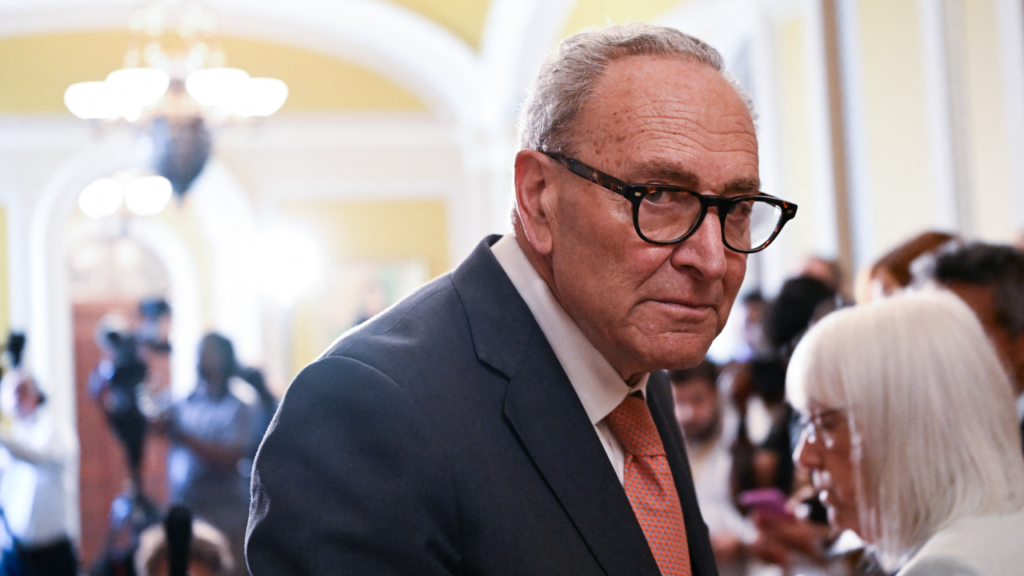
The Democratic Party’s internal ideological struggle intensified this week as progressive candidates won high-stakes primary contests, marking consecutive defeats for Senate Democratic Leader Chuck Schumer’s preferred candidates. While the left-wing movement captured Senate nominations in Michigan and Minnesota, the party’s establishment secured a narrow victory in Wisconsin’s gubernatorial primary, signaling a divided party heading into 2026 midterm races.
Milwaukee County Executive David Crowley narrowly prevailed over state Rep. Francesca Hong, a Democratic Socialists of America member, in Wisconsin’s gubernatorial primary Tuesday. Crowley, who secured backing from retiring Gov. Tony Evers and mainstream Democratic Party figures, will face Republican Rep. Tom Tiffany, a hard-right member of the House Freedom Caucus endorsed by President Donald Trump. The general election winner will replace Evers, who declined to pursue a third term.
Hong, a former chef and single parent, campaigned on a platform including guaranteed paid leave, raising Wisconsin’s minimum wage to $20 per hour, and imposing a one-year moratorium on artificial intelligence data center construction. The candidate faced scrutiny over old social media posts advocating police defunding and abolishment, though she has since clarified her position. She also generated national headlines after resurfaced 2020 posts called for “canceling Thanksgiving” to protest colonialism, comments she later walked back.
National progressive figures including Reps. Ilhan Omar of Minnesota and Ro Khanna of California supported Hong, while Sens. Bernie Sanders of Vermont and Alexandria Ocasio-Cortez of New York declined to endorse. Despite pre-primary polling showing Hong with a substantial lead, the final results confounded forecasters, much like Michigan’s Senate primary one week earlier.
In Minnesota, Lt. Gov. Peggy Flanagan defeated moderate Rep. Angie Craig by approximately 20 points to capture the Democratic Senate nomination. Flanagan, backed by Sanders and Sen. Elizabeth Warren of Massachusetts, will challenge Republican former NBC Sports reporter Michele Tafoya for the seat vacated by retiring Democratic Sen. Tina Smith. No Republican has won a Minnesota Senate election in 24 years, though political observers believe Flanagan’s victory could strengthen GOP chances in the competitive state.
Schumer’s influence suffered another blow as Craig’s defeat marked his second major primary loss in seven days, following Abdul El-Sayed’s razor-thin victory over moderate Rep. Haley Stevens in Michigan’s Democratic Senate primary. Flanagan has publicly stated she would not support Schumer’s continued leadership of Senate Democrats if elected in November.
The Democratic Party confronted a generational reckoning as Rep. John Larson of Connecticut lost his primary bid after nearly three decades in Congress. The 78-year-old Larson fell by double digits to 47-year-old retired Naval intelligence officer Luke Bronin, the former Hartford mayor, in the state’s solidly Democratic 1st Congressional District. Bronin’s campaign emphasized generational change, arguing that the party must move past longtime incumbents to address contemporary crises.
Larson represents the seventh House Democrat to lose a primary this cycle as voters increasingly prioritize youth and fresh perspectives over seniority and experience. Similar contests saw Reps. Al Green of Texas, Diana DeGette of Colorado, Adriano Espaillat of New York, and Shri Thanedar of Michigan fall to younger challengers. The generational struggle will intensify in two weeks when 47-year-old Rep. Seth Moulton challenges 80-year-old progressive Sen. Ed Markey in Massachusetts’s Democratic Senate primary.
Trump’s endorsement power in Republican primaries produced uneven results across six states holding contests Tuesday. In South Carolina’s special Republican Senate primary, Trump-backed appointed Sen. Daline Graham secured the most votes in the race to succeed her brother, the late Sen. Lindsey Graham, who died suddenly at age 71 one month before the primary. Graham will advance to a runoff against Rep. Ralph Norman, another Trump ally who finished second. Neither candidate exceeded 50 percent, necessitating the runoff election in two weeks.
Graham praised Trump’s endorsement at her primary night event, vowing to champion the president’s agenda as her brother had done. Norman similarly highlighted his alignment with Trump during the campaign. The South Carolina runoff winner will be considered the overwhelming favorite in the solidly red state’s general election against Democratic nominee Annie Andrews, a pediatrician.
However, Trump’s recent endorsement record in South Carolina proved inconsistent. The president backed Lt. Gov. Pamela Evette for the Republican gubernatorial nomination earlier this year, but she lost the runoff decisively to Attorney General Alan Wilson despite Trump subsequently endorsing Wilson. Political observers now question whether Graham will suffer an identical fate.
Trump also experienced an unusual endorsement setback in Minnesota, where his chosen candidate, MyPillow founder and close ally Mike Lindell, lost the Republican gubernatorial primary to state House Speaker Lisa Demuth. Lindell, who publicly backed Trump’s disputed 2020 election claims, fell short of advancing to a runoff despite substantial name recognition and presidential support.

More Stories
Colombia backs Trump security push while limiting U.S. role in anti-gang operations
Former NFL cheerleader and ex-aide face off in close Rhode Island GOP primary
Chicago Mayor Issues Executive Order Requiring Contractor Diversity Disclosures and ICE Ties Reporting