


💛 A quick favor, if you've got a second.
We're really happy that you chose to read one of our stories and sincerely hope you'll stick around to read more. We took our paywall down — for now — but that won't last forever, and when the gate goes back up, we'd love for you to already be on the inside.
It's free. So please enter your email here and don't forget to like and follow us on all of your favorite Social Media platforms!
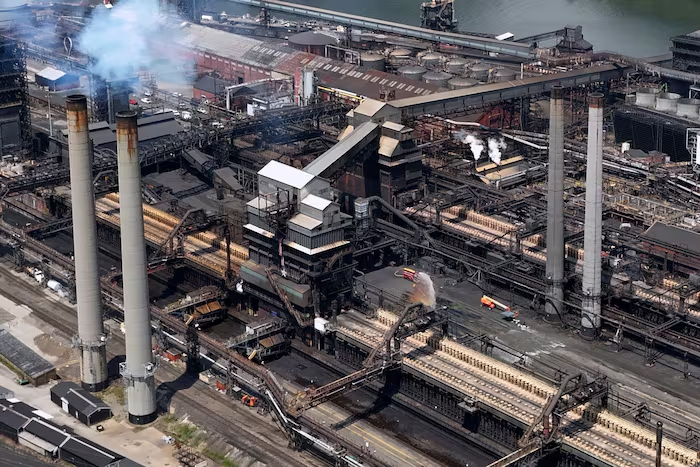
The U.S. Chemical Safety and Hazard Investigation Board released findings on Tuesday from its probe into an August 2025 explosion at U.S. Steel’s Clairton Coke Works facility outside Pittsburgh. The blast claimed two lives, injured 11 additional people including outside contractors, and revealed critical gaps in the company’s safety protocols for equipment maintenance operations.
Investigators determined the catastrophe occurred when workers attempted to clear a gas valve using pressurized water ahead of scheduled maintenance work. The aging cast iron valve, more than 70 years old, ruptured under pressure and released combustible coke oven gas stored within the sprawling riverside industrial complex, the Western Hemisphere’s largest facility of its type. The Chemical Safety Board found that U.S. Steel had no formal written procedure governing this specific cleaning operation despite years of routine use.
Chemical Safety Board member Sylvia Johnson stated the incident resulted from “workers routinely performing a task incorrectly over a period of years until it ultimately led to a catastrophic explosion.” According to the investigative report, employees had been conducting pressurized water cleaning of valve seats on an informal basis for at least three years without documented safety guidelines, creating conditions for catastrophic failure.
The Chemical Safety Board issued two primary recommendations: U.S. Steel must develop written procedures for safely flushing valves with pressurized water, and the industrial cleaning contractor responsible for the pressurized water application must establish formal policies and worker training protocols for operations involving flammable or toxic gases.
The Occupational Safety and Health Administration previously levied penalties totaling $118,214 against the company and issued 10 citations for incomplete, outdated, and inadequate written procedures, maintenance practices, and employee training. Investigator Drew Sahli noted that had the two fatally injured workers and two critically injured workers been positioned away from buildings directly above the coke oven gas piping, “this incident could have been far less severe.”
The facility carries a troubled safety record spanning decades. The Clairton plant experienced a similar coke oven explosion in July 2010 that injured 14 U.S. Steel employees and six contractors. The Chemical Safety Board criticized the company for failing to conduct a facility siting evaluation following that prior incident, a gap that may have contributed to the positioning of occupied structures near hazardous infrastructure.
Beyond workplace safety concerns, the plant has faced ongoing regulatory battles with Allegheny County authorities over environmental violations and air pollution issues. Investigations by Pittsburgh’s Public Source and The Associated Press documented allegations from current and former workers attributing safety deficiencies and poor air quality to management failures and insufficient facility investment.



More Stories
Federal voting arrest in New Jersey adds new pressure point in Sherrill-Trump standoff
Packers Running Back Josh Jacobs Placed on NFL Commissioner’s Exempt List Following Domestic Arrest
Federal Prosecutors Convene Special Grand Jury to Investigate D.C. Schools’ Attendance and Graduation Practices