



💛 A quick favor, if you've got a second.
We're really happy that you chose to read one of our stories and sincerely hope you'll stick around to read more. We took our paywall down — for now — but that won't last forever, and when the gate goes back up, we'd love for you to already be on the inside.
It's free. So please enter your email here and don't forget to like and follow us on all of your favorite Social Media platforms!
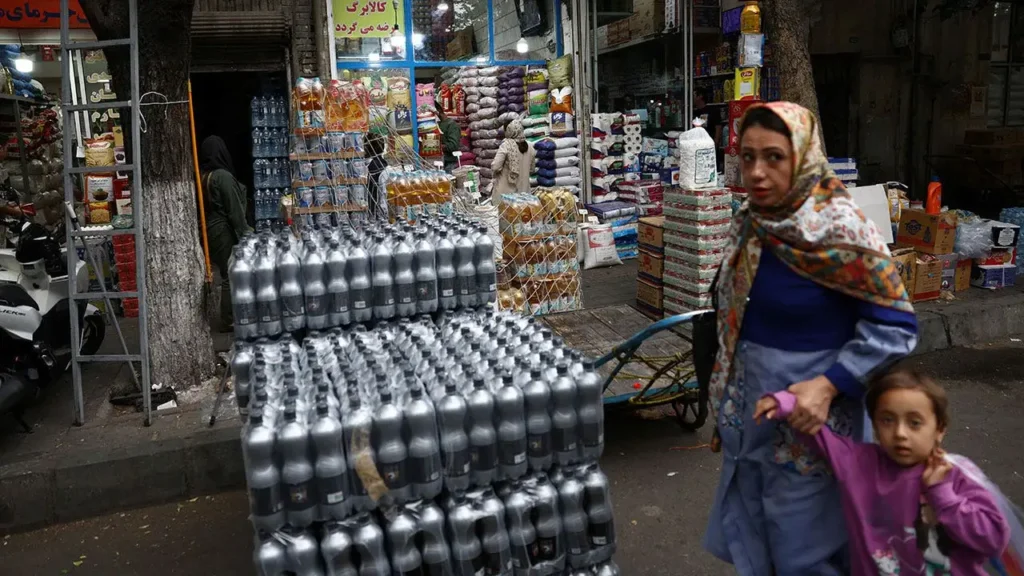
The Trump administration is signaling confidence that sustained economic pressure will accomplish more than immediate military escalation against Iran, at least for the near term. In a Sunday phone interview with Axios, Trump emphasized the strategy of watching Iran struggle with severe inflation and depleted resources while the U.S. maintains its current posture, which he characterized as “low-keying it” rather than pursuing aggressive action.
Trump has pointed to the U.S. naval blockade in the Strait of Hormuz as a key factor compounding Iran’s financial difficulties, arguing that Tehran’s treasury cannot sustain current obligations. His public comments, reinforced by a Truth Social post highlighting the Iranian rial’s collapse and describing the currency as worthless, underscore the administration’s messaging that Iran faces an unprecedented economic crisis stemming from both external pressure and internal decay.
The human cost of Iran’s economic deterioration is becoming apparent in everyday transactions across the country. A recent investigation by the Iranian newspaper Jahan-e Sanat documented supermarket workers witnessing customers shoplifting basic necessities like bread and cheese or consuming packaged goods in stores because they lack purchasing power, revealing the acute strain on household finances as inflation erodes living standards.
Washington has escalated its targeting of Tehran’s revenue sources through what the Treasury Department calls Economic Fury, a comprehensive campaign directed at oil trade, shadow banking infrastructure, weapons procurement networks, cryptocurrency holdings and sanctions-evasion mechanisms. Treasury reported in June that the campaign has blocked “tens of billions of dollars” in regime revenue, while July sanctions targeted more than 100 vessels belonging to Iran’s shadow fleet since the start of 2026.
However, analysts argue a more complex picture emerges when examining the roots of Iran’s economic collapse. Miad Maleki, a sanctions expert and senior fellow at the Foundation for Defense of Democracies, contends that while U.S. pressure has accelerated decline, the regime’s own policy choices—including decades of prioritizing military spending over public services—created the underlying vulnerabilities now being exploited.
Central Bank of Iran data shows Iran’s military share of government spending surged from 16 percent in 1993 to 52 percent by 2006, while education spending contracted from 27 percent to 15 percent over the same period. Health and social services also declined as government budget priorities shifted dramatically toward security apparatus, particularly the Islamic Revolutionary Guard Corps.
The IRGC’s financial footprint extends far beyond official budgets. A 2017 American Enterprise Institute analysis estimated the IRGC’s “gray budget”—off-the-books commercial operations—could add 50 to 100 percent to its declared military expenditures, enabling the organization to maintain economic control independent of government treasury constraints.
The IRGC’s commercial apparatus, anchored by Khatam al-Anbiya Construction Headquarters, has evolved into a sprawling economic empire controlling major revenue sources across construction, energy and infrastructure sectors. Treasury designated the organization in October 2007 as an IRGC engineering operation used to generate income and fund internal operations.
Morad Tahbaz, an Iranian-American conservationist released after nearly six years in Evin Prison in September 2023, argues that sanctions have inadvertently created profitable opportunities for those controlling illicit financial channels. He characterized the system as a lucrative “franchise” for regime-connected operators, where restrictions on legitimate capital flows force all transactions through black market and gray market smuggling networks.
Tahbaz warned that the entrenchment of IRGC-linked financial networks may complicate resolution efforts, as those profiting from restricted channels have incentive to perpetuate the sanctions environment. This dynamic, he suggested, also explains internal factional tensions within Iran, where competing interests contest control over revenue streams created by isolation from global financial systems.
A U.S. official told Fox News Digital that the administration views economic pressure as one component of broader strategy while retaining all military options. The official stated the administration remains committed to preventing Iranian nuclear weapons development and pursuing diplomatic solutions, though it has signaled willingness to escalate if Iran continues terrorism and rejects negotiations.
Treasury acknowledged Iran is increasingly deploying sophisticated evasion schemes including shadow banking networks and cryptocurrency exchanges to circumvent sanctions restrictions. The department announced August 7 actions against crypto platforms allegedly financing the IRGC and international currency networks moving hundreds of millions of dollars for the regime.
Treasury maintains that humanitarian carve-outs remain in place, including authorizations for agricultural products, medicine, medical devices, personal remittances and communications services. The department said additional exemptions are considered on a case-by-case basis under standing regulations and General License 8A.


More Stories
Colombia backs Trump security push while limiting U.S. role in anti-gang operations
Trump Threatens FCC Action Against NBC’s Welker Over Endorsement Coverage
Federal Prosecutors Convene Special Grand Jury to Investigate D.C. Schools’ Attendance and Graduation Practices